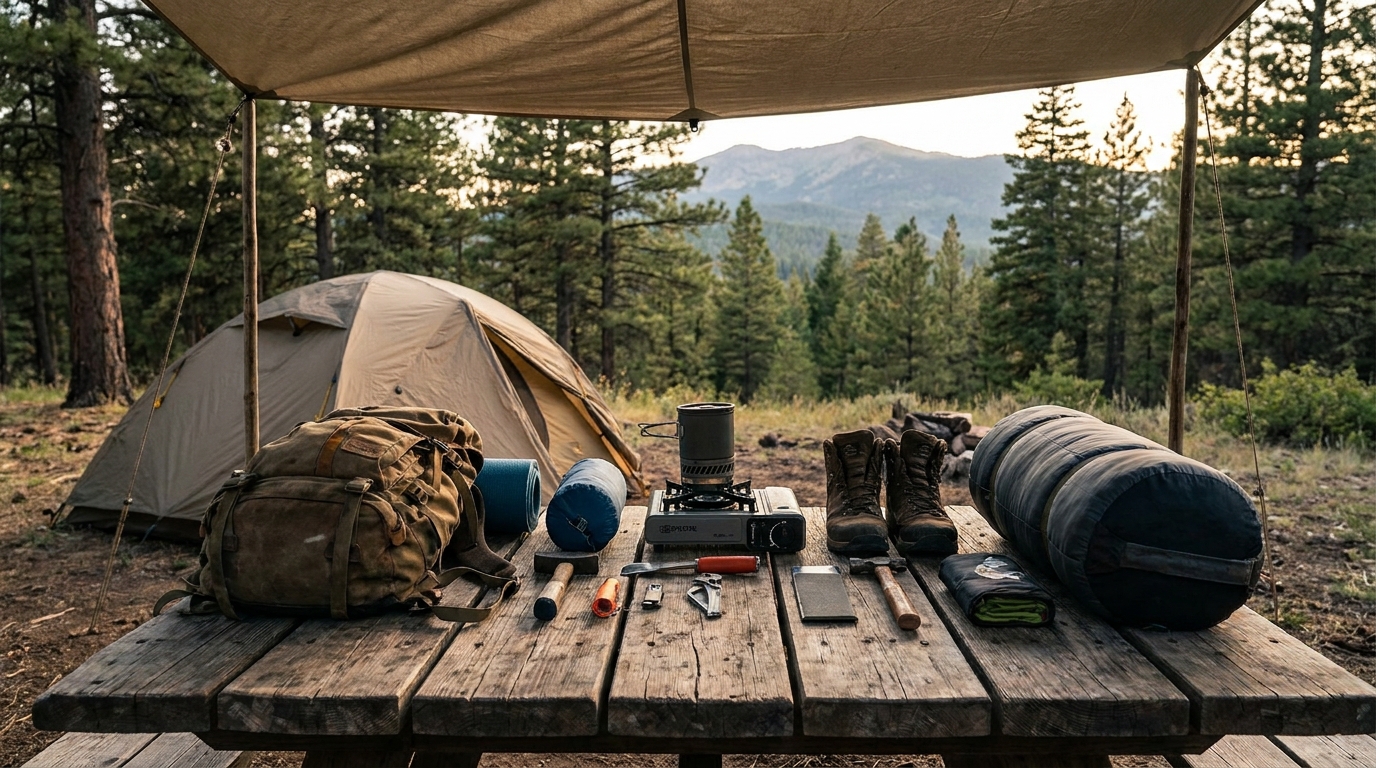
The Best Camping Gear of 2026: What Actually Works When You're in the Wild
We tested gear across different conditions and climates — here's what's worth packing and what to leave at home. The honest guide to building a camping kit that performs when it matters.
The Gear Problem: Too Much Choice, Too Little Guidance
The outdoor gear market is enormous, heavily marketed, and full of products that look impressive in photos and perform poorly in the field. The gap between well-designed, tested equipment and gear that sounds good but fails in practice has never been wider — partly because online retail makes everything equally accessible regardless of quality, and partly because outdoor gear marketing has become exceptionally sophisticated at generating desire without necessarily delivering performance.
This guide is opinionated. We identify the gear categories that matter most, make specific product recommendations based on actual performance in the field, and tell you honestly what the budget option is versus what's worth the premium spend. The goal is a kit that works — not a kit that looks good in a photo or gets the most affiliate clicks.
The Shelter: Tent and Sleeping System
Tents
A tent is the most important piece of camping gear for anyone doing anything other than car camping in fair weather. The three-season tent — designed for spring, summer, and autumn camping in most conditions — is the right choice for most campers. Four-season tents (designed for winter and high-altitude use) are heavier, more expensive, and unnecessary for non-winter camping.
The most important tent specifications: weatherproofing (hydrostatic head rating of 2,000mm minimum for the fly; 3,000mm preferred), pole material (aluminium poles are significantly stronger and lighter than fibreglass), and packed weight (relevant for backpacking; less critical for car camping).
Best overall tent 2026: MSR Hubba Hubba 2 — £450 / $530
The benchmark two-person backpacking tent. Freestanding, exceptionally weather-resistant (the fly has been tested in sustained high winds), well-ventilated to reduce condensation, and weighs 1.72kg / 3.8 lbs packed. The price is high — this is a genuine investment — but MSR's quality control and lifetime repair programme justify it for serious users who will camp many nights per year.
Best value alternative: Vango Nevis 200 (UK) — £160 / or Coleman Sundome 2 (US) — $90 — both significantly cheaper and perfectly adequate for occasional car camping or fair-weather backpacking.
For car camping specifically: The REI Co-op Base Camp 4 (US, £290 / $299) or Vango Icarus 500 (UK, £200) offer significantly more space for families or groups without the weight-optimised premium of backpacking tents.
Sleeping Bags
The temperature rating on a sleeping bag is the most important specification — but requires context. EN/ISO ratings distinguish between "comfort" temperature (the lowest temperature at which an average woman sleeps comfortably) and "limit" temperature (the lowest temperature at which an average man sleeps without waking from cold). Always use the comfort rating as your guide and buy for the coldest temperature you realistically expect to encounter.
Down fill is warmer per weight than synthetic but loses insulation when wet and is more expensive. Synthetic fill works when damp and is cheaper, but heavier for equivalent warmth. For backpacking in dry conditions: down. For camping in wet climates or anyone who sweats heavily: synthetic.
Best down sleeping bag 2026: Rab Neutrino 400 — £280 / $340
EN Comfort rating -3°C / 27°F, 800-fill European goose down, hydrophobic treatment. One of the best warmth-to-weight ratios available at a non-expedition price point. Weighs 780g / 1.7 lbs.
Best synthetic alternative: The North Face Cat's Meow — £170 / $200
3-season synthetic, EN Comfort rating 0°C / 32°F, works reliably when damp. The benchmark value synthetic bag.
Sleeping Pads
The most underrated piece of camping gear. Sleeping pads provide both cushioning and, critically, insulation from the ground — cold ground conducts heat away from a sleeping body faster than cold air. The R-value (thermal resistance) indicates insulation performance: R-value 2 for summer camping, R-value 4+ for three-season, R-value 6+ for winter.
Best inflatable pad: Therm-a-Rest NeoAir XLite NXT — £180 / $220
R-value 4.5, weighs 354g / 12.5 oz, packs smaller than a water bottle. The most warmth-per-weight available in any sleeping pad.
Best value: Therm-a-Rest Z Lite Sol (foam) — £45 / $55 — indestructible, never punctures, R-value 2.0. The standard choice for ultralight and budget campers.
Cooking and Water
Camp Stoves
The choice between canister gas stoves and liquid fuel stoves depends on conditions. Canister stoves (which use pressurised isobutane/propane canisters) are simple, reliable, and efficient in warm conditions. Their performance degrades in cold temperatures (below -5°C / 23°F) and at altitude. Liquid fuel stoves (which use white gas or multi-fuel) perform reliably in all conditions but require priming and maintenance.
Best canister stove: MSR PocketRocket Deluxe — £65 / $75
Piezo ignition (no matches needed), integrated pressure regulator maintains performance in cold and at altitude, weighs 83g. The most reliable compact canister stove available.
Best for groups: MSR Windburner Stove System — £130 / $150 — integrated pot/stove system with exceptional wind resistance; produces boiling water in approximately 2 minutes in any conditions.
Water Filtration
Filtering water from natural sources is essential for any backcountry camping. Giardia, cryptosporidium, and bacteria are present in virtually all natural water sources regardless of apparent clarity. The three main filtration approaches:
Filter straws (Sawyer Squeeze, LifeStraw): Lightweight, fast, effective against bacteria and protozoa. Don't remove viruses (a concern in international travel more than US backcountry). Sawyer Squeeze — £30 / $35 — is the standard recommendation.
Pump filters (MSR MiniWorks EX): More effort but process water quickly for groups. £90 / $110.
UV treatment (SteriPen): Kills viruses as well as bacteria and protozoa. Requires batteries and clear water. £50 / $70. Best used in combination with a pre-filter for turbid water.
Recommendation for most backpackers: Sawyer Squeeze for solo/duo trips; MSR MiniWorks EX for groups or trips with high volume needs.
Navigation and Safety
Navigation
Smartphones with downloaded offline maps (Gaia GPS, AllTrails offline, CalTopo) have replaced paper maps for most casual hikers. For serious backcountry travel, a dedicated GPS device adds reliability — smartphones batteries die, screens crack, and touch interfaces fail in wet conditions.
Best GPS device: Garmin inReach Mini 2 — £350 / $399
Satellite communicator that also provides two-way messaging via satellite network — the ability to call for rescue or communicate with emergency contacts from any location on earth with no cell coverage. The annual subscription (£15 / $15 per month) covers the satellite messaging service. For any remote camping, the inReach pays for itself the first time a genuine emergency occurs.
Best navigation app: Gaia GPS (£23 / $20 annual subscription) — the most comprehensive offline mapping solution for US hiking, with USGS topographic maps, satellite imagery, and the ability to download any area for offline use.
First Aid
A purpose-built wilderness first aid kit that goes beyond the standard blister-and-bandage kit is essential for any backcountry camping. Adventure Medical Kits' Mountain Series (£50–£80 / $60–$100 depending on size) are the standard recommendation — designed by wilderness medicine professionals, clearly labelled, and covering the injuries actually likely in outdoor environments (blisters, cuts, sprains, altitude sickness, hypothermia).
Headlamps
Best overall: Black Diamond Spot 400 — £40 / $45
400 lumens, waterproof to IP67 standard, lockout feature to prevent accidental battery drain in a pack, red-light mode for preserving night vision and not disturbing other campers. The standard recommendation for almost every camping context.
A Complete Starter Kit Under £300 / $350
For someone building their first camping kit on a budget:
Vango Nevis 200 tent — £160 / $185
The North Face Cat's Meow sleeping bag — £170 / $200 (over budget on the kit — substitute Trespass Viper synthetic sleeping bag at £40 / $50)
Therm-a-Rest Z Lite Sol sleeping pad — £45 / $55
MSR PocketRocket Deluxe stove — £65 / $75
Sawyer Squeeze water filter — £30 / $35
Black Diamond Spot headlamp — £40 / $45
Total: approximately £380 / $395 — slightly over budget at full retail but most items are regularly on promotion. This kit will perform adequately in three-season conditions and can be upgraded progressively as camping frequency justifies higher investment.
What to Leave at Home
Gear consistently packed and consistently unused:
Camp chairs (heavy, pack large, rocks and logs serve the purpose for most backpackers)
Excessive cooking equipment (most camp meals require one pot; sets of multiple pots and pans serve car camping, not backpacking)
Cotton clothing ("cotton kills" is an outdoor cliché because it's true — cotton retains moisture against the skin and dramatically increases hypothermia risk when wet)
Solar lanterns (heavy, slow to charge, the headlamp does everything a lantern does with less weight)
best camping gear 2026, camping equipment review, what to pack camping, best tent 2026, best sleeping bag backpacking, camping checklist 2026, MSR tent review, Rab sleeping bag, backcountry camping gear, beginner camping gear list



Discussion
Comments
Approved comments are published after moderation to keep discussion useful and spam-free.
No comments yet. Start the discussion below.