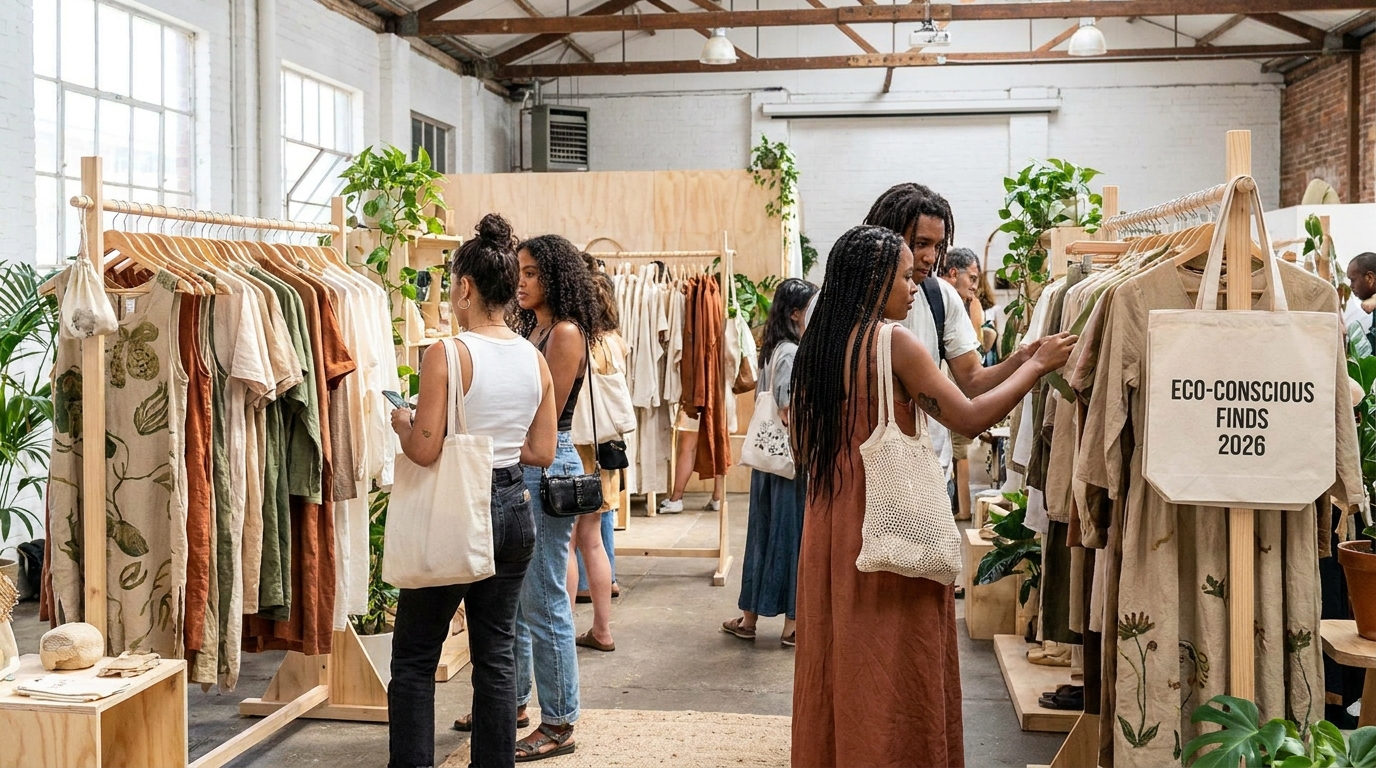
Best Sustainable Fashion Brands of 2026 That Don't Cost a Fortune
Fast fashion is out. But ethical style doesn't have to mean paying luxury prices. These are the sustainable fashion brands proving that dressing consciously can be both affordable and genuinely beautiful in 2026.
The Sustainable Fashion Moment Has Arrived — But Greenwashing Is Rampant
The sustainable fashion industry has a transparency problem. As consumer demand for ethical clothing has grown, so has the number of brands making environmental and ethical claims that range from genuinely impressive to almost entirely meaningless. "Eco-friendly," "conscious collection," "sustainable materials" — these phrases appear on everything from genuinely certified ethical operations to brands that have changed precisely nothing about their supply chain beyond their marketing copy.
Navigating this landscape requires knowing what to look for — which certifications carry weight, which claims are verifiable, and which brands have made systemic commitments rather than cosmetic gestures. This guide does that work for you. Every brand included here has been evaluated against specific, verifiable criteria: supply chain transparency, material sourcing, labour standards, environmental certifications, and the honest assessment of pricing relative to quality.
The result is a list of brands that genuinely deserve the sustainable label — and that make clothes worth wearing and owning for years rather than seasons.
What to Look For: The Certifications That Actually Mean Something
Before the brands, a brief guide to the certifications worth knowing. Not all sustainability claims are equal, and understanding which third-party verifications carry genuine weight makes you a far more effective ethical consumer.
GOTS — Global Organic Textile Standard
The gold standard for organic textiles. GOTS certification covers the entire supply chain from raw fibre to finished product, verifying that materials are genuinely organic and that social standards (fair wages, safe working conditions, no child labour) are met throughout production. A GOTS label on a garment is one of the most meaningful sustainability signals available.
Fair Trade Certified
Verifies that producers received fair prices for their materials and that workers received fair wages and safe working conditions. Particularly meaningful for cotton, where supply chain exploitation is historically widespread. Fair Trade certification requires third-party auditing and ongoing compliance monitoring.
B Corp Certification
A company-level certification (rather than product-level) that verifies a business meets high standards of social and environmental performance, accountability, and transparency across its entire operation. B Corp brands are legally required to consider stakeholder impact — workers, community, environment — alongside shareholder interests. A growing number of the best sustainable fashion brands hold B Corp status.
bluesign
Specifically covers the safety and environmental impact of textile manufacturing processes — dyes, chemicals, water usage, energy consumption. Particularly relevant for synthetic materials and performance fabrics. Less well-known than GOTS but equally rigorous within its scope.
Oeko-Tex Standard 100
Tests finished textile products for harmful substances. An Oeko-Tex label means the garment has been tested and confirmed free from over 100 harmful chemicals. Important for skin-contact items and baby clothing in particular.
The Best Sustainable Fashion Brands of 2026
1. Patagonia — The Gold Standard (US, Available Globally)
Patagonia has been the benchmark for genuinely sustainable outdoor and lifestyle clothing since its founding philosophy committed to environmental responsibility decades before it was commercially advantageous to do so. In 2022, founder Yvon Chouinard transferred ownership of the company to a purpose trust and environmental non-profit — an act without parallel in the fashion industry. All profits above reinvestment now go directly to environmental causes.
The clothing itself is excellent: durable, functional, and backed by an industry-leading repair, reuse, and resale programme. Patagonia's Worn Wear initiative repairs any garment free of charge and operates a robust secondhand market. The brand calculates and publicly discloses its carbon footprint, supply chain emissions, and material sourcing in more detail than virtually any competitor.
Price range: Mid to premium — fleeces from £100 / $110, jackets from £200 / $220
Best for: Outerwear, fleeces, base layers, casual everyday wear
Certifications: Fair Trade Certified sewing, bluesign approved materials, 1% for the Planet member
2. Thought Clothing — Accessible Ethics (UK, Ships Internationally)
Thought is one of the UK's most consistently excellent sustainable fashion brands and one of the most genuinely accessible in terms of price. Their range covers everyday basics through to occasion wear, all made from natural and recycled fibres — bamboo, organic cotton, TENCEL, recycled polyester, and merino wool. The brand publishes an annual impact report with specific targets and progress metrics, a level of transparency that distinguishes genuine commitment from performative sustainability.
Price range: Accessible — basics from £25 / $30, dresses from £65 / $75
Best for: Everyday wardrobe staples, basics, knitwear, and versatile dresses
Certifications: GOTS certified, member of the Ethical Trading Initiative
3. Pact — Affordable Organic Basics (US, Ships to UK)
Pact has solved one of sustainable fashion's most persistent problems: the price premium on organic basics. Their core range of organic cotton T-shirts, underwear, loungewear, and basics is priced competitively with conventional alternatives from mainstream retailers — often cheaper than comparable items from brands with far weaker ethical credentials. GOTS certified throughout, Fair Trade certified production, and carbon-neutral shipping make this one of the strongest value-for-ethics propositions in the market.
Price range: Budget to accessible — T-shirts from $18 / £15, 3-pack underwear from $28 / £22
Best for: Organic cotton basics, underwear, loungewear, children's clothing
Certifications: GOTS, Fair Trade Certified, carbon-neutral shipping
4. Girlfriend Collective — Sustainable Activewear (US, Ships Globally)
Girlfriend Collective makes activewear from recycled materials — specifically post-consumer plastic bottles and fishing nets recovered from the ocean. The technical performance of their leggings and sports bras rivals conventional performance brands, and the size inclusivity (XXS to 6XL) is broader than virtually any competitor. Their ReGirlfriend programme takes back worn Girlfriend pieces for recycling, closing the loop on the product lifecycle.
Price range: Mid — leggings from $68 / £55, sports bras from $48 / £40
Best for: Activewear, leggings, sports bras, swim
Certifications: bluesign approved, OEKO-TEX Standard 100
5. Arket — Accessible Scandinavian Sustainability (H&M Group, UK and US)
Arket occupies a unique position in the sustainable fashion landscape: a brand within the H&M Group that has built genuinely credible ethical credentials while remaining accessible to most budgets. Their material standards are significantly higher than the parent group's mainstream brands, they publish supplier information publicly, and the clothing itself is designed for longevity rather than seasonal obsolescence. The repair café concept, available in many Arket stores, offers free minor repairs on any Arket garment.
Price range: Accessible to mid — T-shirts from £25 / $30, outerwear from £150 / $170
Best for: Wardrobe essentials, knitwear, outerwear, children's basics
Certifications: Better Cotton Initiative member, increasing GOTS and recycled material usage
6. Nudie Jeans — The Most Sustainable Denim Brand (Sweden, Global)
Nudie Jeans has built the most comprehensive circular economy programme in denim. Every pair comes with a lifetime repair guarantee: take any worn pair to any Nudie store or repair partner globally, and they'll repair it free of charge — replacing rivets, restitching seams, patching holes — for the life of the garment. Their Reuse stores sell pre-loved and repaired Nudie jeans at reduced prices. And when a pair reaches true end of life, they can be returned to be recycled into new denim.
The denim itself is made using organic cotton and increasingly recycled materials. The supply chain is fully mapped and published, with all manufacturing in Portugal, Tunisia, and Turkey under verified ethical conditions.
Price range: Mid to premium — jeans from £130 / $150
Best for: Denim — jeans, jackets, shirts
Certifications: GOTS, Fair Wear Foundation member, B Corp
7. People Tree — Pioneer of Fair Trade Fashion (UK, Global)
People Tree is the original fair trade fashion brand, founded in 1991 and still the clearest example of what Fair Trade fashion looks like in practice. Every garment is made by artisan producer groups and Fair Trade certified factories in Bangladesh, India, Nepal, and Kenya — workers who receive fair wages, safe conditions, and development support. The aesthetic is accessible and versatile, the quality consistent, and the price point genuinely affordable for ethically certified clothing.
Price range: Accessible — dresses from £55 / $65, tops from £30 / $35
Best for: Women's everyday wear, occasion dresses, knitwear
Certifications: Fair Trade, GOTS, Soil Association Organic
8. Quince — Radical Transparency at Low Prices (US, Ships Globally)
Quince has disrupted the sustainable fashion market with a model that cuts out wholesale and retail markup entirely — selling directly from ethical factories to consumers at prices that undercut comparable quality from mainstream retailers. A cashmere sweater for $50, merino wool for $30, organic cotton basics for $15 — all from factories with published certifications and verified labour standards. The brand publishes factory names, locations, and audit results publicly.
Price range: Budget to accessible — basics from $15, cashmere from $50
Best for: Premium natural fibre basics at radical prices — cashmere, merino, linen, silk
Certifications: Factory-level certifications published; varies by product category
9. Veja — The Most Famous Sustainable Sneaker Brand (France, Global)
Veja has achieved something almost unprecedented: becoming a genuine mainstream fashion brand — worn by royalty and celebrities, stocked in luxury department stores — while maintaining a supply chain that is among the most transparent and ethical in footwear. Raw materials sourced from organic cotton cooperatives in Brazil, wild rubber from the Amazon, and recycled plastic bottles form the material basis. Production in Porto Alegre, Brazil, in a factory paying wages above local industry standards. No advertising spend — ever — with all marketing budget redirected to supply chain investment.
Price range: Mid to premium — trainers from £110 / $130
Best for: Everyday trainers and casual sneakers
Certifications: Ecocert certified organic cotton, direct trade rubber sourcing
10. Organic Basics — Technical Basics Done Right (Denmark, Global)
Organic Basics specialises in exactly what the name suggests: certified organic and recycled material basics — underwear, base layers, activewear — made to a technical performance standard that rivals conventional synthetic alternatives. Their impact calculator, available on the website, shows the environmental difference between a conventional and organic version of every product they make. Full supply chain transparency, carbon-neutral shipping, and a take-back programme for worn items round out one of the most credible sustainability programmes in the basics category.
Price range: Accessible to mid — underwear from £16 / $18, activewear from £45 / $50
Best for: Underwear, base layers, activewear basics
Certifications: GOTS, Fair Wear Foundation, Oeko-Tex Standard 100, B Corp
The Most Sustainable Choice of All: Secondhand First
Every brand on this list is a better choice than fast fashion. But the single most sustainable fashion decision anyone can make in 2026 is buying secondhand before buying new — at any price point, from any brand.
The environmental cost of producing a new garment — water usage, carbon emissions, chemical processing, transport — is always greater than the environmental cost of extending the life of an existing one. A secondhand Zara dress bought on Vinted is more sustainable than a new dress from any brand on this list.
The practical guide to secondhand in 2026:
Vinted — the largest peer-to-peer secondhand clothing marketplace in the UK and Europe, with a growing US presence. Best for everyday brands, high street, and contemporary fashion.
Depop — strongest for vintage, streetwear, and curated individual sellers. Higher average prices than Vinted but stronger for specific style niches.
eBay — the most comprehensive inventory, particularly for specific items. Best for investment pieces, luxury brands, and hard-to-find items.
ThredUp (US) — curated secondhand with quality control, closer to a traditional retail experience. Higher prices than peer-to-peer but more reliable for condition.
Vestiaire Collective — authenticated luxury and premium secondhand. For investment-level secondhand purchases with authentication guarantees.
Building a Sustainable Wardrobe: A Practical Framework
Sustainable fashion is not about buying from the right brands — it's about buying less, choosing better, and keeping clothes longer. A wardrobe built on these three principles will always be more sustainable than one built on certified organic impulse purchases.
Buy secondhand first — for anything that doesn't need to be new, search secondhand markets before new retailers
Buy less, but better — one well-made £80 / $100 item worn 200 times beats four £20 / $25 items worn 10 times each in every metric: environmental impact, cost per wear, and wardrobe satisfaction
Care for what you own — washing clothes at 30°C, air drying rather than tumble drying, and storing properly extends garment life significantly. A well-maintained garment lasts two to three times longer than a neglected one.
Repair before replacing — most common clothing failures (lost buttons, split seams, broken zips) are £5–£15 / $6–$20 repairs at any local tailor. Replacing instead of repairing is almost never the better choice.
When buying new, use this list — choose brands with verified certifications, published supply chains, and genuine commitments rather than marketing language
best sustainable fashion brands 2026, ethical clothing brands UK US, affordable sustainable fashion, eco friendly clothing brands, fair trade fashion 2026, GOTS certified clothing, sustainable wardrobe guide, best ethical fashion brands, Patagonia alternatives, sustainable activewear 2026





Discussion
Comments
Approved comments are published after moderation to keep discussion useful and spam-free.
No comments yet. Start the discussion below.