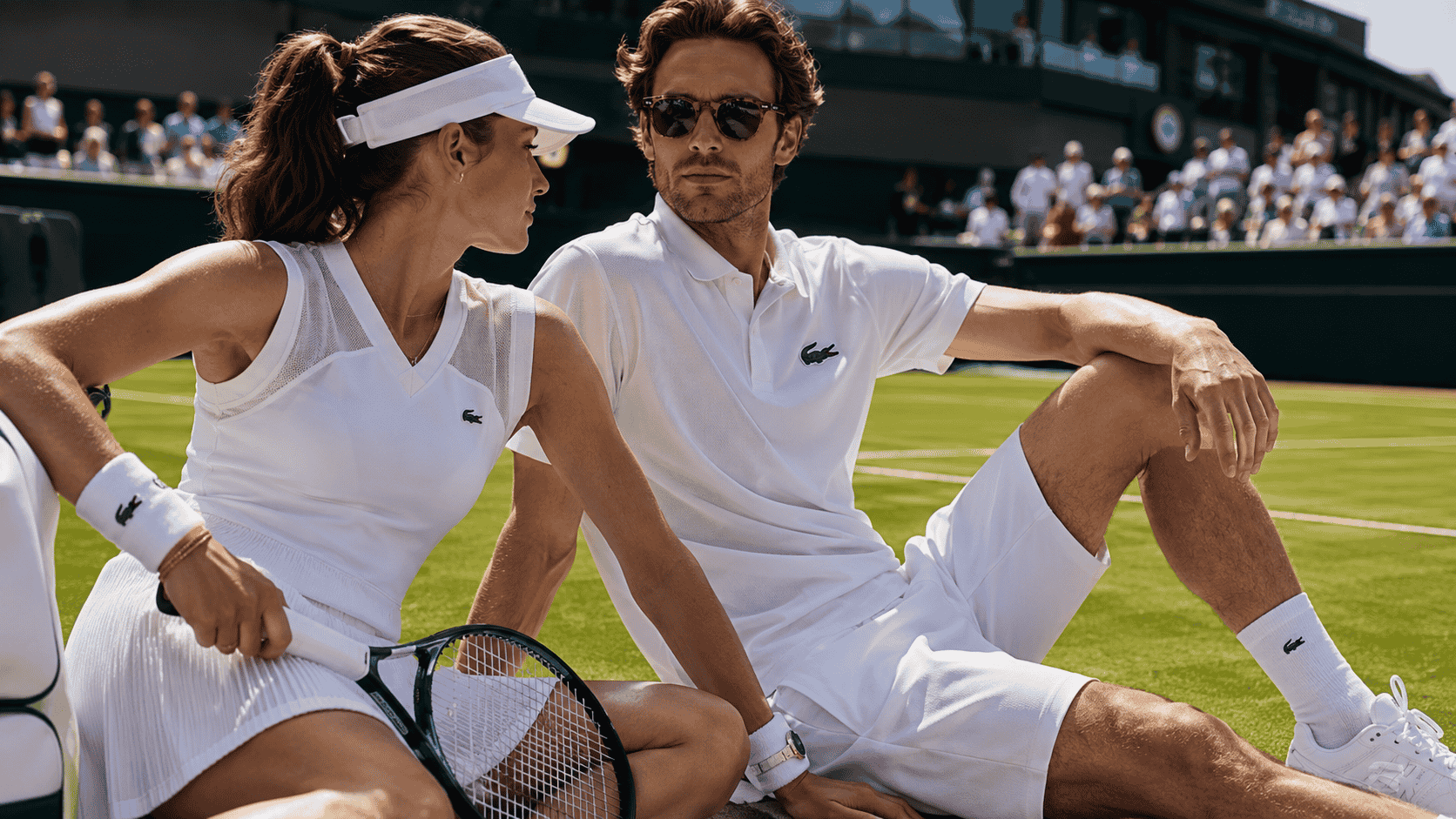
Wimbledon’s quietest rule has become its loudest fashion story
Wimbledon has always looked different.
The grass is greener. The crowd is quieter. The strawberries and cream feel almost ceremonial. And the clothes, of course, are white.
But in 2026, the oldest fashion rule in tennis has become one of the tournament’s biggest talking points.
Players are still expected to wear almost entirely white on court. Wimbledon’s official clothing rules say competitors must wear suitable tennis attire that is “almost entirely white” from the moment they enter the court area. The rule is strict enough that off-white and cream shades are not treated as safe alternatives.
That should make Wimbledon the least experimental stage in tennis.
Instead, it has become one of the most watched.
The all-white rule is not stopping fashion. It is forcing creativity.
The modern tennis player is no longer just an athlete. They are a brand, a media figure, a sponsor asset and, in some cases, a style icon.
That is why Wimbledon fashion matters.
Reuters reported that fashion has taken center stage at the 2026 Championships, with Naomi Osaka’s kimono-inspired walk-on look attracting attention and male players such as Novak Djokovic and Taylor Fritz using custom pieces to create their own pre-match style moments.
This is where Wimbledon’s tension becomes interesting.
At other tournaments, color can do the work. A player can stand out with neon, print, metallic trim or dramatic contrast. At Wimbledon, almost everything must live inside a narrow white frame.
So the fashion story moves somewhere else.
It moves into fabric.
It moves into tailoring.
It moves into walk-on jackets.
It moves into silhouettes.
It moves into how a player enters the court before the first ball is struck.
That is why tennis whites are no longer just tradition. They are becoming a design challenge.
The rise of the walk-on outfit
The biggest style shift at Wimbledon 2026 is not only what players wear during rallies. It is what they wear before the match begins.
The “walk-on fit” has become a small runway moment.
A blazer, scarf, tracksuit, ceremonial layer or custom jacket may only be visible for a short time, but it travels quickly across social media. The Guardian described Wimbledon 2026 as a moment where player walk-on looks are being used for self-expression, branding and psychological presence, with Osaka’s white kimono-inspired styling becoming one of the clearest examples.
That matters because tennis gives fashion something other sports do not always offer: a close-up.
Players enter alone. Cameras follow them. The crowd watches. The outfit is not lost in a team uniform or helmet. It becomes part of the player’s story before the match has even started.
For sponsors, that is valuable.
For players, it is identity.
For fans, it is another reason to watch.
Why tennis whites are trending beyond the court
Wimbledon fashion does not stay at Wimbledon.
Every summer, the tournament revives interest in white dresses, pleated skirts, polo shirts, cable-knit sweaters, linen, tennis shoes, sunglasses and country-club style. But 2026 feels different because tennis fashion is already part of a wider lifestyle trend.
The “tenniscore” look has moved from court clothing into everyday summer wardrobes. It is clean, polished and easy to understand. It works for brunch, travel, resorts, city walks and social media. Wimbledon simply gives the trend its most prestigious stage.
That is why “tennis whites” are not only about sport.
They are about summer luxury.
A white tennis dress can look athletic.
A white blazer can look expensive.
A white polo can feel classic.
A white sneaker can fit almost anywhere.
The look is simple, but the message is strong: controlled, fresh, elegant and quietly wealthy.
The rule is still powerful
For all the creativity, Wimbledon is not relaxing into chaos.
The dress code remains part of the tournament’s identity. Players cannot simply wear whatever they want and call it fashion. The official rule says clothing must be almost entirely white when a player enters the court area, and the code applies to clothing and equipment in detail.
That is why some fashion choices become risky.
The Times reported that Matteo Berrettini’s cream-colored Hugo Boss jacket was rejected because it was not considered white enough under Wimbledon’s rules.
This is exactly what makes Wimbledon different from every other tennis event.
At the U.S. Open, the fashion story can be loud.
At Roland-Garros, it can be earthy and artistic.
At the Australian Open, it can be bright and summer-driven.
At Wimbledon, it has to be disciplined.
The restriction is the brand.
Why luxury brands care so much
Luxury fashion loves control, heritage and visual codes. Wimbledon has all three.
The tournament offers an image that brands spend millions trying to create: tradition, exclusivity, elegance, performance and global attention.
A walk-on jacket or tailored tennis outfit can work like a luxury campaign without looking like a normal advertisement. It is worn by an athlete under pressure, in front of a global audience, inside one of sport’s most recognizable settings.
That is why brands such as Lacoste, Hugo Boss, Nike, Wilson, Lululemon and others see tennis as more than kit supply. It is a cultural platform.
A tennis outfit can sell shoes.
A jacket can sell lifestyle.
A racket bag can sell aspiration.
A white dress can sell the idea of summer itself.
And Wimbledon gives all of it a premium frame.
What readers can take from Wimbledon style
You do not need a Centre Court ticket to borrow from Wimbledon fashion.
The easiest way to wear the look is to keep it clean. Start with one white base piece: a polo, tennis skirt, linen shirt, white sneaker or simple dress. Then add texture instead of loud color.
Think cotton, linen, ribbed knits, pleats, subtle collars, structured bags and minimal accessories.
The mistake is trying too hard. Wimbledon style works best when it looks composed, not costume-like.
For men, the easiest version is a white polo with tailored shorts or light trousers. For women, a tennis dress, pleated skirt or white shirt with clean sneakers works well. For travel, white linen with a light sweater gives the same energy without looking like sportswear.
The key is restraint.
That is the whole Wimbledon lesson.
The heat angle also matters
Fashion is not the only story at Wimbledon 2026. Heat is becoming part of the tournament conversation too.
Reuters reported that Wimbledon organizers are preparing for London temperatures to rise again, with more public communication, water stations and heat precautions for spectators. The event’s heat rule can allow player breaks when the heat stress index reaches the required threshold.
That adds another layer to the clothing conversation.
White is traditional, but it is also practical in summer. Breathable fabrics, light layers, hats and performance materials are not only about style. They are about comfort and safety.
For spectators, the best Wimbledon-inspired look this year may be elegant but sensible: white or light clothing, sunglasses, comfortable shoes, sunscreen and a hat.
A good outfit should survive both the photos and the queue.
Wimbledon’s fashion future
The all-white rule is not going away. It is too central to Wimbledon’s identity.
But the way players use that rule is changing.
The next stage of Wimbledon fashion will likely be more personalized, more sponsor-driven and more cinematic. Expect more custom walk-on pieces, more subtle storytelling, more heritage references and more collaborations between athletes and designers.
The outfit may be removed before the first game.
But the image will remain.
That is the new fashion economy of tennis.
A player does not need to break Wimbledon’s rules to stand out. They only need to understand how to bend tradition without snapping it.
The bottom line
Wimbledon 2026 proves that strict rules do not kill style.
Sometimes they sharpen it.
The all-white dress code gives every player the same limitation. The best-dressed players turn that limitation into identity, drama and brand power.
That is why Wimbledon fashion is trending again.
Not because the rules changed.
Because the players did.
Quick FAQ
Why do Wimbledon players wear white?
Wimbledon requires players to wear almost entirely white tennis attire when they enter the court area. The rule is part of the tournament’s long-standing tradition and visual identity.
Can Wimbledon players wear cream or off-white?
Wimbledon’s rules are strict, and off-white or cream shades can be rejected. Matteo Berrettini’s cream-colored jacket was reportedly banned because it was not considered white enough.
Why is Wimbledon 2026 fashion trending?
Players are using walk-on outfits, custom jackets and luxury styling to express personality while still working within Wimbledon’s all-white rule. Reuters reported that Osaka, Djokovic and Fritz were among the players drawing attention for fashion moments this year.
What is tenniscore fashion?
Tenniscore is a lifestyle fashion trend inspired by tennis clothing, including polos, pleated skirts, tennis dresses, white sneakers, sweaters and clean summer tailoring.
How can I dress like Wimbledon style?
Choose clean white or light pieces, breathable fabrics, minimal accessories and polished sneakers. Keep the look simple, elegant and practical for summer.




Discussion
Comments
Approved comments are published after moderation to keep discussion useful and spam-free.
No comments yet. Start the discussion below.