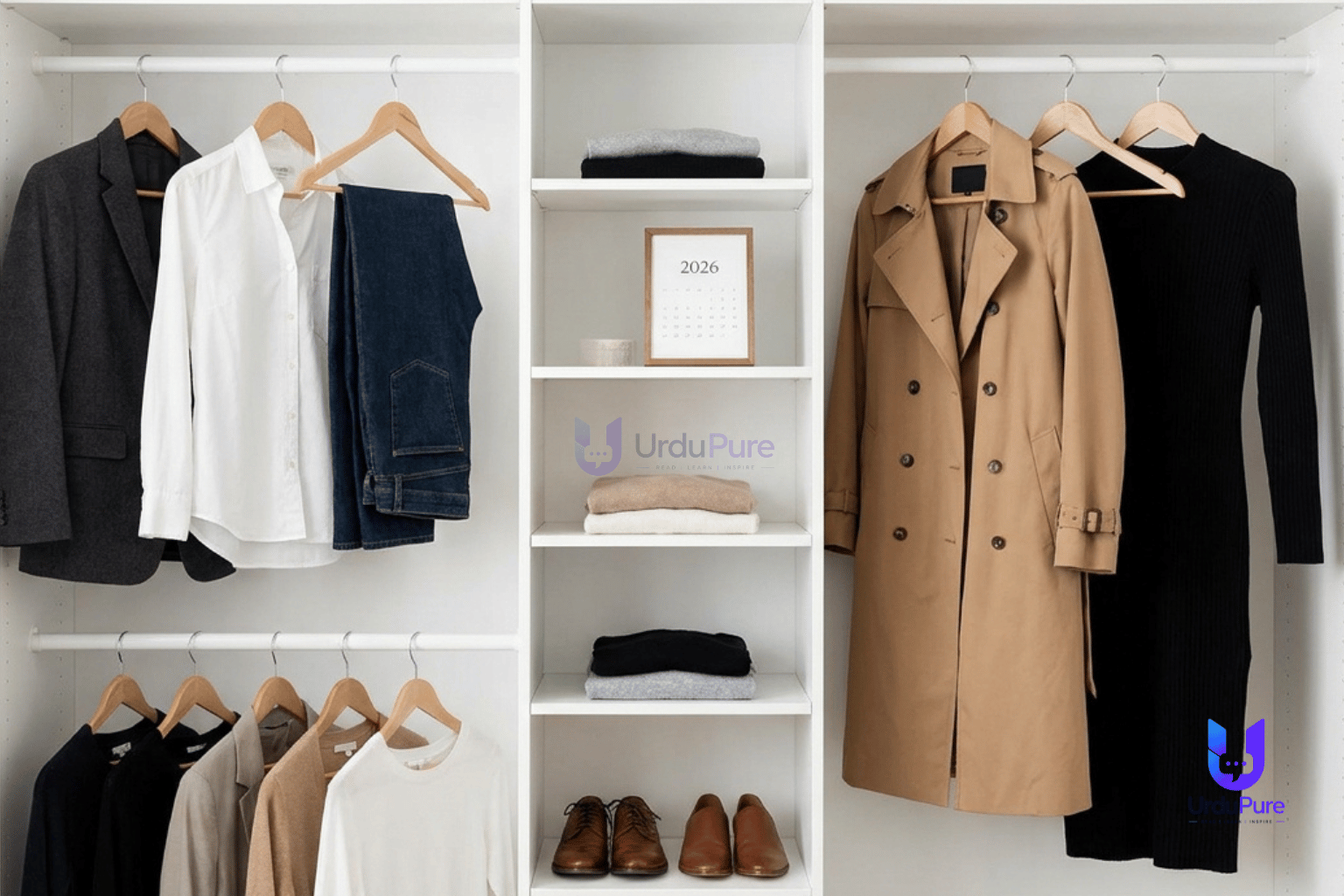
How to Build a Capsule Wardrobe in 2026: The Minimalist's Complete Guide
A capsule wardrobe means owning less but looking better — every single day. Here's the definitive 2026 guide to building one that genuinely works for your life, budget, and style.
The Problem With Most Wardrobes
The average person in the UK and US owns approximately 120 items of clothing and wears 20% of them 80% of the time. The remaining 96 items sit in drawers and wardrobes occupying physical space, mental bandwidth, and — critically — money. The fashion industry's business model depends on this dynamic: the more you buy, the more you feel you need, the less satisfied you are with what you have.
The capsule wardrobe concept is the most effective known antidote to this cycle. By deliberately limiting your wardrobe to a curated set of high-quality, versatile items that work together, you create a wardrobe where everything is worn, nothing is wasted, and getting dressed becomes genuinely easy rather than a daily source of low-level stress.
In 2026, the capsule wardrobe concept has evolved beyond its early minimalist-aesthetic associations. This isn't about owning a beige-only wardrobe or dressing identically every day. It's about intentionality — knowing exactly what you own, why you own it, and being able to dress well from it every day without effort.
What Is a Capsule Wardrobe, Exactly?
A capsule wardrobe is a curated collection of clothing in which every item:
Fits well and flatters you right now (not when you lose weight, not five years ago)
Is versatile enough to work in multiple outfits and contexts
Reflects your actual life — not your aspirational life
Is something you actually reach for and wear
The most cited version, from stylist Susie Faux who coined the term in the 1970s and Donna Karan who popularised it with her "Seven Easy Pieces" collection in 1985, suggests roughly 30–40 items per season. In practice, what matters is not the number but the principle: every single item earns its place.
Step 1: The Wardrobe Edit — What to Keep, What to Let Go
You cannot build a capsule wardrobe on top of an existing cluttered one. The edit comes first. This is the hardest part for most people — and the most important.
The Keep Test
Hold each item and ask these four questions:
Does it fit me well right now, today? If it doesn't fit, it doesn't belong in your wardrobe — regardless of how much it cost or how much you liked it once.
Have I worn it in the past 12 months? If the answer is no, and there isn't a clear specific occasion it's being held for, let it go.
When I put it on, do I feel good? Not just adequate — good. Clothing that makes you feel merely acceptable contributes to the feeling that you have nothing to wear.
Does it work with at least three other things I own? An item that only works with one specific outfit is a wardrobe bottleneck, not an asset.
The Practical Edit Process
Take everything out of your wardrobe and drawers. Put it all on your bed. Go through each item using the test above. Create three piles: Keep, Donate / Sell, and Unsure. Put the Unsure pile in a bag and seal it — if you haven't gone looking for anything in it within three months, donate the whole bag without reopening it.
What remains after the edit is the foundation of your capsule. The next step is identifying the gaps and filling them deliberately.
Step 2: Define Your Actual Life — Not Your Instagram Life
The biggest capsule wardrobe mistake is building for an idealised version of your life rather than the one you actually live. A wardrobe full of beautiful blazers and tailored trousers is useless if you work from home in a creative role and spend weekends outdoors. A wardrobe of casual basics is insufficient if your job involves regular client meetings or formal events.
Before identifying what to buy, map your actual week. How many days involve formal or business settings? How many are casual? How much of your life involves sport or outdoor activity? Do you have frequent evening commitments, or is your social life mostly daytime? Build your wardrobe to reflect the real proportions of your life.
A useful rule of thumb: the ratio of your wardrobe items should roughly mirror the ratio of your activities. If 60% of your week is casual, 60% of your capsule should be casual pieces.
Step 3: The 2026 Capsule Wardrobe Formula
The following is a gender-neutral base capsule of 37 items for a mixed work/casual lifestyle in the UK or US in 2026. Adjust up or down depending on your life, climate, and how frequently you do laundry.
Tops (10 items)
3 × plain T-shirts in white, grey, and navy (or equivalent neutrals)
2 × long-sleeve tops or light knits in neutral tones
2 × button-down shirts — one white, one a muted pattern or stripe
1 × fine-knit jumper or crewneck in camel, oatmeal, or chocolate
1 × slightly elevated blouse or top for dressier occasions
1 × sweatshirt or oversized knit for casual/loungewear days
Bottoms (8 items)
2 × jeans — one straight or barrel-leg dark wash, one in a second wash or cut
2 × tailored trousers — one neutral (cream, tan, or grey), one dark (navy or charcoal)
1 × chinos or casual trousers for smart-casual situations
1 × midi skirt or wide-leg trousers (depending on your preference)
1 × shorts or linen trousers for warm weather
1 × leggings or joggers for exercise / home days
Outerwear (4 items)
1 × warm coat or overcoat for cold weather (camel, navy, or charcoal)
1 × trench coat or raincoat for transitional weather
1 × casual jacket — denim, bomber, or overshirt
1 × lightweight layer — blazer, cardigan, or zip-up for layering
Footwear (7 items)
1 × clean white or neutral trainers
1 × trail or more substantial everyday trainer
1 × loafers or smart flat shoes
1 × ankle boots (leather or leather-look) for smarter occasions
1 × sandals or mules for warm weather
1 × boots or sturdy shoes for bad weather
1 × elevated shoe or heeled option for formal occasions
Dresses (3 items — adapt as relevant to your wardrobe)
1 × casual day dress that works in summer
1 × smart or elevated dress for occasions
1 × versatile midi or wrap dress that bridges casual and smart
Accessories (5 items)
1 × everyday bag (structured tote, shoulder bag, or backpack)
1 × smaller evening or crossbody bag
1 × belt in a neutral leather tone
1 × scarf or lightweight layer for neck/warmth
2–3 pieces of simple jewellery that you wear daily
Total: 37 items. Every single one earns its place. Nothing is waiting for a special occasion that never arrives.
Step 4: The Colour Strategy That Makes Everything Work Together
The secret to a functional capsule wardrobe is a coherent colour palette where the majority of items work with each other. The most versatile approach uses three layers:
Layer 1: Neutral Foundation (70% of your wardrobe)
Choose 2–3 neutrals that suit your colouring and that you genuinely love. The most universally flattering neutral combinations in 2026: navy + white + camel, charcoal + ivory + chocolate brown, or black + white + grey. Every item in this layer works with every other item.
Layer 2: Accent Colours (20% of your wardrobe)
Add 1–2 colours that complement your neutrals and that you're drawn to. These bring personality to the wardrobe without complicating the formula. Good 2026 accent colours: rust, burgundy, forest green, cobalt blue, or sage. Accent pieces (a jumper, a skirt, a blouse) provide variety within the system.
Layer 3: Statement Items (10% of your wardrobe)
One or two deliberately bold items — a patterned skirt, a vivid coat, a printed shirt — that you reach for when you want to make an impact. These work because everything else in your wardrobe is neutral enough to support them.
Step 5: Buying for Your Capsule — The Rules
Quality Over Quantity
The arithmetic of capsule wardrobe buying is different from standard shopping. When an item is worn 150 times per year rather than 5, the cost per wear collapses. A £150 / $180 pair of well-made trousers worn 3 times per week costs less per wear over two years than a £30 / $35 pair worn twice then abandoned.
The One-In-One-Out Rule
Every new item that enters the capsule requires the departure of an existing one. This discipline prevents gradual wardrobe inflation and forces genuine consideration before every purchase: is this new item better than what it's replacing?
Wait Before You Buy
For any non-essential purchase, impose a 48-hour waiting period between wanting something and buying it. The majority of impulse purchases fail this test. The ones that survive it are the considered purchases that actually serve the wardrobe.
Try Before You Commit — to Online Purchases Too
Order multiple sizes and options from online retailers with free returns, try everything properly at home in your own lighting with your own existing clothes, and return anything that isn't genuinely excellent. The convenience of online shopping should work in your favour, not the retailer's.
The Best Brands for Capsule Wardrobe Pieces in 2026
Accessible Budget (Most pieces under £50 / $60)
Arket offers the best balance of quality and price for capsule staples in the UK. Uniqlo's U and Lifewear collections are unmatched for basics quality at their price point in both markets. Mango provides strong tailoring and outerwear at accessible prices. In the US, Quince offers exceptional value for elevated basics with a more ethical supply chain.
Mid-Range (Most pieces £50–£150 / $60–$180)
COS delivers consistent minimalist design with above-average quality. &Other Stories is excellent for elevated basics and accessories. Reiss and Phase Eight cover the smarter end of the mid-range spectrum in the UK with genuine quality. Banana Republic and J.Crew occupy a similar position in the US.
Investment Pieces (Worth spending more)
The items worth investing significantly in: coats (Mackintosh, A.P.C., Toteme), leather bags (Coach, Polène, Strathberry), quality denim (Agolde, Frame), and classic footwear (Tod's, Church's, or Grenson for leather shoes). These items last 10–20+ years with care and cost less per wear than almost anything else in your wardrobe.
Maintaining Your Capsule: The Ongoing Practice
A capsule wardrobe is not a one-time project — it's an ongoing practice. Schedule a seasonal review (four times per year, 30 minutes each) to assess what's been worn, what hasn't, what needs replacing, and what can be retired. The annual cost of maintaining a well-functioning capsule wardrobe — replacing worn items, adding one or two seasonal pieces — is typically £200–£400 / $250–$500, dramatically less than average clothing spend while producing consistently better results.
The goal is not a perfect wardrobe frozen in time. It's a living, evolving wardrobe that serves your actual life at every stage of it.
capsule wardrobe 2026, how to build capsule wardrobe, minimalist wardrobe guide, capsule wardrobe formula, capsule wardrobe pieces, how many clothes to own, sustainable wardrobe 2026, capsule wardrobe colour palette, wardrobe edit guide, best capsule wardrobe brands 2026






Discussion
Comments
Approved comments are published after moderation to keep discussion useful and spam-free.
No comments yet. Start the discussion below.