
It’s Usually Not About You: 20 Things Women Wear That Men Constantly Overanalyze
There is a very specific type of confidence that appears in certain corners of the male imagination: the belief that nearly everything a woman wears contains a hidden message specifically intended for male interpretation.
A red lipstick shade becomes a signal. A leather jacket becomes a psychological profile. A pair of heels becomes evidence of elaborate romantic strategy. Somewhere between fashion and projection, ordinary clothing choices transform into detective material.
Meanwhile, reality is usually much less cinematic.
Most women are dressing for comfort, weather, convenience, self-expression, practicality, mood, social context, or the increasingly desperate condition of their laundry situation. But because clothing is visible — and because people naturally assign meaning to appearance — outfits often become overanalyzed in ways that say more about the observer than the person wearing them.
This is not entirely men’s fault. Fashion does communicate things sometimes. Humans are wired to interpret visual cues. The problem is the level of confidence people attach to those interpretations. A man sees hoop earrings and invents a personality. A woman sees hoop earrings and thinks, “These matched faster than the silver ones.”
The gap between those two realities is where most of the comedy lives.
Here are 20 things women wear that men routinely treat like encrypted emotional messages — and what they usually mean in real life.
1. Red Lipstick
Red lipstick has somehow become the United Nations flag of male overanalysis.
The moment a woman wears it, certain men start assigning meaning at Olympic speed. Suddenly she is “confident,” “dangerous,” “trying to get attention,” “feeling bold,” or apparently preparing for a dramatic rooftop breakup scene in a movie soundtrack montage.
Sometimes that is true.
But very often, red lipstick is simply efficient.
It makes someone look awake in under thirty seconds. It turns minimal makeup into a complete look. It survives photographs better than neutral tones. And occasionally, it was just the only lipstick not lost at the bottom of a handbag.
Men often interpret red lipstick as performance directed outward. Women frequently experience it as mood enhancement directed inward.
Those are not the same thing.
2. Oversized Hoodies
Few items trigger more unnecessary male detective work than the oversized hoodie.
Whose hoodie is it?
Is it an ex’s?
A boyfriend’s?
A secret boyfriend’s?
A symbolic emotional support hoodie?
The theories multiply instantly.
Meanwhile, the actual explanation is usually devastatingly simple: oversized hoodies are comfortable beyond human language.
They are soft. They hide bloating. They remove the obligation to look visually structured after sunset. They feel like portable blankets with sleeves.
Not every hoodie belongs to a man. And even when it does, that often means nothing more profound than “he left it here and it’s warmer than mine.”
Men sometimes interpret oversized clothing emotionally because they associate intimacy with sharing clothes. Women often interpret oversized hoodies physically because existing inside soft fabric feels incredible.
3. Hoop Earrings
Hoop earrings carry an almost supernatural level of projected personality.
Men see hoops and immediately decide someone is bold, fiery, dramatic, confident, socially dominant, or “not the one to mess with.”
In reality, hoops often serve one simple purpose: making an otherwise basic outfit look intentional.
That is it.
You can wear jeans, a plain shirt, minimal makeup, and slightly messy hair, but add hoops and suddenly it appears you participated in planning.
They are the fashion equivalent of adding parsley to food.
The mythology around hoops says far more about cultural stereotypes than jewelry itself.
4. The Black Dress
Men frequently react to a black dress like they have encountered a cinematic event.
Immediately there is mystery. Romance. Revenge plots. Expensive wine energy. Jazz music in the background.
The truth?
Black is practical.
It matches everything. It photographs well. It hides accidental coffee spills, makeup stains, and existential exhaustion. It works in nearly every social setting without requiring complex decisions.
Women often wear black because it simplifies life.
Men sometimes mistake simplicity for seduction because confidence and ease can look intentional even when they are logistical.
5. Workout Clothes
Modern athleisure has broken a certain category of male brain.
Some men see leggings and immediately assume the outfit exists to attract attention, despite overwhelming evidence that leggings are primarily designed to support movement and comfort.
Workout clothes became mainstream because people discovered something shocking: stretchy fabric is pleasant.
That is the whole conspiracy.
A matching gym set does not automatically indicate flirtation. Sometimes it indicates someone needed groceries after Pilates.
The issue is that men often interpret visibility as intentionality. If something looks attractive, they assume attraction was the primary goal.
But many clothing decisions are comfort-first choices that incidentally also look good.
Human beings contain multitudes. And elastic waistbands.
6. Glasses
Glasses continue to inspire bizarre personality assumptions.
The moment a woman puts them on, men suddenly begin narrating intellectual character arcs in their minds. Now she is “serious,” “bookish,” “smart,” “innocent,” or part of a highly specific fantasy involving libraries and impossible levels of eye contact.
Meanwhile, glasses primarily mean one thing: seeing.
That’s it.
Vision correction somehow became aesthetic symbolism because humans love attaching personality traits to visual changes.
The funniest part is how dramatically glasses can alter perception while changing almost nothing about the actual person wearing them.
A woman with glasses is usually just a woman who enjoys recognizing objects from across rooms.
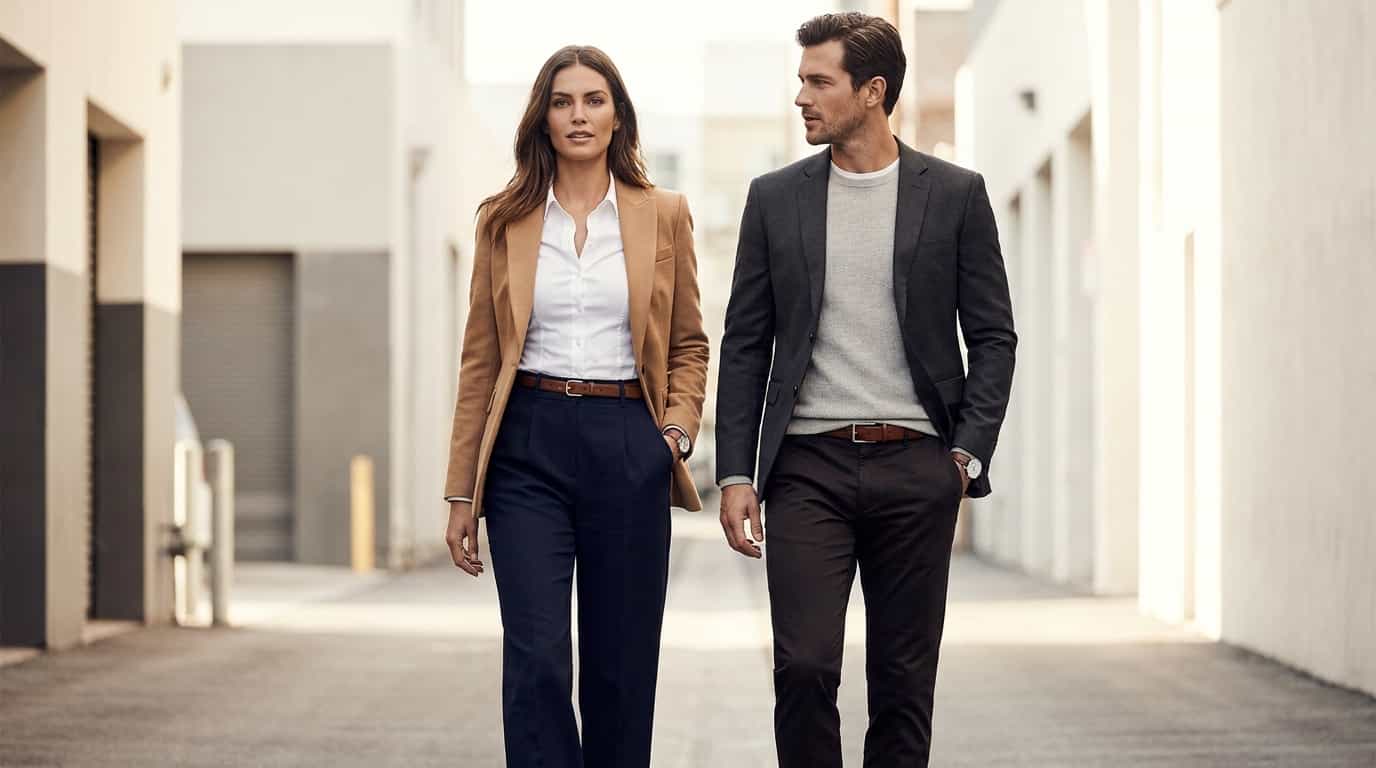
7. Blazers
Blazers create instant assumptions about ambition.
Men see one tailored jacket and immediately imagine corporate dominance, emotional unavailability, calendar management skills, and the ability to destroy someone politely in a meeting.
Sometimes accurate.
Other times, the blazer exists because the shirt underneath has completely given up.
Blazers are one of fashion’s greatest optical illusions. They make chaos appear organized. You can feel exhausted, underprepared, and emotionally fragile while visually resembling someone who owns three businesses.
Men often confuse aesthetic structure with personal structure.
Fashion is frequently just architecture for panic.
8. Perfume
Perfume may be the most misunderstood item on this list because men often assume fragrance exists for them specifically.
Someone catches a pleasant scent and instantly imagines intentional seduction.
But perfume is frequently personal before it is social.
Many women wear fragrance the same way people light candles in empty rooms: because atmosphere affects mood.
A good perfume creates a tiny private experience you carry throughout the day. It can feel grounding, calming, luxurious, nostalgic, or energizing.
Yes, sometimes perfume is meant to be noticed.
But often it is simply emotional interior design.
9. Cowboy Boots
Cowboy boots trigger immediate fictional storytelling.
Men see them and suddenly invent entire backstories involving ranches, whiskey, road trips, country playlists, emotional unpredictability, and at least one horse.
Meanwhile, boots are often chosen for simpler reasons:
They work with the outfit
They are comfortable
They survive weather
They look cooler than standard shoes
Humans love attaching narratives to aesthetic symbols. Cowboy boots happen to arrive preloaded with cinematic associations.
The person wearing them may simply enjoy footwear that survives puddles.
10. Band T-Shirts
Band T-shirts somehow transform regular men into unpaid music examiners.
The interrogation begins immediately:
“Oh, you like them?”
“Name three songs.”
Relax.
Sometimes women genuinely love the band. Sometimes the shirt is vintage. Sometimes it belonged to a sibling. Sometimes the design looked cool.
Men occasionally treat cultural references as territory to defend rather than things people casually enjoy.
Not every T-shirt is a declaration of identity. Sometimes it is literally just cotton with graphics.
11. Sundresses
The sundress has achieved mythical status in male culture.
Every summer, men collectively behave as though women invented lightweight dresses specifically to emotionally destabilize them.
In reality, sundresses are popular because they are practical in hot weather.
One item. Minimal effort. Maximum airflow.
Women wear sundresses because July feels like surviving inside a microwave. Men interpret them as symbols of romance because flowing fabric plus sunlight triggers cinematic associations.
The dress is breathable. The reaction is psychological.
12. Dark Nail Polish
Dark nail polish causes instant personality profiling.
Men see black, burgundy, navy, or deep plum nails and immediately assume mystery, emotional complexity, rebellion, or an ongoing transformation arc.
Sometimes nail polish is expressive.
But often it is seasonal. Or trendy. Or simply prettier than pale pink that week.
People underestimate how often fashion choices are aesthetic rather than symbolic.
Not every dark manicure represents hidden pain. Sometimes someone just wanted tiny dramatic accessories attached to their hands.
13. Matching Lingerie
Matching lingerie receives perhaps the most exaggerated interpretation imaginable.
Men often imagine it as evidence of meticulous romantic planning. Candlelight. Intention. Seduction. Orchestral music.
Meanwhile, many women simply enjoy feeling coordinated.
Matching undergarments can create a sense of organization even if nobody else sees them. It feels polished in the same way making your bed feels productive even when guests are not coming over.
Sometimes it is romantic.
Sometimes it is laundry synchronization.
Human existence contains layers.
14. Big Sunglasses
Large sunglasses instantly create assumptions of secrecy.
Men see oversized shades and imagine celebrity behavior, emotional distance, judgment, mystery, or someone hiding from paparazzi that do not exist.
But giant sunglasses are multifunctional miracles.
They block sunlight. Hide exhaustion. Reduce social interaction. Eliminate accidental eye contact. Provide emotional privacy during errands.
They are less “mysterious woman” and more “portable personal boundary.”
Which, to be fair, may accidentally appear mysterious.
15. Leather Jackets
Leather jackets make men assign rebellion immediately.
Suddenly there is imagined motorcycle energy, emotional danger, commitment issues, or a playlist containing at least one dramatic rock song.
In practice, leather jackets are just structurally flattering.
They improve basic outfits instantly. They survive weather. They add shape. They make ordinary jeans look deliberate.
Fashion often works because certain materials carry inherited cultural symbolism. Leather jackets absorbed decades of movie mythology.
Most people wearing them are simply cold.
16. Ballet Flats
Ballet flats frequently create assumptions of softness or innocence.
Men sometimes associate them with gentleness, politeness, sweetness, or traditional femininity.
Then they become deeply confused when the woman wearing them demonstrates sarcasm, ambition, strong boundaries, or the ability to verbally dismantle nonsense in under twelve seconds.
Shoes are not personality tests.
Ballet flats are often chosen because they are easier to walk in than heels while still looking somewhat polished.
Comfort continues defeating symbolism.
17. Statement Necklaces
Statement jewelry creates uncertainty in men because they do not know how to interpret it.
Is it artistic? Expensive? Fashion-forward? Intimidating?
Usually it means the outfit needed visual balance.
Fashion styling is frequently less emotional than structural. A necklace fills empty space visually. It draws attention upward. It completes proportions.
But because men often engage less deeply with accessories, statement pieces can appear more psychologically meaningful than they actually are.
Sometimes the necklace is just doing graphic design for the neckline.
18. Ripped Jeans
Ripped jeans continue upsetting people in ways that feel disproportionate to the amount of fabric involved.
Men may interpret them as rebellion, carelessness, trend obsession, or deliberate provocation.
But fashion has always included controlled imperfection. Distressed clothing signals casualness, ease, and personality.
Also: ventilation.
Humans assign moral meaning to clothing far more often than logic requires.
At the end of the day, ripped jeans are still just denim with enthusiasm.
19. An Ex’s Shirt
Nothing activates emotional overanalysis faster than discovering a woman still owns an ex’s shirt.
Men instantly imagine unresolved feelings, hidden longing, emotional complications, or passive-aggressive messaging.
Sometimes those things exist.
But sometimes the shirt is simply excellent.
Old shirts become soft in ways newer clothes cannot replicate. They lose stiffness. They become emotionally neutral objects through repetition.
Not every retained object represents emotional attachment. Sometimes it represents fabric quality.
Which may actually be the funniest truth in this entire article.
20. Heels
Heels are probably the most overinterpreted item in fashion history.
Men often see them as universal evidence of effort, seduction, confidence, romance, or strategic attractiveness.
Sometimes heels genuinely do change mood and posture. Fashion affects psychology. People often feel different in different clothing.
But heels are also practical for proportions. They change how pants fit. They alter posture. They work better with certain outfits.
And occasionally, they are simply required by dress codes humanity should probably reconsider.
Not every heel carries hidden meaning. Sometimes the shoes just made the outfit work.
Why Men Overanalyze Women’s Fashion
At the center of all this is a very human tendency: people want visual certainty.
Clothing feels easier to interpret than personality because it is visible. Humans naturally search for patterns, symbols, and social cues. Fashion becomes shorthand.
The problem is that shorthand is unreliable.
A leather jacket cannot tell you someone’s emotional availability. Red lipstick cannot confirm flirtation. Glasses are not proof of intelligence. Cowboy boots do not guarantee a horse.
People contain contradictions. Fashion contains convenience. And most daily clothing choices happen faster and with less psychological depth than outsiders imagine.
What men often interpret as signaling is frequently just routine decision-making filtered through comfort, weather, practicality, confidence, exhaustion, laundry access, or aesthetics.
The misunderstanding becomes funny because the interpretations are usually so elaborate compared to reality.
The Real Secret Behind Most Fashion Choices
The truth is less dramatic but more interesting:
Most women are not dressing to create a coded message for strangers.
They are dressing to move through the day feeling comfortable, functional, attractive to themselves, socially appropriate, emotionally aligned, weather-prepared, or slightly less tired than they actually are.
Sometimes fashion is expressive. Sometimes it absolutely communicates confidence, creativity, rebellion, professionalism, flirtation, or mood.
But the assumption that every visual choice exists specifically for male interpretation says more about ego than fashion.
The real secret behind most outfits is surprisingly ordinary:
People wear things because they like them.
And honestly, that explanation is probably healthier than all the detective work anyway.
women fashion psychology, things women wear men overanalyze, fashion misconceptions, what men think women wear means, women clothing stereotypes
red lipstick meaning, oversized hoodie psychology, why men love sundresses, fashion and attraction, women style misconceptions, outfit psychology, female fashion trends, men interpreting women clothes, relationship humor, modern dating culture
things women wear that men misunderstand, why men overanalyze women’s outfits, funny fashion misconceptions between men and women, what women’s clothes actually mean, everyday outfits men read too deeply into



Discussion
Comments
Approved comments are published after moderation to keep discussion useful and spam-free.
No comments yet. Start the discussion below.