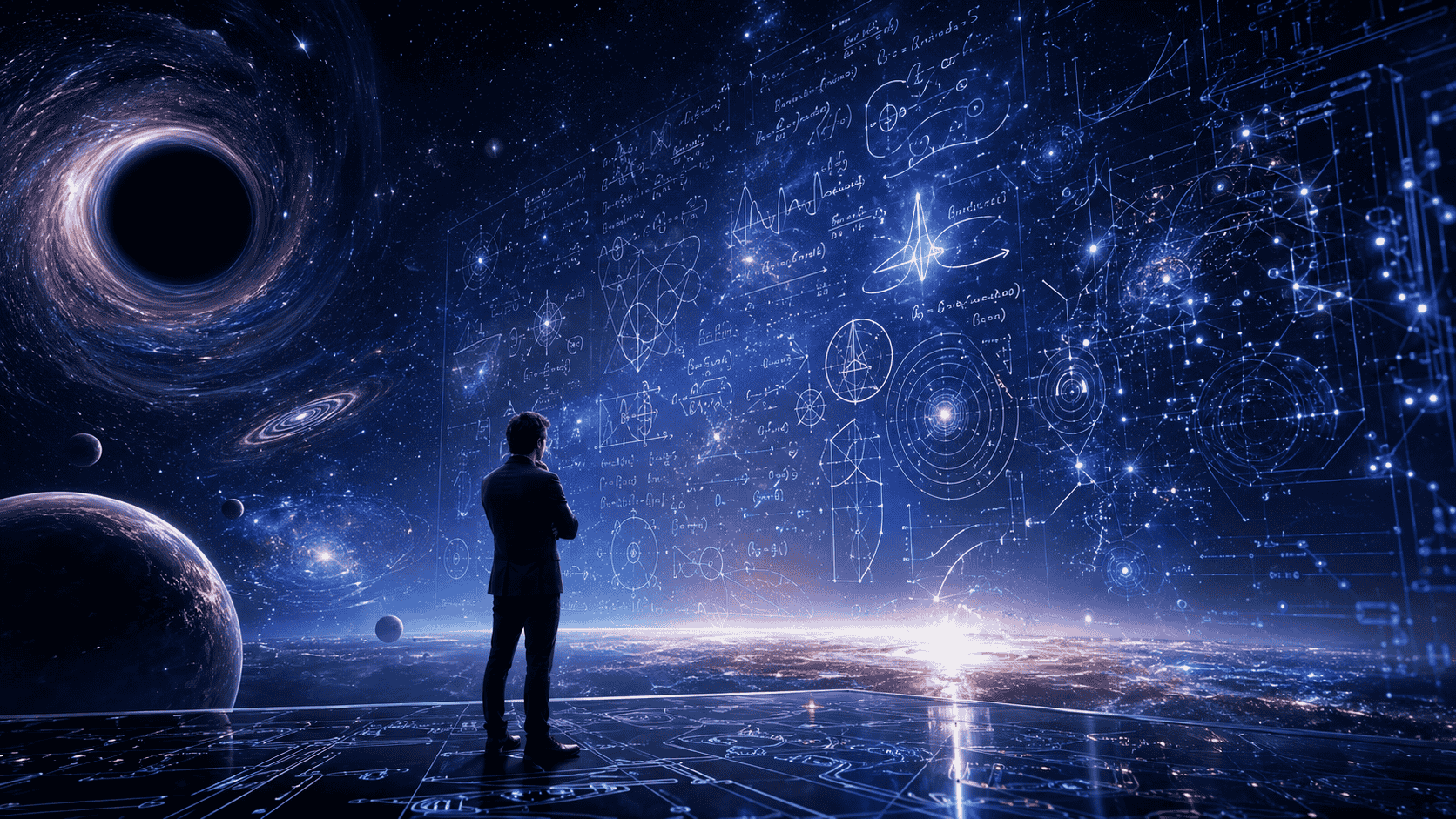
Dr. Michio Kaku on aliens, black holes, the Big Bang and the future we still do not understand
Dr. Michio Kaku has built much of his public career around questions that sound simple until you try to answer them.
Are we alone? What existed before the Big Bang? What happens inside a black hole? Could artificial intelligence or quantum computers help scientists solve problems that ordinary physics still cannot settle?
Those questions attract attention because they sit between science and human instinct. People want facts, but they also want scale. They want to know where they fit inside a universe that is older, stranger and larger than everyday life allows them to imagine.
Kaku is a theoretical physicist, bestselling author and professor at the City College of New York. His CCNY profile describes him as a co-founder of string field theory and says his work continues Einstein's effort to unite the four fundamental forces of nature into one theory. (The City College of New York)
That ambition is often described as the search for a "Theory of Everything." The phrase can sound grand, but the basic problem is practical: physics still has two extremely successful frameworks that do not fully fit together.
The problem Einstein left behind
General relativity explains gravity, space, time, planets, galaxies and black holes. Quantum mechanics explains atoms, particles, electronics, lasers, chemistry and the behavior of matter at tiny scales.
Both theories work. The trouble begins where they overlap.
A black hole is a good example. Relativity can describe the gravitational field around it. Quantum physics is needed to understand matter and energy at the smallest scales. Put those two requirements together and the mathematics becomes hard to reconcile.
String theory is one attempt to bridge that gap. Instead of treating particles as point-like objects, it imagines the basic units of reality as tiny vibrating strings. Different vibrations could produce different particles, similar to how a violin string produces different notes.
Kaku often uses that musical analogy, and it is easy to see why. It makes an abstract theory feel intuitive.
The important caveat is that string theory has not been experimentally proven. CERN describes ideas such as extra dimensions and tiny black holes as part of ongoing attempts to probe physics beyond current models, but these remain difficult to test directly. (CERN)
That is where Kaku's work can be both useful and risky for a general audience. He makes speculative physics exciting, but the reader has to remember where the evidence ends.
Alien life is plausible. Alien visitors are another matter.
Kaku's position on alien life begins with probability. The universe contains too many planets for Earth to feel like an obvious exception.
NASA says more than 6,000 exoplanets have been confirmed. It also notes that Proxima Centauri b, the closest known exoplanet to Earth, is about four light-years away. (NASA Science)
That is enough to make alien life seem plausible. It is not enough to prove it.
Scientists have not confirmed life beyond Earth. They have not received a verified message from another civilization. They have not found a spacecraft from another world.
The distinction matters because public conversation often jumps from "life may exist somewhere" to "aliens may already be here." Those are very different claims.
UAP sightings belong in that second, more difficult category. A Pentagon report covered by Reuters said U.S. government investigations found no evidence that historical UAP sightings represented extraterrestrial technology, and that most sightings were ordinary objects or phenomena. (Reuters)
That does not mean every case has been fully explained. It means "unidentified" should not be treated as "alien."
A strange radar reading, a blurry video or a witness report can deserve investigation. It still does not become evidence of extraterrestrial life unless the data supports that conclusion.
Distance may be the real reason we never meet
The strongest argument against alien contact may not be that life is rare. It may be that space is too large.
Four light-years sounds close until you convert it into distance. One light-year is about 9.46 trillion kilometers. Current spacecraft are nowhere near fast enough to cross that distance within a normal human lifetime.
NASA's Voyager mission helps put this in perspective. The twin Voyager spacecraft launched in 1977, explored the outer planets and are now traveling through interstellar space. They are extraordinary machines, but even they show how slowly humans move on a galactic scale. (NASA Science)
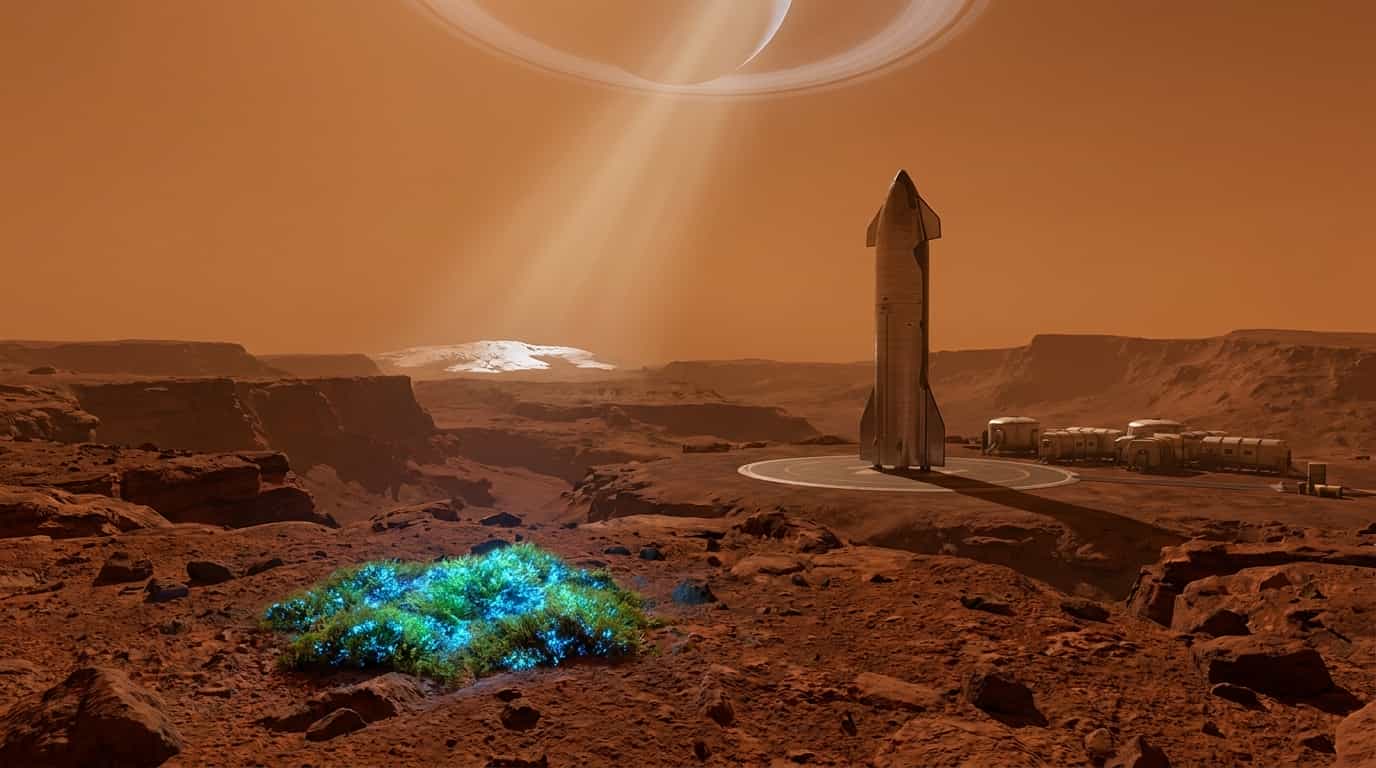
This is the point behind Kaku's "70,000-year" idea. A civilization might know another planet exists and still be unable to reach it in any useful timeframe.
The usual escape routes are familiar from science fiction: fusion propulsion, laser sails, antimatter engines, generation ships, suspended animation, wormholes and warp drives. Some are discussed seriously in physics or engineering circles. Others remain speculation with no practical route today.
So the alien question may have an awkward answer. Life could be widespread, and civilizations could still remain separated by distance.
The Big Bang is not the beginning of every answer
The term "Big Bang" is often misunderstood. It was not an explosion into empty space. It was the expansion of space itself from an early hot, dense state.
Cosmology has a strong account of what happened after the earliest moments. Particles formed, then atoms, stars, galaxies and eventually planets. The deeper question is what caused the Big Bang, or whether "cause" is even the right word at that scale.
Kaku often discusses ideas such as quantum events, bubble universes and multiverse scenarios. These are interesting, but they are not settled facts.
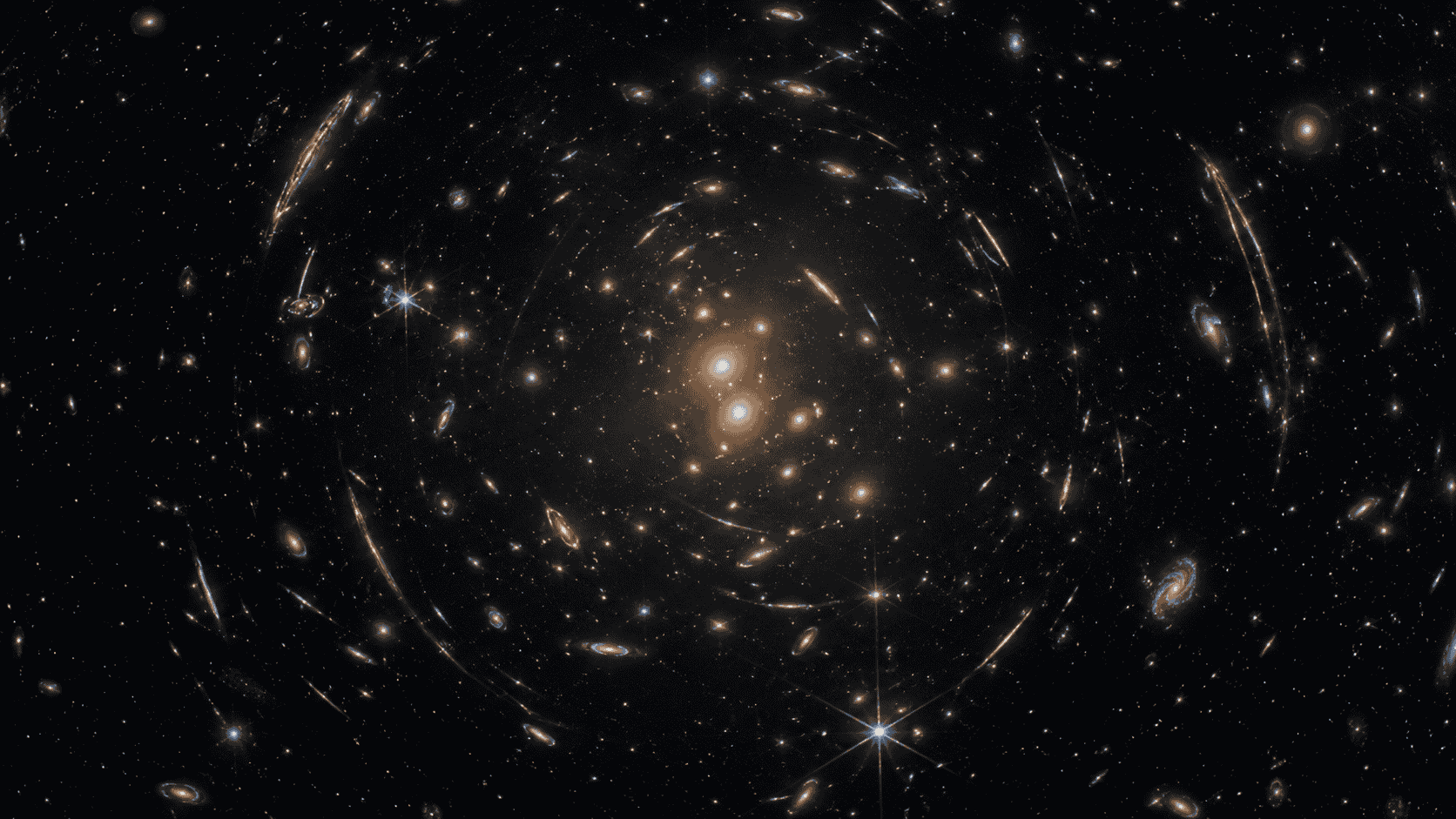
NASA's WMAP mission studied the cosmic microwave background, the afterglow of the early universe. NASA describes this radiation as a key source of information about the age, composition, geometry and development of the universe. (NASA Science)
NASA's SPHEREx mission is another attempt to turn early-universe questions into measurable data. The mission is designed to survey hundreds of millions of galaxies and more than 100 million stars in the Milky Way to help study cosmic origins. (NASA Science)
That is the more grounded version of the mystery. The origin of the universe is not only a philosophical question. It is also a data problem.
Still, the final cause remains unresolved. The honest answer is not dramatic: scientists do not yet know.
The multiverse is a serious idea, but not a proven one
The multiverse is one of the easiest ideas to oversell.
Some theories suggest that our universe could be one of many, with other universes having different physical laws or histories. Kaku often explains this with the image of a bubble bath, where each bubble is a universe.
It is a useful metaphor. It is also just a metaphor.
The multiverse has not been confirmed by direct observation. The central problem is testability. If another universe cannot be observed, measured or made to leave a detectable trace, scientists have to ask whether the idea belongs to physics, philosophy or a borderland between the two.
That does not make the idea worthless. It does mean readers should treat it as a possibility within certain theories, not as established science.
Black holes are where certainty breaks down
Black holes are real astronomical objects, but they are also places where our theories start to strain.
NASA describes a black hole as a concentration of matter so dense that near the event horizon, gravity is strong enough that nothing, not even light, can escape. NASA also notes that the event horizon is not a physical surface like Earth's surface, but a boundary around the black hole. (NASA Science)
That detail matters because black holes are often described too casually. They are not vacuum cleaners pulling everything in from across space. From far enough away, a black hole's gravity behaves like the gravity of any other object with the same mass.
The trouble comes at the center. Classical physics predicts a singularity, a point where density becomes infinite and current equations stop being useful. Many physicists suspect that this is not a real physical object but a sign that the theory is incomplete.
To go further, scientists likely need a quantum theory of gravity. That is why black holes remain so important. They are not just exotic objects. They expose the limits of what current physics can explain.
Black holes are not proven portals
Science fiction has trained people to think of black holes as tunnels to other worlds. Kaku often discusses this kind of possibility because some mathematical solutions in general relativity allow wormhole-like structures.
That is not the same as evidence.
NASA is clear on this point: black holes are not wormholes, do not provide shortcuts between distant points in space and are not portals to other dimensions or universes. (NASA Science)
The gap between mathematics and reality is large. A traversable wormhole would require conditions or exotic forms of matter that have not been shown to exist in a usable way.
So the careful position is simple. Black holes may teach physicists something profound about gravity and quantum mechanics. They are not known doorways.
The simulation question is more philosophy than physics
The simulation hypothesis asks whether our universe could be generated by a more advanced intelligence, like a cosmic computer program.
It is a modern version of an old question: how do we know reality is what it appears to be?
Kaku treats the idea as interesting but unproven. That is the right level of caution. A scientific theory needs a way to be tested. If a simulation perfectly reproduces every physical law we observe, it may be impossible to distinguish from reality itself.
The more useful point is less dramatic. Human perception is limited. We see only a narrow part of the electromagnetic spectrum. We do not naturally see radio waves, infrared light, ultraviolet light, X-rays or gamma rays.
Science extends perception. Telescopes, microscopes, particle detectors and quantum experiments show that ordinary experience is only a small part of what exists.
That does not prove we live in a simulation. It proves that reality is larger than our senses.
Kaku's warning about AI is mostly about overconfidence
Kaku is interested in artificial intelligence, but he is not quick to confuse today's systems with full human intelligence.
AI can write, classify, generate images, search datasets and assist research. It can also produce confident mistakes. It lacks lived experience, moral responsibility, common sense in the human sense and any verified consciousness.
That does not make AI useless. It makes it a tool with limits.
The risk is not simply that AI becomes too advanced. The nearer risk is that people trust it too quickly in fields where accuracy and accountability matter.
In science, AI could still be useful. It can scan huge datasets, look for patterns, support molecular design, analyze telescope data and speed up simulations. NASA's exoplanet work already depends on large datasets, and confirmed planet discoveries keep expanding the search space for researchers. (NASA Science)
But scientific discovery still has to pass through evidence, peer review, reproducibility and human judgment. AI may help generate leads. It does not decide what is true.
Quantum computing has promise, but the timeline is still uncertain
Kaku's book "Quantum Supremacy" argues that quantum computing could eventually change fields such as chemistry, materials science, cryptography, optimization, climate modeling and artificial intelligence.
The reason is that quantum computers do not work like ordinary computers. They use quantum effects such as superposition and entanglement to approach certain problems in a different way.
Google's Willow quantum chip announcement claimed two major achievements: improved quantum error correction as more qubits are added, and a benchmark computation completed in under five minutes that Google said would take one of today's fastest supercomputers 10 septillion years. Google also said the next challenge is demonstrating useful, beyond-classical computation with real-world applications. (blog.google)
That last sentence is the one to remember. The science is real, but practical large-scale quantum computing is not fully here.
The security implications are serious enough that governments are preparing early. In 2024, NIST released the first three finalized post-quantum encryption standards, designed to help protect digital systems from future quantum attacks. (NIST)
This does not mean a quantum computer will break ordinary bank security tomorrow. It means encryption systems take years to replace, so institutions are preparing before the threat becomes practical.
The future depends on wisdom, not prediction
Kaku's larger concern is not only physics. It is whether humanity can become wise enough to manage the tools it creates.
That is not an abstract worry. Nuclear weapons, artificial intelligence, biotechnology, cyberwarfare and climate-changing industries all show the same pattern: human intelligence creates power faster than societies always learn to govern it.
Kaku often speaks about the possibility of humans reaching other planets, using AI to accelerate science, designing new materials with quantum tools and finding signs of life beyond Earth. Those futures are possible in broad outline. None is guaranteed.
This is where the article has to resist the usual uplifting ending. The future will not arrive safely because technology improves. It will depend on policy, culture, incentives, education and whether people can manage risk before risk manages them.
What AI may do to work
Kaku's view of AI and employment is practical. The first pressure will fall on tasks that are repetitive, pattern-based, data-heavy or rule-driven.
That could include basic customer support, routine writing, simple coding, translation, data entry, document review, marketing drafts, scheduling and research summaries.
But jobs are not just task lists. Many roles require trust, judgment, leadership, taste, physical presence, emotional intelligence and responsibility.
The better career lesson is not to memorize more facts. It is to learn faster, adapt faster and understand how to use tools without surrendering judgment to them.
That applies beyond AI. It is also the lesson of Kaku's own career: curiosity is not a decoration. It is a survival skill.
Kaku's best public work does not make the universe feel simple. It makes complexity feel approachable.
Aliens may exist, but distance may keep civilizations apart. Black holes may expose the limits of current physics, but they are not proven portals. The Big Bang has a strong scientific model after its earliest moments, but its ultimate cause remains unknown. The multiverse is a serious possibility in some theories, but not a confirmed fact. AI can help researchers, but it does not replace scientific judgment. Quantum computers may matter enormously, but their practical future is still being built.
The useful lesson is modest: science gives humans a way to ask better questions without pretending that every mystery has already been solved.
That is enough.
Frequently asked questions
Who is Dr. Michio Kaku?
Dr. Michio Kaku is a theoretical physicist, professor at the City College of New York, bestselling author and public science communicator. CCNY describes him as a co-founder of string field theory and a scientist working on Einstein's dream of unifying the four fundamental forces. (The City College of New York)
What is the Theory of Everything?
The Theory of Everything is the idea of one deeper framework that could unite gravity, quantum mechanics and the fundamental forces of nature. String theory is one candidate, but it has not been experimentally proven.
Does Michio Kaku believe aliens exist?
Kaku argues that alien life is highly likely because the universe contains enormous numbers of planets. NASA says more than 6,000 exoplanets have been confirmed, but scientists have not yet confirmed life beyond Earth. (NASA Science)
Are UAP sightings proof of aliens?
No. UAP means unidentified, not extraterrestrial. Reuters reported that a Pentagon review found no evidence that historical UAP sightings represented alien technology. (Reuters)
Why would travel to the nearest star take so long?
The nearest known exoplanet is about four light-years away, and current spacecraft are far too slow to reach another star within a human lifetime. NASA's Voyager mission shows how difficult interstellar distance remains even for humanity's farthest spacecraft. (NASA Science)
What caused the Big Bang?
Scientists do not yet know the ultimate cause of the Big Bang. Current cosmology explains much of what happened after the early universe began expanding, and missions such as WMAP and SPHEREx help study that early history, but the deepest origin remains unresolved. (NASA Science)
Are black holes portals to another universe?
There is no evidence that black holes are portals. NASA says black holes are not wormholes and do not provide shortcuts to other places or universes. (NASA Science)
Could we be living in a simulation?
The simulation idea can be discussed philosophically, but there is no confirmed evidence that our universe is a simulation.
Why are quantum computers important?
Quantum computers could eventually help solve certain problems in chemistry, materials science, cryptography, optimization and physics that are difficult for classical computers. Google says its Willow chip showed progress in quantum error correction and benchmark performance, but useful large-scale quantum computing remains a longer goal. (blog.google)
Will AI replace scientists?
AI may help scientists analyze data and generate hypotheses, but scientific discovery still depends on evidence, testing, creativity, interpretation and human judgment.
External Sources
The City College of New York
CERN
NASA Science: Exoplanets
Reuters: UAP/Pentagon report
NASA Science: Voyager mission
NASA WMAP
NASA SPHEREx
NASA Science: Black holes
Google Research / Google Blog: Willow quantum chip
NIST: Post-quantum encryption standards



Discussion
Comments
Approved comments are published after moderation to keep discussion useful and spam-free.
No comments yet. Start the discussion below.