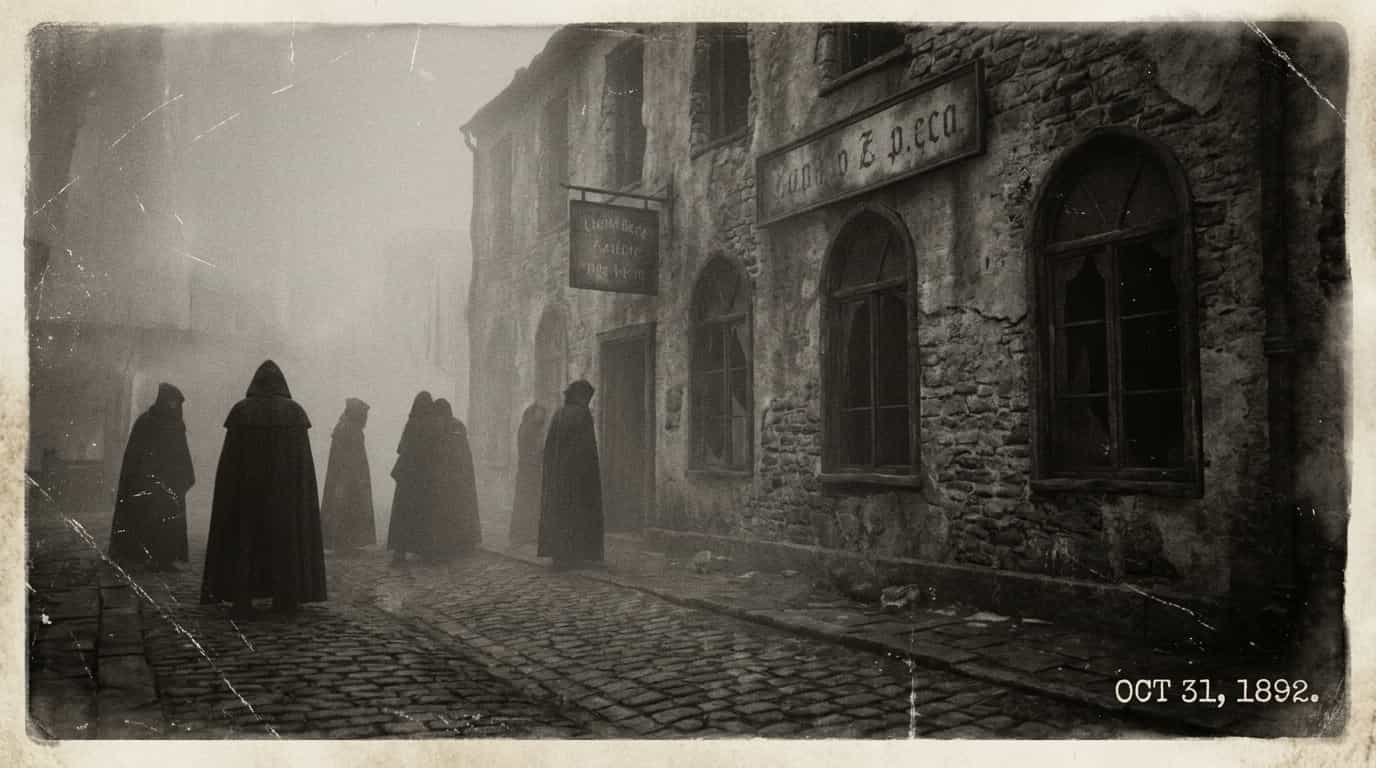
8 Strange Coincidences in History That Still Send Chills Down Scientists' Spines
Historians are generally a rational, evidence-driven bunch. They don't spook easily.
So when professional historians — people who spend their careers explaining why things happened — describe certain events as genuinely inexplicable, it's worth paying attention.
These aren't urban legends. They aren't things that happened to a friend of a friend. They're documented, cross-referenced, extensively studied historical coincidences that remain, after everything, deeply strange.
Some of them will make you feel a little funny inside. That's normal.
1. The Eerily Accurate Novel Written 14 Years Before the Titanic Sank
In 1898, a struggling American author named Morgan Robertson wrote a novella called Futility. In it, a massive ocean liner — the largest ever built — strikes an iceberg on its maiden voyage in the North Atlantic in April and sinks. Most passengers die because there aren't enough lifeboats.
The ship in Robertson's story was called the Titan.
Fourteen years later, the RMS Titanic — the largest ship ever built — struck an iceberg on its maiden voyage in the North Atlantic in April. Most passengers died because there weren't enough lifeboats.
Robertson's Titan was described as 800 feet long and carrying 3,000 passengers. The real Titanic was 882 feet long and carried 2,200 passengers. Both were described as "unsinkable."
Robertson died in 1915 and never gave a satisfying explanation. He said he based the story on his knowledge of ship engineering and what he thought was inevitable. Whether that's a sufficient explanation is something you'll have to decide for yourself.
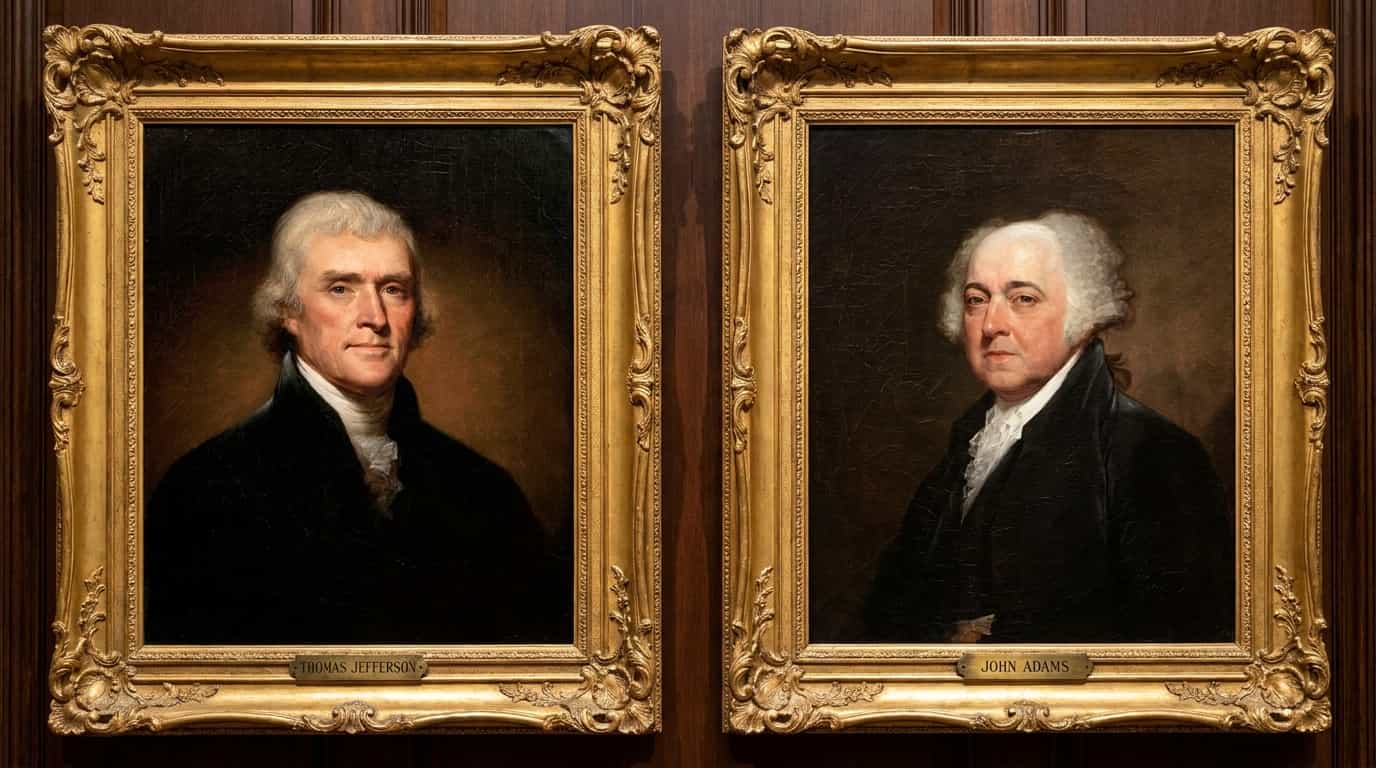
2. Thomas Jefferson and John Adams Died on the Exact Same Day
Two of America's founding fathers, former presidents, and at one point bitter political rivals — Thomas Jefferson and John Adams — both died on July 4, 1826.
Not just the same year. The same day. The 50th anniversary of the signing of the Declaration of Independence, a document they both helped write.
Adams's reported last words were "Thomas Jefferson survives." Jefferson had, in fact, died a few hours earlier.
The probability of this happening by random chance is extraordinarily small. Historians have written entire papers attempting to explain it. The most grounded theory is that both men were clinging to life specifically to reach that symbolic date. Jefferson had been unconscious and near death for days. Adams had been failing for weeks.
The idea that willpower and symbolic significance might genuinely influence the timing of death is uncomfortable in a very specific way. Because it suggests the mind is doing something that shouldn't be possible.
3. The Man Who Survived Both Atomic Bombs
On August 6, 1945, a Japanese naval engineer named Tsutomu Yamaguchi was in Hiroshima on a business trip when the first atomic bomb was dropped. He was badly burned, spent the night in the city, then — in what he later described simply as needing to get back to work — traveled home to Nagasaki.
He arrived on August 8. The second bomb was dropped on August 9.
Yamaguchi survived both. He lived to the age of 93 and spent much of his later life as an anti-nuclear activist. He is the only person officially recognized by the Japanese government as a survivor of both bombings.
He was asked many times how he understood what had happened to him. He said he didn't. He just kept being alive.
4. Lincoln and Kennedy — The Coincidences That Won't Stop
You've probably heard some version of this list before. But the full thing is stranger than the abbreviated version usually shared.
Abraham Lincoln was elected to Congress in 1846. John F. Kennedy was elected to Congress in 1946. Lincoln was elected president in 1860. Kennedy in 1960. Both were succeeded by men named Johnson. Andrew Johnson was born in 1808. Lyndon Johnson was born in 1908.
Lincoln was shot in Ford's Theatre. Kennedy was shot in a Ford Lincoln (a Lincoln Continental made by Ford). Lincoln's secretary was named Kennedy and reportedly warned him not to go to the theatre. Kennedy's secretary was named Lincoln.
Both were shot in the head on a Friday, in the presence of their wives. Both wives were unhurt.
Statisticians will tell you that if you look hard enough at any two events, you can find coincidental connections. They're probably right. But the density of connections here is what makes people uncomfortable. At some point "coincidence" starts to feel like a thin word for something stranger.
5. The Poet Who Predicted His Own Death — In a Poem
Edgar Allan Poe published a poem in 1849. In it, he described a man trapped in a small room, unable to escape, whose life slowly slipped away.
Poe died later that same year — in circumstances so strange that they've never been fully explained. He was found delirious on a street in Baltimore, wearing clothes that weren't his, unable to explain where he'd been for five days. He died shortly after, still incoherent. The cause of death was never established.
Poe had a documented obsession with death, particularly his own. Whether he was predicting, projecting, or simply a very troubled man with a morbid imagination is the question nobody has answered cleanly.
6. The Three Strangers Who Independently Invented the Same Things
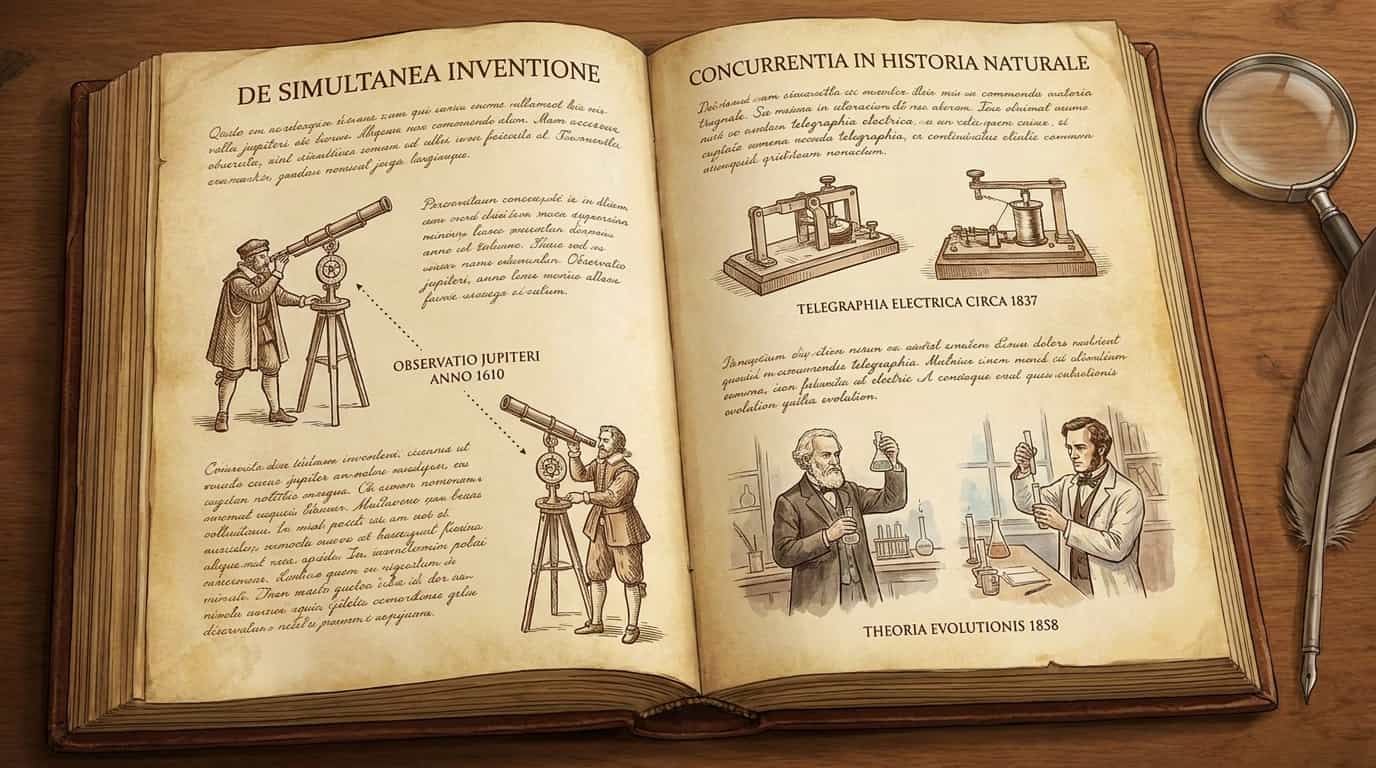
In 1858, Charles Darwin and Alfred Russel Wallace independently arrived at virtually identical theories of natural selection — simultaneously, without contact with each other.
The same thing happened with calculus. Isaac Newton and Gottfried Leibniz developed it independently at roughly the same time in the 17th century. It happened with the telephone: Alexander Graham Bell and Elisha Gray filed patents for a telephone design within hours of each other on the same day in 1876.
When the same discovery happens independently and simultaneously across different people, separated by geography, it raises a question that science doesn't have a clean answer to: are ideas somehow "in the air," ready to be found? Or is it simply that the same cultural and scientific conditions produce the same outputs at the same moment?
Maybe both. Maybe neither. Researchers argue about it still.
7. The Woman Who Won the Lottery Four Times
Evelyn Marie Adams won the New Jersey lottery in 1985. Then she won it again in 1986.
The odds of winning the lottery twice have been estimated at around 1 in 17 trillion. Adams beat those odds. Then she reportedly lost most of her winnings to gambling.
The statistician who calculated the probability of this happening noted afterward that while the odds for any specific person are astronomically small, across an entire population of lottery players over many years, the odds of it happening to someone are actually reasonable. You just happen to know the name of the person it happened to.
That reframe makes it feel less mysterious. Until you remember she did it twice in two years. Then it feels mysterious again.
8. The Succession of Popes and the Ancient Prophecy
In the 12th century, an Irish bishop named Saint Malachy reportedly experienced a vision in which he saw a succession of 112 popes — with a brief description of each one. He wrote them down.
The prophecy, which was either genuinely prophetic or an elaborate later forgery (historians are split), describes the second-to-last pope as "the glory of the olive." Pope Benedict XVI, who held that position, chose his papal name in honor of Saint Benedict — the founder of the Benedictine order, whose symbol is the olive branch.
The final pope in the prophecy is described as "Peter the Roman," during whose papacy Rome is said to face great tribulation.
Pope Francis, the current pope, is the last on the list. His birth name is Jorge Mario Bergoglio. He was not named Peter. Make of that what you will.
Why Do We Love These Stories?
Part of it is pattern recognition — the same cognitive feature that helped early humans survive by spotting predators in the grass. Our brains are extraordinarily good at finding connections. Sometimes too good.
But there's something else. These stories are popular because they make the world feel larger and stranger than it did before you read them. They press gently on the assumption that everything is random and explainable and ordinary.
Maybe it is. Probably it is.
But the pressing feels interesting. And these eight coincidences do it better than most.
👉 Also read: The Dark History of Sugar: How the Dominican Republic's Colonial Past Shaped the Modern World Economy



Discussion
Comments
Approved comments are published after moderation to keep discussion useful and spam-free.
No comments yet. Start the discussion below.