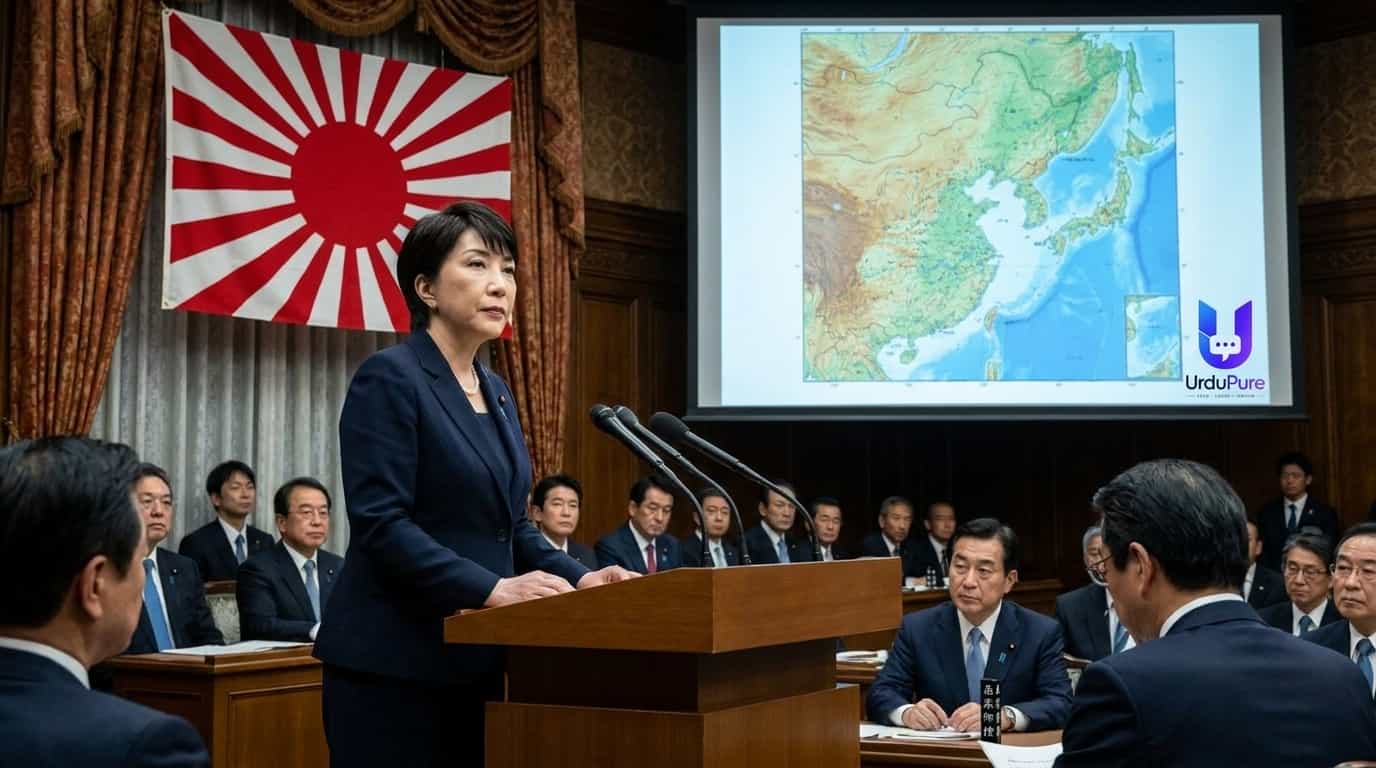
Japan's Iron Lady Is Building the Alliance America Abandoned — and Beijing Is Furious. Can Japan Stop China?
In May 2026, Harvard's Stephen Walt — the Robert and Renée Belfer Professor of International Relations and one of America's most clear-eyed realists — published a piece in Foreign Policy with a title that felt less like analysis and more like a verdict: "Thanks to Trump, Chinese Hegemony in Asia Might Be Happening."
His argument was surgical. Donald Trump had withdrawn from international organizations, imposed tariffs on nearly every country in the world, and launched the war in Iran — an operation that spiked global fuel prices, destabilized Gulf shipping lanes, and consumed America's strategic bandwidth entirely. In doing so, Walt wrote, Trump had "done just about everything someone would do if they consciously wanted China to supplant the United States and establish a dominant position in its immediate region."
Washington gifted Beijing a silver platter. But nobody consulted Tokyo about whether they were willing to be on the menu.
Japan's "Iron Lady" — Prime Minister Sanae Takaichi, Japan's first female head of government — has spent the eight months since taking office in October 2025 doing something no Japanese leader has done with such velocity since the end of World War II: systematically dismantling the constraints on Japanese military power while simultaneously assembling the most ambitious regional security coalition Asia has seen in decades. She is doing it faster than Beijing expected, further than Tokyo's pacifist tradition was supposed to allow, and with a coalition of partners that would have seemed politically impossible just five years ago.
And if Beijing's private reaction is any guide, it is working.
Part I — The Woman Who Changed Japan's Posture
The Inheritance
Before Takaichi, Japan's remilitarization was already underway. The credit for opening the door belongs to the late Shinzo Abe, whose government pushed through legislation in 2015 allowing Japan's Self-Defense Forces to engage in collective self-defense — the legal right to fight in limited cases where an attack on an allied nation threatens Japan's survival. Previously, the law was binary: Japan could only use force if Japan itself was attacked. Abe's 2015 legislation introduced a third category: Japan could act if an attack on an ally posed an existential threat to Japan itself.
At the time, the change was deeply controversial. Protesters surrounded the Diet. Opposition parties staged walkouts. Critics accused Abe of dragging a traumatized nation back toward the military adventurism of its Imperial past. But the law passed, and it opened the constitutional floodgates.
In 2017, Abe scrapped Japan's informal 1% GDP defense spending cap — a ceiling that had constrained Japanese defense budgets for decades. The following year, Tokyo created the Amphibious Rapid Deployment Brigade — designed to defend and retake remote islands, including the Senkakus in the East China Sea, which both Tokyo and Beijing claim. That same year, Japan announced plans to modify its Izumo-class destroyers to operate F-35B fighter jets, of which Japan planned to buy 147 units. Whether you stretch the definition or not, Japan had, for the first time since 1945, something that functioned like an aircraft carrier.
But as Professor Daisuke Kawai of the University of Tokyo has noted, it is Takaichi who looks set to finish the job Abe started.
The Taiwan Declaration That Enraged Beijing
In November 2025 — just weeks after taking office — Takaichi made a statement in the Japanese Parliament that landed like a stone in still water, and the ripples have not stopped since.
She declared that a Chinese military attack on Taiwan could constitute a "survival-threatening situation" for Japan — the precise legal threshold established by Abe's 2015 legislation for Japan to invoke collective self-defense. The implication was unmistakable: Japan might go to war to defend Taiwan.
China's response was immediate and military. In late December 2025, Beijing launched Justice Mission-2025 — a large-scale PLA exercise directly retaliating against Takaichi's Taiwan comments, testing capabilities across the Taiwan Strait, East China Sea, Philippine Sea, Luzon Strait, and South China Sea simultaneously. Its stated objective: "sea-air combat readiness patrol, joint seizure of comprehensive superiority, blockade on key ports and areas, as well as all-dimensional deterrence outside the island chain."
The diplomatic retaliation was equally pointed. Beijing accused Takaichi of attempting to revive Japan's colonial past — a highly charged claim given the war crimes Imperial Japan committed in China. It discouraged Chinese tourists from traveling to Japan, suspended seafood imports, and banned the export of dual-use items to 20 Japanese companies it claimed were supplying the Japanese military.
In December, Chinese fighter jets locked their radar onto Japanese aircraft, forcing Japan to scramble its own jets in response.
China's message was clear: back down or face economic and military pressure. Takaichi's response was to press forward.
Polling conducted in December showed 70% of Japanese backing her — a figure, as multiple analysts noted, that most Western leaders would consider a governing mandate in perpetuity.
The Historic Defense Export Overhaul: April 21, 2026
On April 21, 2026, Takaichi's government delivered the most consequential single act of Japanese defense policy since the postwar constitution was written.
Japan unveiled its biggest overhaul of defense export rules in decades, scrapping restrictions on overseas arms sales and opening the way for exports of warships, missiles, and other weapons. The revision, approved by Takaichi's Cabinet and the National Security Council, removed five previously restricted export categories that had limited Japanese defense sales primarily to non-combat equipment: rescue, transport, warning, surveillance, and minesweeping systems.
What replaced them? Judgment. Ministers and officials will instead assess the merits of each proposed sale. In practice, this means Japan can now export fighter jets, missiles, warships, combat drones, and virtually any weapons system it produces.
"No country today can defend peace and safety by itself and needs partners to support each other," Takaichi said on X. "There is no change to our 80-year history as a pacifist nation and its pledge."
Critics heard the second sentence as a rhetorical fig leaf over a fundamental transformation. They are not entirely wrong. Japan's postwar constitution had accounted for just 0.1 percent of global arms exports. Tokyo had historically maintained restrictive frameworks preventing weapons exports. What Takaichi did on April 21 ended that framework. Japan is now, for the first time in eight decades, a full participant in the global arms market.
The Heritage Foundation called it "a desperately needed injection of reinforcements" to a Western defense industrial base "faltering under tremendous strain" from the Ukraine and Iran wars. With Japanese firms expanding into new defense supply chains, Japan — and the United States — will be stronger because of it.
Meanwhile, Japan has steadily increased defence spending to 2% of GDP, and Takaichi's government is expected to announce further rises this year when it releases a new security strategy.
At 2% of GDP, Japanese defense spending is approximately $62 billion annually in raw numbers — a figure that sounds substantial until you place it next to China's disclosed total of $277–336 billion. But the trajectory matters as much as the current figure, and Japan's trajectory is unambiguously upward.
Part II — Building the Coalition
The Most Unlikely Alliance: Japan and South Korea
The most striking diplomatic achievement of Takaichi's eight months in office may have nothing to do with weapons at all. It is the transformation of the Japan-South Korea relationship — historically one of the most fraught bilateral relationships in Asia — into something that genuinely resembles a security partnership.
The historical weight is real and cannot be minimized. Japan colonized Korea from 1910 to 1945. The atrocities of that period left wounds that have never fully healed. In 2018, South Korea's Supreme Court ordered Japanese companies to compensate South Koreans for forced labor during World War II, triggering a trade and intelligence-sharing crisis that brought the two nations to the brink of formally severing security ties.
But since taking office, Takaichi and South Korean President Lee Jae-myung have met four times in roughly six months — a pace that would have been unthinkable just a few years ago.
Their January 13 summit in Nara — Takaichi's hometown, a deliberate gesture of intimacy and trust — was particularly telling. The two leaders confirmed the "strategic importance" of their countries' ties, agreeing to boost cooperation on economic security and reaching a deal on DNA testing for Korean wartime laborers who died in Japan. Bloomberg reported the summit also featured a surprise drum session together — an image that would have seemed surreal a decade ago.
"Behind closed doors, the leaders will certainly discuss the current Japan-China crisis, as Beijing's retaliatory measures, including export controls, will have an impact on Korea as well," said Benoit Hardy-Chartrand, an East Asian geopolitics expert at Temple University's Tokyo campus. The supply chains of Japan, South Korea, and China are deeply intertwined — making Beijing's pressure on Tokyo an indirect pressure on Seoul as well.
The most recent summit, held May 19–20 in Andong — Lee's hometown, reciprocating Takaichi's Nara choice — went further. On May 7, during the first vice ministerial-level "2+2" dialogue between the foreign and defense ministries of South Korea and Japan, the two sides discussed the possibility of establishing a mechanism for military logistics exchange and support. A bilateral Acquisition and Cross-Servicing Agreement — the precise instrument Japan signed with the Philippines in January — is now explicitly on the table.
There are limits. South Korea is not a Japanese ally. It is a complicated neighbor making a pragmatic calculation. Representatives from South Korea's Ministry of National Defense quickly stated during the talks that Seoul currently has no intention of signing such an agreement with Tokyo. But the fact that the conversation is happening at all — between the foreign and defense ministries of two countries that were functionally estranged five years ago — is itself historic.
The Philippines: The South China Sea Front
While Japan's rapprochement with South Korea addresses the Northeast Asian flank, its deepening partnership with the Philippines anchors a second front: the South China Sea.
On January 15, 2026, the Philippines and Japan signed three key security and development deals, including the Acquisition and Cross-Servicing Agreement (ACSA) — allowing mutual logistics support between their two forces. The deal enables Japan's Self-Defense Forces and the Armed Forces of the Philippines to exchange ammunition, fuel, food, and supplies tax-free during joint exercises, humanitarian operations, and contingencies.
On March 6, about 1,000 Japanese soldiers participated in Balikatan — the multinational military exercise hosted annually by the Philippines — which took place April through May 2026. One thousand Japanese soldiers, operating inside Philippine territory under a reciprocal access agreement, conducting joint exercises. A year ago this would have been a geopolitical headline. In 2026, it is policy.
Philippine Defense Secretary Gilberto Teodoro welcomed Japan's defense export rule change, saying it will give his country access to defense "articles of the highest quality" that would "strengthen domestic resilience" and "contribute to regional stability through deterrence." Analysts read Teodoro's statement as exactly what it sounded like: a barely veiled message to Beijing that Manila is now armed from a source Beijing cannot easily pressure.
Japanese officials and diplomats have told Reuters that countries ranging from Poland to the Philippines are exploring procurement opportunities as they modernize their forces. One of the first deals could be the export of used warships to Manila.
Retired Philippine Navy Rear Admiral Rommel Ong, speaking to Indo-Pacific Defense Forum, captured the operational stakes precisely: "Even small delays, like days instead of months, can completely throw off military drills, which are often time-sensitive." The logistics agreement eliminates those delays. In a conflict scenario, that elimination could be decisive.
Australia: The Southern Anchor
Further south, Japan has signed what is arguably its most commercially significant defense deal in modern history.
Australia signed an agreement with Japan for delivery of three of Mitsubishi Heavy Industries' upgraded Mogami-class frigates and to jointly produce eight others — a contract reported variously at $6.5 billion to $7 billion in value. The Mogami class is highly automated and cuts crew numbers in half — a significant advantage for Australia, which faces its own defense manpower constraints given an aging population.
The deal is significant on multiple levels. It is the first major Japanese warship export since the postwar period, representing the defense export rules change made concrete. It binds Australia into Japan's defense industrial ecosystem in a way that deepens the bilateral relationship well beyond diplomatic statements. And it creates interoperability between Australian and Japanese naval vessels that would have direct operational value in any Indo-Pacific contingency.
Takaichi also announced Power Asia — Partnership on Wide Energy and Resources Resilience Asia — a $10 billion financing program aimed at boosting energy security across the Asian continent. The name is clunky. The strategy is not. Tokyo is actively moving to counter Beijing's efforts to use economic leverage to drive a wedge between key U.S. allies. Power Asia is Japan's counter-BRI: an alternative infrastructure and energy investment platform that gives regional nations a choice between Japanese-backed development and Chinese-backed debt.
Part III — China Responds
Xi's Private Fury at Trump
The most revealing moment in the China-Japan story of 2026 did not happen in Tokyo or Beijing. It happened in Washington.
During President Trump's bilateral meeting with Xi Jinping in mid-May 2026, the Chinese President delivered what the Financial Times described as an "intense diatribe" against Japan's increased military spending. Trump administration officials were reportedly caught off guard by the intensity of Xi's reaction — Japan had not been a major topic in the lead-up to the meeting. Analysts say that Beijing's belligerence, including a massive military display in December and intensifying disputes with other countries including Vietnam and the Philippines, has pushed regional nations to remilitarize.
The irony embedded in that analysis is devastating for Beijing's strategic interests: China's aggression is producing exactly the response it was designed to deter. Every time Chinese jets lock radar onto Japanese aircraft over Okinawa, Tokyo's remilitarization gains public legitimacy. Every time Chinese maritime militia assemble in formation near Taiwan, Manila signs another logistics agreement with Japan. Every time Beijing bans seafood exports or blocks rare earth shipments, Seoul accelerates its security conversations with Tokyo.
Beijing is not containing Japan's resurgence. It is funding it.
2,000 Fishing Boats and What They Were Rehearsing
On Christmas Day 2025, roughly 2,000 Chinese fishing vessels abruptly stopped their normal activities and assembled into two long parallel formations in the East China Sea, each stretching more than 400 km. Then, between January 9-12, approximately 1,400 vessels mobilized again, holding position in a rectangular shape for hours.
These ships are China's maritime militia — nominally civilian fishing vessels whose crews have received military training and can be called up to fight alongside the Navy. Gregory Poling, director of the Asia Maritime Transparency Initiative, wrote in the New York Times that he believed the mobilizations were not consistent with normal fishing boat movements and were likely "state-directed" — testing how civilian vessels would respond if ordered to assemble in a future crisis, such as a blockade of Taiwan.
The formations were not secret. They were visible to satellite imagery, tracked by ship signals data, and analyzed in real-time by Jason Wang, chief operating officer of InenniSpace. China wanted the formations to be seen. The maritime militia drill is a message written in fishing boats: we have the numbers, we have the coordination, and we can deploy both without firing a single shot.
The fact that China could get thousands of vessels to coordinate in the seas — even if all were civilian — while Japan only has 154 vessels in its entire navy underscores just how massive the current gap is between the two nations. And this is before we consider China's 234 warships.
The Military Gap: The Numbers That Define the Stakes
The raw numbers of the China-Japan military balance are not ambiguous. They are stark.
Defense spending: China's disclosed budget for 2026 is approximately 1.91 trillion yuan ($277 billion). The actual figure, per SIPRI and other analysts who note that China does not fully disclose military expenditure, may be significantly higher — with some estimates approaching $336 billion. Japan's 2026 defense budget, at 2% of GDP, is approximately $62 billion. China spends at least four to five times more.
China will increase its defence spending by 7% in 2026, continuing a steady military buildup aimed at modernising the armed forces by 2035 even as economic growth slows. Premier Li Qiang outlined that the new budget would help improve combat readiness and accelerate the development of "advanced combat capabilities."
Naval power: China has 234 warships. Japan has approximately 154 vessels. China's four largest shipyards produced 39 warships between 2019 and 2023, per the Center for Strategic and International Studies. Japan is investing in its navy, but does not have the industrial capacity to match that production rate.
Cyber: China launched an estimated 2.8 million cyber attacks per day in 2025, up from 2.4 million in 2024, per Reuters. These attacks target military networks, critical infrastructure, and intelligence systems across the entire region simultaneously.
Air: In 2025, China violated Taiwanese airspace more than 3,700 times. The East Asia Forum documented that the Chinese Coast Guard spent 335 consecutive days in the waters around Japanese-administered Senkaku Islands in 2025, up from 215 days in 2024.
These are not the metrics of a nation that is uncertain about its objectives. They are the metrics of a nation that has decided what it wants and is building the capability to take it.
Part IV — The Real Question
Is Japan Trying to Match China — Or Offer an Alternative?
The debate over whether Japan "can counter China" may be framed around the wrong question. As the video's source analysis correctly observes, Japan cannot match China in raw military terms within any realistic timeline. China's head start is too massive, its production capacity too deep, and its population base too large for Japan — facing a demographic crisis that by its own government's admission threatens to be existential — to close the gap through rearmament alone.
But matching China may not be what Takaichi is actually building toward. What Japan can offer — uniquely, among all the nations of the Indo-Pacific — is a credible alternative. A choice.
For years, smaller Asian nations have been trapped in a binary: accept Chinese infrastructure investment and its attached influence, or have rotting roads. Manage Chinese fishing fleets in your sovereign waters, or lose the trade. For many of these governments — including the Philippines, despite or perhaps because of the South China Sea disputes — China is simultaneously the threat and the biggest trading partner. That is the definition of a trap.
Japan is trying to spring the trap. Power Asia is a $10 billion answer to the Belt and Road Initiative. The Japan-Philippines ACSA is a defense logistics backbone. The Australia warship deal is an industrial partnership. The arms export opening means regional nations can now buy Japanese-quality weapons from a source that does not come with Chinese strings attached.
If Japan can offer countries a real choice between Tokyo and Beijing — rather than a choice between Beijing and nothing — it changes the regional calculus without Japan having to match the PLA destroyer for destroyer.
The NATO Question: Is an Asian Alliance Possible?
The framework that could make Japan's regional strategy genuinely powerful is the one that remains most politically difficult: a formal, collective defense alliance among Indo-Pacific democracies — an Asian NATO.
The building blocks are already in place. Japan has deepened military ties with South Korea, the Philippines, Australia, and indirectly with the United States through existing bilateral defense agreements. The defense export opening means those ties will deepen further as procurement relationships develop. Most of these countries are already bound to each other, to varying degrees, by their bilateral defense agreements with Washington.
The obstacle is political will in the face of certain Chinese retaliation. Any country that hints at joining such an alliance will have to deal with unprecedented levels of Chinese harassment. In the worst case, China might even refuse to trade with them.
For the Philippines, China is the largest trading partner. For South Korea, the economic exposure to China is enormous. For Australia, the memory of China's 2020 trade restrictions — after Canberra called for an independent COVID-19 investigation — remains politically vivid.
And yet: the 70% of Japanese who back Takaichi, the Philippine defense secretary welcoming the weapons deal, the Australian government signing a $7 billion warship contract, the South Korean president meeting his Japanese counterpart four times in six months — these are not the actions of governments that have decided the cost of standing up to China is too high.
They are the actions of governments that have decided the cost of not standing up may be higher.
Beijing Spent Decades Building a Military. Japan Spent a Decade Building a Coalition.
Stephen Walt's warning about Chinese hegemony is not wrong. The strategic vacuum created by Trump's foreign policy — the tariffs, the Iran war, the withdrawal from international organizations — is real, and Beijing has moved to fill it with characteristic patience and speed.
But the story of 2026 in East Asia is not only about what America abandoned. It is about what Japan is building in the space that abandonment created.
Sanae Takaichi has, in eight months, done more to reshape the regional security architecture than most Japanese leaders accomplish in a full term. She opened the arms export market. She raised defense spending. She declared Taiwan's defense a potential Japanese interest. She met the South Korean president four times in half a year and built a logistics partnership with the Philippines. She sold warships to Australia and launched a $10 billion energy security initiative.
She did all of this while Xi Jinping was complaining about her in private to Donald Trump — and being reported by the Financial Times as having lost his composure in doing so.
That loss of composure is the most important data point in the entire story. Xi Jinping projects control. He is a leader who manages his public image with extraordinary discipline, presenting always the image of a China that is confident, patient, and certain of its course. For him to allow that composure to slip — even in a private meeting — in response to the actions of an island nation with one-tenth of China's military budget, is a glaring admission.
Japan is getting to him. The coalition is mattering. The remilitarization is working — not because it matches China, but because it is changing the calculations of every country in the region about whether a Chinese-dominated Asia is inevitable, or whether there is another option on the table.
Beijing spent decades building a military. Japan spent a decade building a coalition. Both projects are unfinished. Only one of them is accelerating.
SOURCES:
Stephen M. Walt, Foreign Policy, "Thanks to Trump, Chinese Hegemony in Asia Might Be Happening" (May 12, 2026)
Semafor, "China Rails Against Japan's Increased Defense Spending" (May 26, 2026)
CNN, PBS, Al Jazeera, Japan Today — Japan Defense Export Overhaul (April 21, 2026)
Heritage Foundation — "Japan's Easing of Arms Exports is a Defense Game Changer"
Reuters — Japan-South Korea Summit, Nara (January 13, 2026)
The Diplomat — "What's on the Agenda for the 3rd Lee-Takaichi Summit?" (May 2026)
Bloomberg — "Japan's Takaichi Courts South Korea With China Rift Deepening" (January 14, 2026)
Japan Times, Mainichi — Takaichi-Lee summit coverage
ISEAS/The Diplomat — Japan-Philippines ACSA (January 15, 2026)
Indo-Pacific Defense Forum — Japan-Philippines strategic partnership (March 2026)
Library of Congress — Japan-Philippines Balikatan 2026
WSWS — Japan-Philippines defense agreements analysis
AP — Australia-Japan Mogami frigate deal ($7 billion)
AEI — China-Taiwan Update (January 23, 2026) — Maritime Militia formations
Modern Diplomacy — China defense spending 7% increase (March 2026)
Wikipedia — Justice Mission-2025 (PLA exercise against Japan/Taiwan)
GZERO Media — Stephen Walt on Trump's foreign policy (January 2026)
Belfer Center, Harvard Kennedy School — Stephen Walt profile and publications
Japan China 2026, Japan remilitarization, Sanae Takaichi, Chinese hegemony Asia, Japan defense spending, Japan South Korea alliance, Japan Philippines defense deal, China Japan tensions, Taiwan Japan military, Stephen Walt China hegemony, SIPRI military spending 2026, Japan Australia warship deal, Power Asia, China maritime militia East China Sea, Japan Self-Defense Forces, Xi Jinping Japan, Kishore Mahbubani, Japan military 2026, Japan South Korea alliance, Japan Philippines defense deal, China Japan tensions, Taiwan Japan military, Stephen Walt China hegemony, Japan defense export rules 2026, SIPRI military spending 2026, Japan Australia warship deal, Power Asia Japan, China maritime militia East China Sea, Japan Self-Defense Forces, Kishore Mahbubani China, Xi Jinping Japan





Discussion
Comments
Approved comments are published after moderation to keep discussion useful and spam-free.
No comments yet. Start the discussion below.