By Elena Rostova | July 19, 2026
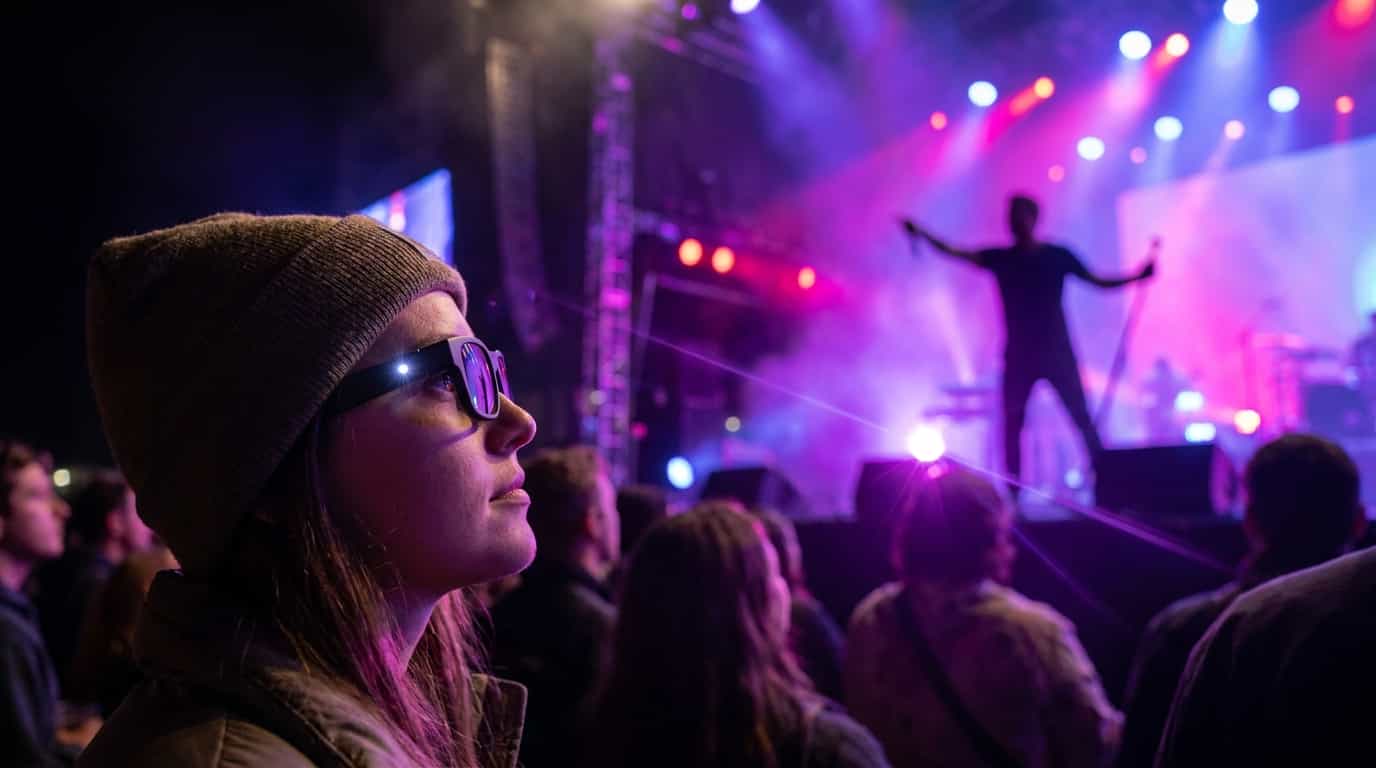
At first glance, Meta’s integration into the 2026 Mad Cool Festival in Madrid seemed like a masterclass in experiential marketing. Ray-Ban, Meta’s hardware partner, was a prominent sponsor. Blackpink’s Jennie, a global ambassador for the Ray-Ban Meta AI glasses, was heavily featured. The objective was clear: normalize face-mounted cameras by seamlessly blending them into high-end youth culture.
Then, Lorde took the main stage and shattered the illusion.
Midway through her set, the New Zealand pop star addressed the massive crowd with a pointed critique of the exact wearable tech subsidizing the event. "Increasingly in our world, it gets harder and harder to know what is real," Lorde stated, directly calling out the anxiety of being recorded by strangers. "You don't know if someone is wearing sunglasses or if they're wearing those fucked up... Can I just say, for the record, fuck the glasses. Don't get the glasses. Not sexy."
The clip immediately went viral, spawning thousands of reaction videos across Reddit, TikTok, and X. But what makes Lorde’s two-word verdict—"not sexy"—so damaging isn't just the profanity. It is the crystallization of a growing, visceral public backlash. Meta has spent billions trying to make AI glasses cool, but a single, undeniable cultural rejection threatens to plunge the technology back into the "Glasshole" era of social stigma.
1. Background & Context: The Push for Normalization
For the past three years, Meta has aggressively tried to rewrite the rules of wearable tech. After the spectacular public failure of Google Glass a decade ago, Meta pivoted its strategy: rather than building a sci-fi headset, they hid their technology inside classic, beloved Ray-Ban frames.
Commercially, the Trojan Horse strategy worked. Meta reportedly moved over 7 million pairs of its smart glasses last year. The hardware represents a genuine technical leap, featuring an integrated 12-megapixel camera, open-ear speakers, and a hands-free multimodal AI assistant capable of translating signs, summarizing audio, and instantly live-streaming to Instagram.
To combat the inherent "creep factor" of wearing a hidden camera, Meta relied heavily on influencer marketing, recruiting celebrities like Kylie Jenner to frame the glasses as an essential creator tool. But as the glasses saturated the consumer market, the everyday friction of wearing them in public began to crack the glamorous veneer.
2. Technical Challenges: The Illusion of the Indicator Light
The primary point of social friction—and the catalyst for Lorde's onstage critique—is the sheer ambiguity of the hardware.
How do you know if you are being recorded? Meta’s engineering solution was an LED indicator light next to the camera lens that glows white when recording video or taking a photo. Recently, Meta even pushed a firmware update that allegedly disables the camera entirely if the LED is covered with tape or paint.
However, security researchers and privacy advocates point out that hardware tampering is only part of the problem.
The Lighting Problem: In bright sunlight or the strobing, chaotic lighting of a music festival, a tiny white LED is practically invisible.
Passive Listening: The glasses don't just record video; they feature an always-on microphone array listening for the "Hey Meta" wake word.
Social Ambiguity: Unlike holding up a smartphone, which requires a distinct physical gesture, an individual wearing smart glasses simply looks like they are standing there. The intent is entirely masked.
This is the exact ambiguity Lorde highlighted. In an increasingly synthetic digital world, the inability to distinguish between a passing glance and a persistent digital recording generates a low-level, constant social anxiety.
3. Expert Commentary: The "Not Sexy" Verdict
Tech critics have struggled for years to articulate the ethical implications of face-mounted AI. Lorde managed to do it in two words.
"The aesthetic gap is the hardest thing to engineer away," notes a hardware analyst regarding the Mad Cool incident. "Hardware that functions perfectly can still feel socially wrong. Lorde described the AI presence as basically having a tiny, stressed-out nerd trailing you everywhere. That fundamentally undercuts the aspirational lifestyle branding Meta Reality Labs has been heavily subsidizing."
Furthermore, music festivals are historically safe spaces for uninhibited expression. The introduction of pervasive, invisible surveillance tech directly violates the social contract of those spaces. When a globally recognized artist openly rejects the premise while standing on a stage sponsored by the manufacturer, it signals a massive shift in consumer tolerance.
4. Scenario Analysis: The Future of Reality Labs
Lorde's viral rebuke lands at a highly sensitive moment for Mark Zuckerberg's empire. Meta’s Reality Labs division—which oversees both VR headsets and smart glasses—continues to post staggering operating losses, burning through billions of dollars every quarter to secure the next computing platform.
The Optimistic Case for Meta: The backlash is a temporary PR hiccup. Meta leans harder into the utility of the AI, proving that real-time translation and seamless audio are valuable enough that the general public eventually accepts the privacy trade-offs, much like they did with smartphone cameras.
The Neutral Case (The Niche Tool): Smart glasses survive, but only in highly specific, utilitarian contexts. They become essential tools for delivery drivers, warehouse workers, and extreme sports enthusiasts, but utterly fail to cross over into mainstream, everyday fashion.
The Pessimistic Case (The Second Glasshole Era): The "not sexy" label calcifies into permanent consumer resistance. Concert venues, bars, and private businesses begin explicitly banning the glasses. Facing mounting social stigma and continuous multi-billion dollar losses, Meta is eventually forced to shutter or drastically scale back the consumer smart glasses project.
5. Risks & Trade-offs: The Right to Look Away
The fundamental trade-off of the Meta Ray-Ban glasses is convenience for the user exchanged for the privacy of the bystander.
Meta argues that society successfully adapted to smartphones, which also possess cameras and microphones. But smartphones require active, highly visible engagement. Smart glasses shift the burden of awareness entirely onto the public. If you do not want to be recorded, you must constantly monitor the faces of everyone around you for a tiny, glowing white dot.
As Lorde correctly observed, this dynamic makes existing in public spaces exhausting.
6. Future Outlook: Will the Ban Hammer Fall?
The immediate fallout from the Mad Cool Festival is already rippling outward. Following the viral clip, Several prominent indie venues in London and New York have proactively updated their door policies to explicitly forbid smart glasses, treating them with the same zero-tolerance approach as professional DSLR rigs.
The Bottom Line
Meta engineered an incredible piece of hardware, but they fundamentally underestimated the social friction of deploying millions of hidden cameras into the wild. Converting skeptics into buyers requires the technology to feel aspirational, seamless, and cool. When a global pop star looks out at a sea of branded lenses and declares them "fucked up," it becomes painfully clear: you can buy a legendary sunglass brand, and you can sponsor the biggest music festivals in the world, but you cannot buy social acceptance.





Discussion
Comments
Approved comments are published after moderation to keep discussion useful and spam-free.
No comments yet. Start the discussion below.