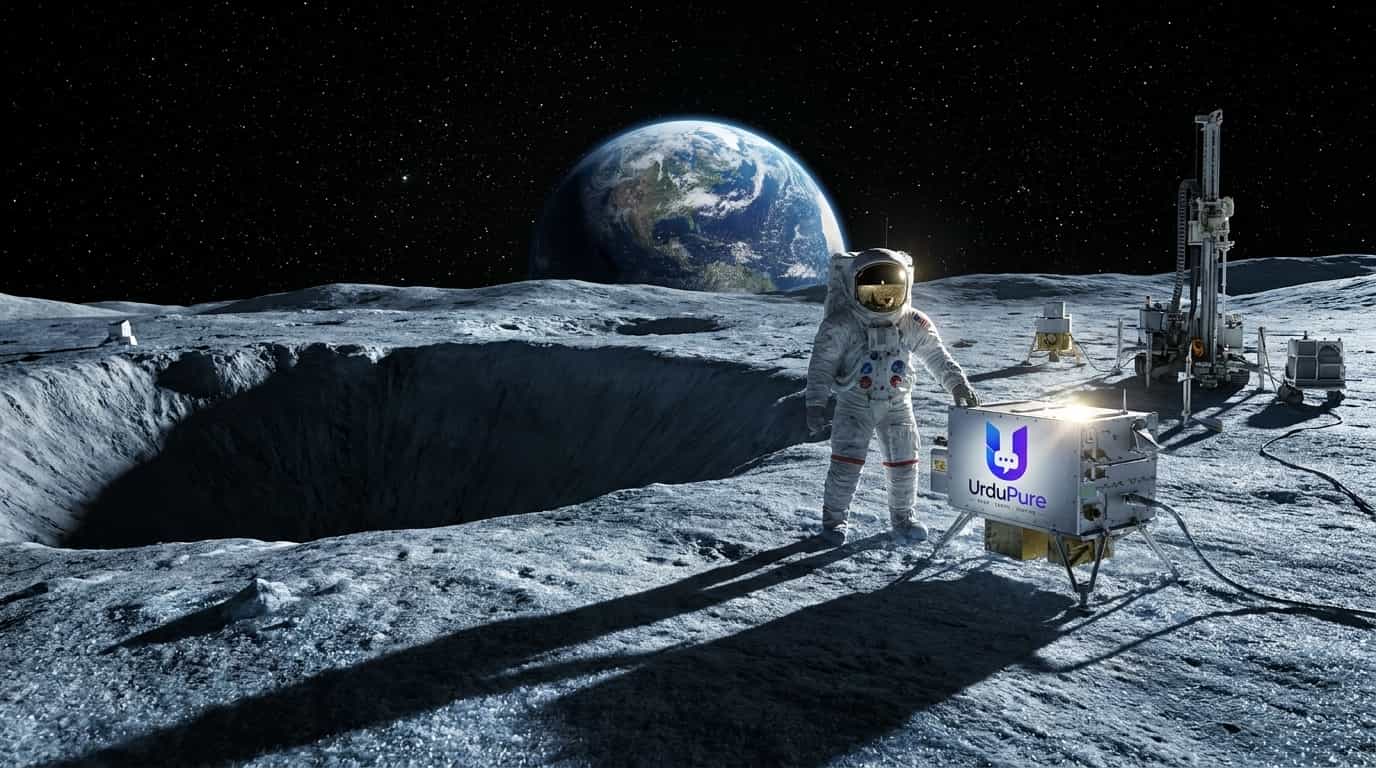
NASA's Artemis III Moon Landing: What Scientists Found That Nobody Expected
The Moon is not the world we thought we knew. For half a century after Apollo, humanity treated Earth's satellite as a solved problem — a dead rock, geologically inert, scientifically exhausted, its secrets already pulled from the grey regolith by twelve American astronauts between 1969 and 1972. Artemis III is dismantling that assumption piece by piece.
Returning to the Moon — But Not the Same Moon
When NASA's Artemis programme first announced its intention to return humans to the lunar surface, much of the public framing centred on symbolic and geopolitical dimensions: the first woman on the Moon, the first person of colour on the Moon, America reasserting its leadership in deep space exploration in the face of renewed Chinese and Russian ambitions. These were real and meaningful goals. But they somewhat obscured the equally significant scientific rationale for the mission.
Artemis III is not Apollo revisited. The landing site alone makes that clear. While the six Apollo landings were all clustered within a narrow equatorial band chosen primarily for safety and communication reasons, Artemis III targets the lunar South Pole — specifically the rim regions near Shackleton Crater — a location that Apollo-era planners would never have considered and that subsequent robotic reconnaissance has revealed to be one of the most scientifically compelling environments in the entire inner Solar System.
The South Pole region is strange. Profoundly, unexpectedly strange. And the strangeness began revealing itself long before any crewed spacecraft set down on its ancient, shadowed terrain.
The Ice That Should Not Be There
The most significant pre-mission discovery shaping Artemis III science was also the one that most dramatically altered our understanding of the Moon itself: water ice, confirmed in permanently shadowed craters at the lunar South Pole.
The existence of some water ice on the Moon had been theorised since the 1960s, but confirmation came in stages that felt almost reluctant, as if the universe were releasing the secret slowly. NASA's LCROSS mission in 2009 slammed a spent rocket stage into Cabeus Crater near the South Pole and analysed the resulting plume, confirming the presence of water ice. India's Chandrayaan-1 orbiter detected widespread hydroxyl signatures. NASA's SOFIA airborne observatory detected water molecules on the sunlit lunar surface in 2020 — an even more puzzling finding, since sunlit regolith was supposed to be too energetic to retain water in any form.
But the quantity, distribution, and — crucially — the age of this ice remained poorly constrained. Early estimates suggested it might be sparse, patchy, and relatively young, deposited by recent cometary impacts or the solar wind.
What Artemis III surface operations are revealing is more complex and, to planetary scientists, far more exciting. Drilling and sampling operations at the South Pole site have reached ice-bearing layers at depths previously unmodelled, and the isotopic signatures of that ice — the specific ratios of hydrogen isotopes within the water molecules — are inconsistent with a purely cometary or solar wind origin. The ratios point, in part, towards an endogenous source: water that originated from within the Moon itself, outgassed from its interior during an epoch of volcanic activity that ended billions of years ago.
This has profound implications. If the Moon retains internally sourced water in its permanently shadowed regions, then our models of lunar geological history — including the thermal evolution of its mantle and crust — need substantial revision. And if water can be preserved over billions of years in these cold traps, the Moon becomes not just a scientific destination but a potential waystation: a source of water that future missions could mine for drinking, for oxygen generation, and for rocket propellant.
Regolith That Behaves Like Nothing on Earth
Every astronaut who has trained for lunar surface operations understands intellectually that the Moon's regolith — the loose, fragmented surface material ground down by billions of years of meteorite impacts — is unlike any soil on Earth. It is angular, abrasive, and clingy in ways that created serious technical problems for Apollo astronauts, clogging suit joints and scratching visors.
But the South Pole regolith is different again from the equatorial regolith Apollo encountered, and the differences are scientifically and practically significant in ways that researchers did not fully anticipate.
The extreme cold of the permanently shadowed regions — temperatures in some Shackleton Crater floor areas can drop below minus 250 degrees Celsius, among the coldest naturally occurring temperatures in the Solar System — has altered the physical properties of the regolith in striking ways. Ice-cemented layers interspersed with dry regolith create a stratified structure that behaves, under load and vibration, in ways that engineers' pre-mission models did not predict. The implications for future infrastructure — landing pads, habitat foundations, rover pathways — are significant and are being rapidly incorporated into planning for subsequent Artemis missions.
Perhaps more unexpectedly, spectroscopic analysis of South Pole surface samples has revealed a chemical complexity that far exceeds what was found in Apollo samples. Organics — carbon-bearing compounds — are present at concentrations that cannot be explained by contemporary meteorite delivery alone. Some of these compounds bear structural similarities to the amino acid precursors that astrobiologists study in the context of the origins of life on Earth. Their presence on the Moon does not imply life; it implies chemistry, rich and complex, occurring across the Solar System in environments long assumed to be sterile.
A Magnetic Anomaly Nobody Predicted
One of Artemis III's instrument packages includes a high-resolution magnetometer array — a suite of sensors designed to map the local magnetic field environment with precision impossible from orbit. The South Pole region was known to have crustal magnetic anomalies from satellite data, but their scale, structure, and origin were poorly understood.
What surface-level measurements are revealing is a magnetic landscape of surprising complexity. Localised field strengths in certain areas near the Shackleton rim reach intensities that would be sufficient to partially deflect solar wind ions — a natural magnetic mini-shield that creates, in effect, a microenvironment distinct from the surrounding lunar surface. The solar wind flux in these shielded zones is measurably lower. The regolith chemistry in these zones is, correspondingly, measurably different.
This is entirely unexpected. The Moon has no global magnetic field to speak of — its core is too small and insufficiently dynamic to generate one. But these crustal remnants, frozen into the rock from an ancient epoch when the Moon's dynamo was still active, create local magnetic environments that have persisted for billions of years. Understanding them matters for several reasons, not least of which is the possibility that such natural shielding could influence where future lunar habitats are most safely sited.
The origin of the strongest anomalies remains debated. One compelling hypothesis holds that they are associated with ancient impact antipodes — regions on the opposite side of the Moon from giant ancient impacts, where converging seismic shockwaves created unusual rock structures that preserved stronger ancient magnetic signatures. If confirmed, this would provide new information about the sequence and scale of the Moon's bombardment history in its first billion years — a period called the Late Heavy Bombardment whose precise nature is still contested among planetary scientists.
The Geological Story Hidden in the Shadows
Permanently shadowed regions are not merely cold storage for ice. They are time capsules. The lack of solar heating means they have not experienced the thermal cycling that, over billions of years, thoroughly mixes and reworks sunlit regolith. In the shadows, stratigraphic layering — the sequence of depositional events preserved in the sediment record — remains far more intact than anywhere Apollo astronauts worked.
Core samples drilled from the Artemis III site are being read like a geological diary, each centimetre of depth corresponding to millions of years of Solar System history. Distinct layers of impact ejecta — fine material blasted to the South Pole from distant impacts across the Moon's surface — can be chemically matched to known impact craters, allowing scientists to build an independent chronological record of the Moon's impact history with a precision that orbital data alone cannot provide.
This matters enormously for planetary science beyond the Moon itself. The Moon, lacking the erosional and tectonic processes that continuously resurface Earth, preserves a record of the early Solar System's bombardment history that Earth has long since erased. By reading that record in unprecedented detail from South Pole cores, scientists are reconstructing a history of asteroid and comet delivery to the inner Solar System that has direct implications for understanding how life's building blocks may have arrived on the early Earth.
The boundary between two distinct ejecta layers in one Artemis III core sample has generated particular excitement among the science team. The layers' chemical composition and isotopic characteristics suggest they record two large impact events separated by approximately 500 million years — events that, if confirmed, would significantly refine existing models of the Late Heavy Bombardment's duration and intensity.
The Human Factor: Science Done in Real Time
One dimension of Artemis III that robotic missions simply cannot replicate is the capacity for adaptive, real-time scientific decision-making in the field. The history of geology as a science was built by geologists walking landscapes, reading rock outcrops, noticing anomalies that no instrument specification could have anticipated and no remote operator could have caught in time.
On the lunar surface, this capacity has already made a difference. During an early EVA traverse toward a boulder field on the Shackleton rim, crew members identified and sampled a rock type — a breccia with an unusual clast composition — that was not on the nominal sampling list and whose significance only became apparent when the crew geologist made the connection, in the field, to a theoretical rock type predicted by models of ancient volcanic activity. That sample, collected on the basis of a human judgment call made seconds before the traverse window closed, is now among the most scientifically discussed specimens returned by the mission.
This is what human exploration adds. Not just speed or strength or the ability to carry heavy equipment, but cognition deployed in context — the capacity of a trained scientific mind to be surprised, to notice, and to act.
The Atmosphere at the Pole: Space Weather in Close-Up
One of the most practical scientific returns of Artemis III has been an unprecedented close-up study of how the lunar surface interacts with space weather — the constant stream of charged particles, electromagnetic radiation, and energetic ions that the Sun and the wider cosmos deliver to any unshielded surface in the inner Solar System.
On Earth, our magnetic field and atmosphere deflect and absorb most of this radiation. On the Moon, with no global magnetic field and no meaningful atmosphere, the surface is directly exposed. This matters enormously for future human habitation, and the radiation environment at the South Pole is meaningfully different from what Apollo astronauts experienced at equatorial latitudes.
Monitoring instruments deployed by Artemis III crew members are recording the radiation dose rates at the surface — data that inform the design specifications for habitats, suit systems, and mission duration limits for future long-stay missions. But they are also revealing something less expected: the interaction between galactic cosmic rays (high-energy particles originating outside the Solar System) and the lunar regolith produces a measurable secondary radiation field at the surface, a shower of particles generated when primary cosmic rays impact regolith nuclei. The intensity and energy distribution of this secondary radiation field at South Pole latitudes differs from theoretical predictions in ways that are prompting a reassessment of the models used to calculate crew radiation exposure for deep space missions.
This is not a minor technical footnote. Radiation remains one of the two most serious health hazards for deep space exploration (the other being microgravity's effects on the cardiovascular and musculoskeletal system). Getting the numbers right — knowing exactly what radiation dose a crew will receive during a thirty-day lunar surface stay — is a medical imperative. Artemis III is providing the most accurate numbers yet obtained.
There is a deeper scientific story here as well. The cosmic ray flux that bombards the lunar surface has fluctuated over geological time, tracking changes in the Sun's activity and in the interstellar environment through which the Solar System moves. By measuring cosmogenic nuclides — isotopes produced in the regolith by cosmic ray bombardment over millions of years — researchers can reconstruct that history of flux variation. Artemis III samples are providing this data at a temporal resolution, and from a geographic location, never previously achieved. The result is a new window into the history of the Sun and its neighbourhood in the Galaxy — information recoverable from nowhere else in the Solar System as conveniently as from the ancient, undisturbed regolith of the lunar South Pole.
What Comes Next
The findings from Artemis III are reshaping the mission architecture for subsequent Artemis flights. Artemis IV and V landing sites are being reconsidered in light of the magnetic anomaly data, with geologists arguing for sites that would allow comparative study of high- and low-field regions. The ice distribution data is informing engineering designs for the Lunar Gateway and the proposed long-duration South Pole surface habitat.
More fundamentally, Artemis III has re-established something that was perhaps in danger of being forgotten in the decades of robotic exploration that preceded it: the Moon is not finished with its surprises. It is a world with a four-and-a-half-billion-year history written in rock and ice and magnetic fields and layers of dust, and we have barely begun to read it.
The scientists who spent their careers arguing for a return to the surface — arguing that there was still profound science to be done on the Moon, not merely en route to Mars — have been vindicated. Not because they were right that the Moon held surprises. But because even they did not anticipate the specific, astonishing nature of what has been found. The discoveries described here — water ice of internal origin, anomalously complex organic chemistry, magnetic micro-shields, radiation fields that deviate from theoretical predictions, stratigraphic layers that preserve a billion years of Solar System history in readable sequence — are not the results of a single, definitive mission. They are the first chapter of a new era of lunar science. Each answer surfaces three new questions. Each sample pulled from the South Pole regolith opens a window onto processes and timescales that dwarf human history entirely.
The Moon, it turns out, kept its best secrets for those willing to land in the dark.
The Artemis programme is a collaboration between NASA and international partners including ESA, JAXA, and the Canadian Space Agency. Science data from Artemis III surface operations is being made publicly available through NASA's Planetary Data System. The first peer-reviewed papers from mission samples are expected to appear in Nature and Science within 18 months of sample curation completion.





Discussion
Comments
Approved comments are published after moderation to keep discussion useful and spam-free.
No comments yet. Start the discussion below.