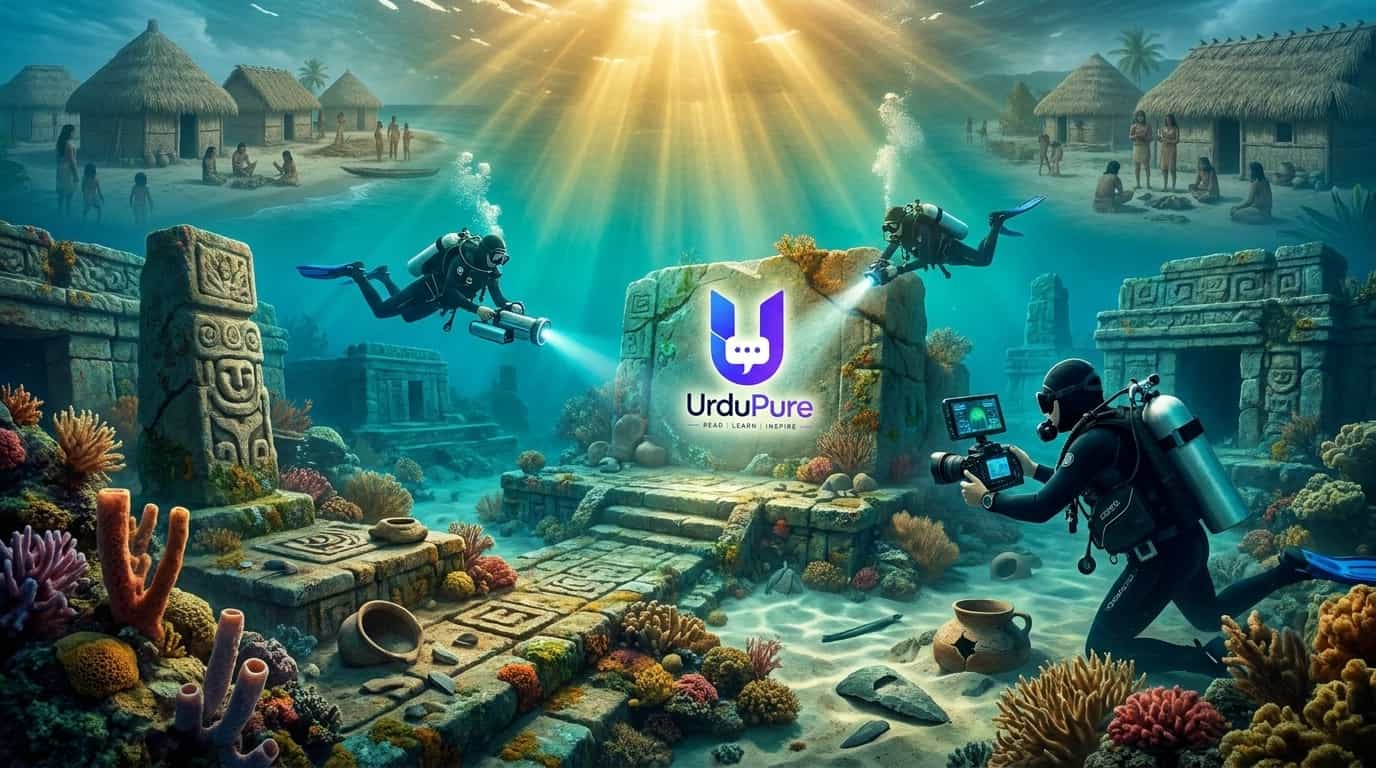
The Lost Civilisation Beneath the Caribbean Sea: What New Archaeological Discoveries Reveal About Ancient Hispaniola
By the time European ships broke the horizon in 1492, the island of Hispaniola had already been home to one of the most sophisticated pre-Columbian cultures in the Americas for nearly two thousand years. But a growing body of archaeological evidence — much of it pulled from beneath the waves of the Caribbean Sea itself — is rewriting everything historians thought they knew about the Taíno people and the civilisations that came before them.
A World Submerged
The Caribbean Basin is, geologically speaking, a restless place. Over the past ten thousand years, as glaciers retreated and sea levels rose by more than 120 metres globally, vast stretches of what are now the seabeds surrounding Hispaniola, Cuba, and Puerto Rico were once dry land — habitable coastal plains, river deltas, and estuaries teeming with freshwater and marine life. Where the ocean now sits twenty, thirty, sometimes fifty metres below the surface, human beings once walked, fished, built fires, and raised children.
This is not speculation. It is the conclusion that a new generation of underwater archaeologists, marine geologists, and indigenous heritage researchers are now confidently drawing from a remarkable series of discoveries made across the Greater Antilles over the past decade. What they are finding challenges not only the timeline of human habitation in the Caribbean but also the complexity, scale, and connectivity of the societies that flourished there long before Columbus ever set foot on a Spanish ship.
The island of Hispaniola — shared today by the Dominican Republic and Haiti — sits at the heart of this reassessment. Its submerged coastlines, particularly along the northwestern shelf and the Bahoruco Peninsula in the southwest, have become some of the most archaeologically productive underwater sites in the entire Western Hemisphere.
Who Were the First Hispaniolan People?
Standard historical accounts held that the Caribbean was settled in waves beginning around 4,000 BCE by Archaic Age peoples — small, nomadic bands of hunter-gatherers who arrived from Central and South America via a chain of island-hops along the Lesser Antilles. These early inhabitants, sometimes called the Ortoiroid or Casimiroid peoples depending on the region, were thought to leave relatively sparse material traces: shell middens, crude lithic tools, the bones of hunted mammals and birds.
The Taíno — the Arawakan-speaking agricultural civilisation whose sophisticated political structures, religious art, and agricultural systems so startled early Spanish explorers — were understood to have arrived later, displacing or absorbing these earlier populations beginning roughly 2,500 years ago. This was the accepted model.
But new underwater survey data is cracking this narrative open.
Between 2018 and 2024, a consortium of researchers from Dominican Republic's Universidad Autónoma de Santo Domingo, the University of Florida's Maritime Studies programme, and the Smithsonian Tropical Research Institute conducted a series of remotely operated vehicle (ROV) surveys along a fifteen-kilometre stretch of the Hispaniolan northwestern shelf. What they found there was not a scattering of ancient debris. It was structure.
The Structures That Changed Everything
At a depth of between twelve and thirty-eight metres, seafloor sonar imaging and subsequent ROV dives revealed the unmistakeable geometry of human construction: raised earthen platforms, post-hole alignments that could only represent the foundations of large communal structures, deliberate stone arrangements consistent with ceremonial plazas, and — most astonishingly — what appears to be a network of low stone walls that archaeologists believe may have functioned as fish weirs or managed aquatic farming systems.
The raised platforms are the most significant find. Averaging thirty metres across and between one and two metres in height, they bear a striking resemblance to the ceremonial bateys — ball courts and public gathering spaces — that are well documented in Taíno archaeology on dry land. But preliminary radiometric dating of organic material recovered from the sediments directly surrounding these structures suggests an age of between 3,800 and 4,200 years before present. That places them firmly in the Archaic period, centuries before the Taíno cultural florescence is supposed to have begun.
"What we're seeing doesn't fit the model," said one lead researcher affiliated with the underwater survey project, speaking to the journal Latin American Antiquity in 2023. "Either the Archaic peoples of Hispaniola were significantly more socially complex than we believed, or there was cultural continuity between these early builders and the later Taíno that we have completely failed to appreciate. Either conclusion is extraordinary."
The fish weir structures are equally provocative. Managing aquatic resources through built infrastructure implies not only technical knowledge but also the kind of social organisation — coordinated labour, territorial rights, multi-seasonal planning — that archaeologists have traditionally associated only with settled agricultural societies. If confirmed, these structures push the origins of organised food management in the Caribbean back by more than a millennium.
The Underwater Caves and Their Secrets
Submarine archaeology around Hispaniola is not limited to open-water survey work. The island's limestone geology means its coastline is riddled with underwater cave systems — anchialine environments where freshwater and saltwater mix in complex chemical layers. For the past two decades, cave divers working in collaboration with archaeologists have been mapping these systems and, in some cases, recovering extraordinary finds from their depths.
The most significant of these explorations has focused on a cave network near the southern coast, in the Bahoruco region. Within chambers that were clearly above sea level at the time of their use — as evidenced by the presence of stalactites and stalagmites, which only form in air — divers have recovered human skeletal remains, ceramic fragments, wooden objects preserved by the anoxic conditions, and, most remarkably, carved objects in stone and shell that bear iconographic motifs now recognisable as precursors to classic Taíno religious art.
Among these is a carved stone figure — a zemí, in the Taíno spiritual vocabulary, though this word itself becomes complicated when applied to objects that may predate the Taíno cultural period — depicting a stylised human face with elongated features and a distinctly bifurcated cranial form that researchers believe may represent deliberate head shaping, a practice known to have been widespread among Taíno elites. The figure has been dated to approximately 2,900 years before present, pushing back the evidence for cranial modification and the associated cosmological beliefs by several centuries.
Ceramic sequences recovered from the cave systems are equally revealing. The pottery shows a clear evolution over time — from simple, tempered wares with minimal decoration in the lower strata to increasingly complex forms with painted and incised geometric and anthropomorphic decoration in upper levels. This continuity suggests that, rather than the replacement model that dominated earlier scholarship, Hispaniola may have witnessed a process of in situ cultural development: the Taíno did not arrive from outside and displace an earlier population but grew out of that population over generations of innovation and adaptation.
The Connectivity Question
One of the most intellectually exciting dimensions of recent Hispaniolan underwater archaeology is what it implies about inter-island connectivity in the ancient Caribbean. For years, archaeologists puzzled over the remarkable cultural homogeneity observable across the Greater Antilles — similar ceramic styles, similar architectural forms, similar religious iconography appearing across islands separated by hundreds of kilometres of open water.
The prevailing explanation was cultural diffusion: ideas and objects spread gradually through trade networks and occasional inter-island contact. But the scale and speed of the similarities now seem to demand something more robust — regular, sustained maritime interaction between communities across the archipelago.
Submerged landscape modelling — using sea-level reconstruction data combined with bathymetric maps — is revealing something crucial: at sea levels ten to fifteen metres lower than today, the strait between Hispaniola and Cuba narrows dramatically, and what is now open water between Hispaniola and Puerto Rico becomes punctuated by a chain of small islands and exposed reef platforms that would have served as stepping stones for canoe navigation.
In other words, the ancient Caribbean was, in periods of lower sea level, a far more navigable and connected space than it appears today. The maritime cultures of ancient Hispaniola were not isolated island dwellers. They were participants in a sophisticated inter-island world that extended from the Venezuelan coast to the Florida Keys — a world whose full extent we are only now beginning to map.
What Was Lost — and What Can Be Recovered
The human cost of European colonisation in Hispaniola was catastrophic and swift. Within fifty years of Columbus's arrival, the Taíno population of Hispaniola — estimated by some scholars at between 400,000 and one million people — had been reduced to a few thousand by violence, forced labour, and epidemic disease. With them went languages, oral traditions, agricultural knowledge, spiritual practices, and, crucially, the living memory of their own history.
What the underwater archaeological record is doing is providing a different kind of memory. Stone does not forget. Ceramics, though fragile, survive in the oxygen-poor sediments of submarine environments with extraordinary fidelity. The submerged landscapes of Hispaniola are not simply archaeological sites. They are archives — slow, patient, and indifferent to conquest.
For researchers and descendants alike, this archive is both gift and burden. Many contemporary Dominicans carry Taíno ancestry and feel a profound personal connection to these discoveries. The question of who owns this heritage — who has the right to excavate, interpret, and communicate its findings — is one that the archaeological community is still negotiating with imperfect but genuine effort.
Dominican Republic's Ministerio de Cultura has in recent years moved towards a collaborative model of heritage management in which communities with documented indigenous ancestry are consulted as formal stakeholders in excavation projects. This is not merely ethical window-dressing: community knowledge holders have, in several instances, directed researchers to sites and practices that formal archaeological survey would have overlooked entirely.
The involvement of indigenous community representatives has, in several documented cases, led to the identification of oral traditions — stories passed down in families, often dismissed by earlier scholars as mere mythology — that correspond in specific and testable ways to the physical features of sites now being surveyed underwater. A story of a sacred pool that was "swallowed by the sea" turns out to describe, with credible accuracy, the flooding of a freshwater spring site that now sits eighteen metres beneath the surface. The boundary between oral history and geological record, it seems, is far more permeable than colonial-era scholars assumed.
Reading the Landscape: Climate, Agriculture, and Resilience
Understanding the sophistication of pre-Columbian Hispaniolan civilisation requires understanding its environment — not the Caribbean as it exists today, but as it was experienced across the millennia that shaped these societies. The island of Hispaniola is geologically young and climatically dynamic. Over the past ten thousand years, it has experienced significant shifts in rainfall patterns, sea level, and hurricane frequency, and the archaeological record shows that its ancient inhabitants did not simply endure these changes. They adapted, innovated, and in many cases anticipated them.
Palaeoclimate data recovered from lake sediment cores drilled at multiple sites across the Dominican Republic tell a story of recurrent drought episodes punctuating generally wetter baseline conditions — drought periods that correlate, intriguingly, with apparent shifts in settlement patterns and agricultural intensity visible in the archaeological record. During drier centuries, coastal and lowland sites appear to have been depopulated or reduced in size, while interior highland sites show evidence of intensified activity. When wetter conditions returned, coastal communities re-expanded, often incorporating new architectural features and agricultural systems that suggest they had, during the retreat inland, developed new technical knowledge.
This is not the behaviour of a simple, static society living in passive harmony with its environment. It is the behaviour of adaptive, learning communities with sufficient institutional memory to apply lessons across generations — the hallmark of genuinely complex social organisation.
Among the most striking expressions of this adaptive complexity is the raised field agriculture documented by aerial and satellite survey in several lowland valleys of the Cibao region. Raised field systems — artificial earthwork platforms built to elevate crops above seasonal flood levels — are known throughout tropical America as indicators of agricultural sophistication and population density. Their presence in Hispaniola suggests that pre-Columbian agriculture here was not the simple forest-garden system that early Spanish observers described. It was intensive, managed, and capable of supporting large, settled populations.
The underwater fish weirs discovered off the northwestern coast fit within this same pattern of environmental management. Managed protein production, managed flood agriculture, managed forested landscapes — the emerging picture is of a society that understood its environment in intimate, systematic detail and possessed the social mechanisms to act on that understanding at a landscape scale.
The Broader Picture: Rewriting Caribbean Prehistory
What the accumulated evidence from Hispaniola's submerged landscapes is beginning to tell us is a story of remarkable human ingenuity and resilience. A story in which island peoples developed sophisticated social structures, managed complex environments, maintained long-range maritime trade networks, and created rich cosmological and artistic traditions — all without any contact with, or assistance from, the Old World civilisations that later colonisers assumed were the only source of genuine cultural achievement.
This matters far beyond the academy. In a region where colonial narratives have spent five centuries minimising the sophistication and humanity of indigenous peoples, the archaeological record is an act of restoration. The lost civilisation beneath the Caribbean Sea was never truly lost. It was submerged — by water, by conquest, and by the selective blindness of those who chose not to look.
The divers are looking now. And what they are finding is extraordinary.
The scholarly implications of these findings will take decades to fully absorb. Revised textbooks, updated museum exhibits, reframed heritage tourism — these are the slow downstream consequences of paradigm shifts in archaeology. But the immediate consequence is simpler and more powerful: the human beings who built those underwater platforms, who carved those cave-bound zemís, who managed those coastal fish weirs and raised those highland agricultural terraces, are no longer faceless primitives in a pre-contact void. They are architects, engineers, artists, farmers, and sailors — people of considerable sophistication who shaped this island for thousands of years before history, in its European sense, arrived to erase them. Archaeology is, at its best, an act of restoration. On the submerged coastlines of Hispaniola, that act has only just begun.
Further reading: For an introduction to Taíno archaeology above the waterline, the work of researchers at the Centro León in Santiago de los Caballeros, Dominican Republic, provides an excellent foundation. The journal Latin American Antiquity regularly publishes updated findings from ongoing underwater survey projects across the Greater Antilles.



Discussion
Comments
Approved comments are published after moderation to keep discussion useful and spam-free.
No comments yet. Start the discussion below.