She ran Russia's entire economy for twelve years. She was the one person standing between Vladimir Putin and total financial collapse. And then, she vanished.
There was no statement. No press conference. No explanation.
On May 28th, 2026, the most powerful economic mind in Russia simply disappeared from public view. And while she was gone, the Russian people began quietly, methodically emptying their bank accounts at the fastest pace in thirty years.
Her name is Elvira Nabiullina. And if you don't know who she is, you need to.
For over a decade, Nabiullina was the Chairperson of the Russian Central Bank. She was the woman who kept an entire war economy from imploding through sheer, ruthless technical discipline. Even Western economists—her harshest critics—openly called her extraordinary.
When Putin invaded Ukraine in 2022, it was Nabiullina who slammed interest rates to 20% overnight, halted the ruble's freefall, and prevented a complete financial meltdown. The IMF watched in disbelief—and then, quietly, acknowledged that her brutal tactics worked.
She did it again in 2024. And again in 2025. Each time, she bought Russia more time. More months of war. More ammunition funded. Some would call that complicity. Others call it survival.
But here is what matters right now: She is gone.
And in the three weeks since her disappearance, Russia's economy has begun showing signs that even her staunch defenders describe as terminal.
This is not a story about one woman. This is a story about an empire running out of road, and the moment its last competent guardrail was violently removed.
The Great Russian Bank Run
Let's establish what we actually know right now, because the facts alone are staggering.
Since January 2026, Russians have pulled over one trillion rubles in cash out of the banking system. In April alone, 679 billion rubles vanished. In May, another 381 billion. That is the highest May withdrawal figure since modern records began in 1995.
That money is not being spent in stores. It is not being invested in the stock market. It is disappearing—into mattresses, into safes, into walls.
The deputy chairman of Sberbank—Russia's largest state-owned bank—said publicly: "The cash is staying in the hands of the population."
Pause and think about what that means. That is a senior official at a state bank describing a massive bank run on national television.
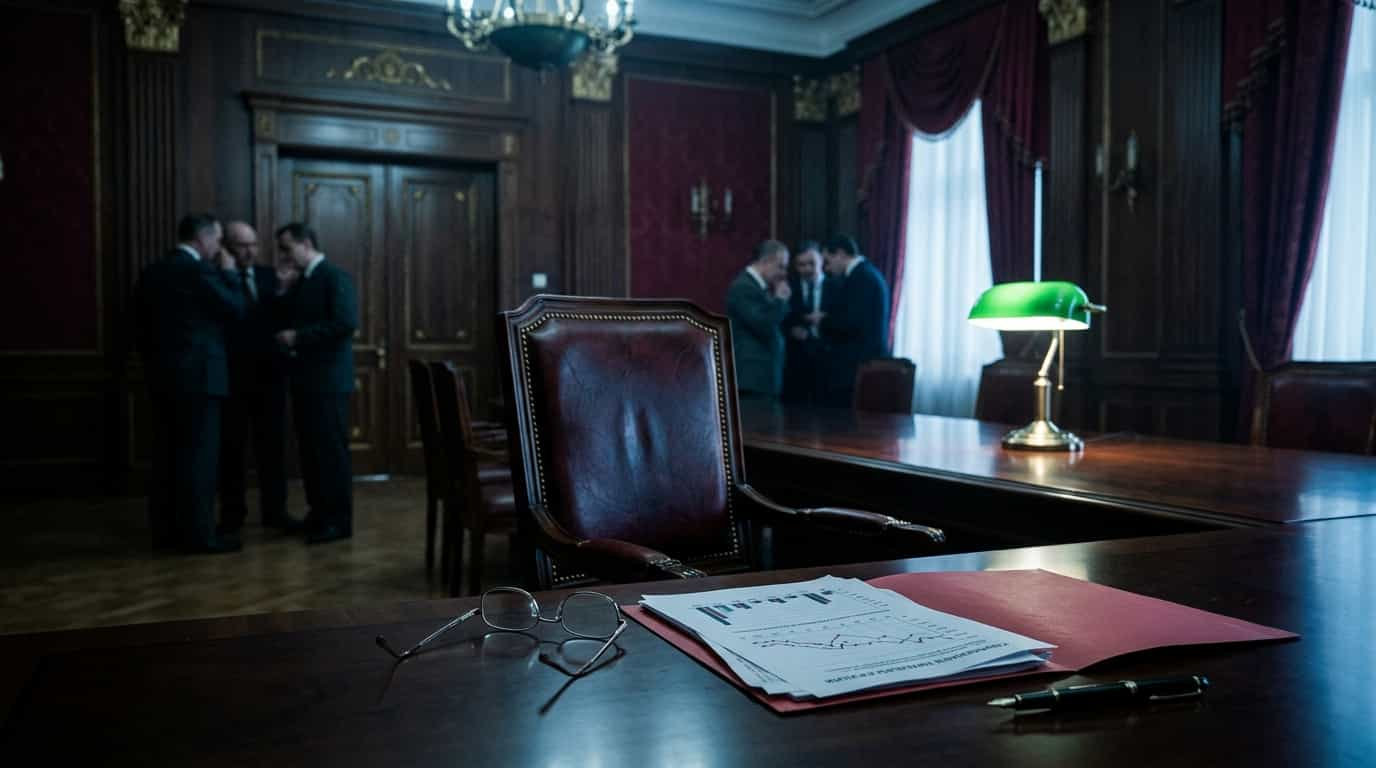
Simultaneously, on June 10th, Putin held an emergency meeting on inflation and interest rates. Nabiullina's chair was empty. Not a single one of her deputies attended either. In twelve years of dedicated service, she had never once missed a meeting with the President.
Not once.
The Three Pillars of Collapse
So what is actually happening inside Russia's economy while its chief architect is missing?
Three independent investigations—from The Economist, the Kiel Institute for the World Economy, and Stockholm's Institute of Transition Economics—all published their findings within days of each other this month. Their conclusions are chillingly identical.
1. The Oil Revenues Are Gone
Using NASA satellite fire-detection data and Australian internet outage monitoring, The Economist reconstructed what Russia is actually earning from its energy exports versus what it should be earning given current global oil prices.
The gap is devastating. By spring 2026, the gap had widened to 34 percent. One-third of Putin's war chest is evaporating before it ever arrives.
Why? Because Ukraine has been systematically destroying Russia's oil infrastructure. Not occasionally—relentlessly. In May 2026 alone, Ukrainian drones struck at least 31 refineries and export terminals. Russian refinery output has now fallen to its lowest level since 2009. Putin received an enormous geopolitical gift when the war in Iran drove global oil prices up, but Ukraine took that gift away using domestically produced weapons that no one can sanction, restrict, or intercept.
Here is the part that should terrify the Kremlin: The Economist's model found that over 37 percent of all strategic sites deep inside Russian territory have already been hit. This is not a border skirmish. This is the systematic dismantling of the machine that funds the war.
2. The Fiscal Reserves Are Exhausted
The Kiel Report—a seventy-page document co-authored by Europe's top economists—is titled simply: "Endgame."
Its opening conclusion states that Russia has no meaningful fiscal buffer remaining. Its capacity to fund the war is now directly and immediately tied to whatever hydrocarbon export revenue it can scrape together. No buffer. No cushion. No margin for error.
Yet, in just the first four months of 2026, Russia's budget deficit reached 5.9 trillion rubles. The plan for the entire year was 3.8 trillion. They blew through their annual limit before May.
And here is perhaps the single most chilling number in this entire story: In the first quarter of 2026, Russia's economy shrank by 0.3 percent—despite the state spending 44 percent more in March than the year before.
Record spending went in. A contraction came out. That is the definition of an economy that has reached its absolute physical limit.
3. The Institutions Are Collapsing Inward
The rot is spreading everywhere. In a single quarter, 209,000 small and medium businesses closed. Corporate investment fell 14.3 percent. Moscow's real estate market has lost an estimated 40 percent of its value this year alone when adjusted for inflation.
Five of Russia's systemically important banks are now operating below the mandatory capital adequacy threshold. And a Duma deputy—not an opposition figure, but a Kremlin loyalist—warned publicly this month that Russia is rapidly approaching a "social explosion."
Even Russia's most prominent ultranationalist commentators are now openly discussing the possibility of the government seizing private bank deposits to fund the war.
The people standing in line at ATMs are not panicking irrationally. They have simply understood what is coming before the official announcement is made.
The Circuit Breaker
Which brings us back to Elvira Nabiullina.
At that June 10th meeting—the one she didn't attend—Putin announced that Russia has "every right" to expect further interest rate cuts. This was a president publicly dictating monetary policy to his central bank. A central bank whose chair has been missing for over two weeks.
Here is what keeps me awake at night about this: Nabiullina wasn't just a central banker. She was the circuit breaker. She was the one person in the entire Russian system with both the authority and the technical competence to look Putin in the eye and say, "This will break."
And she did say it. On June 1st, she and the Finance Ministry delivered a formal warning to Putin: military spending is pushing the budget past the point of no return.
Six days later, her name vanished from the conference schedule. Ten days later, her chair was empty.
Now, Putin is preparing what he calls a "new investment cycle"—an economic transformation and a radical restructuring. What that actually means—mass money printing, forced capital reallocation, and the potential seizure of private savings—will unfold in the weeks ahead.
But here is the brutal irony: the very measures Putin needs to keep the war going will accelerate the bank run. Every new tax hike, every capital control, every rumor of deposit seizures drives more Russians to the ATM. The state tightens its grip, and the money disappears faster. It is not a policy problem anymore. It is a death spiral with no exit.
And the people of Russia—quietly, methodically, without being told—are already behaving as if they know what comes next. Thirty years of institutional memory is currently being compressed and hidden inside a mattress.
Tomorrow
June 19th. That is the date of the next scheduled interest rate decision.
Either Elvira Nabiullina walks up to that podium, or she doesn't.
If she appears, she has surrendered—a brilliant technocrat reduced to executing orders she fundamentally knows will destroy the country.
If she doesn't, it means the Kremlin has just violently removed its last economic safety net... in the middle of a bank run... with an empty war chest... and a shrinking economy.
Watch that date.
(If you found this breakdown insightful, share it with someone who needs to understand what is really happening behind the geopolitical curtain right now.)





Discussion
Comments
Approved comments are published after moderation to keep discussion useful and spam-free.
No comments yet. Start the discussion below.