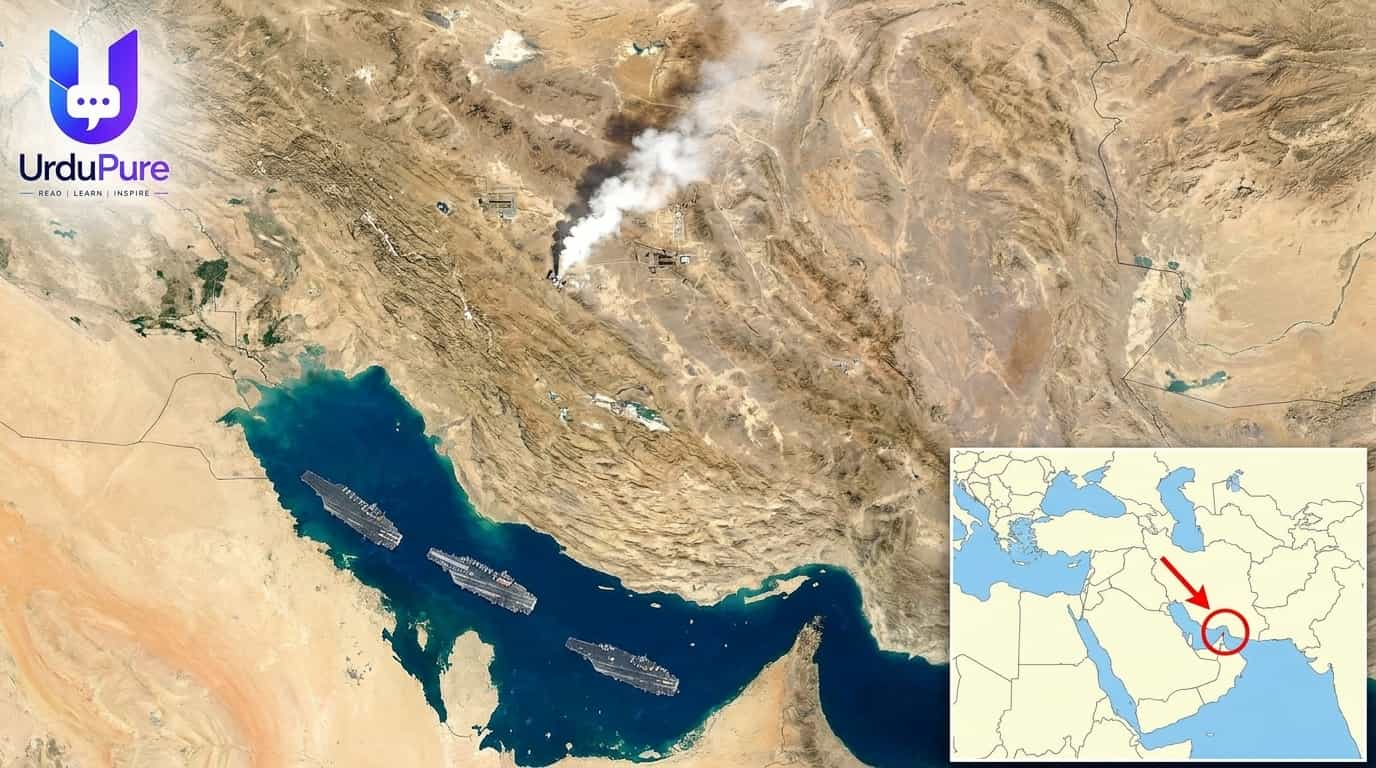
Iran War 2026: The Full Story — Nuclear Strikes, Strait of Hormuz, and the Deal That Could End It All
The 2026 Iran War, Explained: Everything You Need to Know Right Now
The 2026 Iran war is the most consequential geopolitical event since Russia's invasion of Ukraine — and it is still unfolding as of this writing. U.S. military strikes against Iranian positions happened just hours ago on May 25, even as American and Iranian negotiators circle what could be a landmark peace framework. The story involves nuclear sites, a global shipping chokepoint, an assassinated Supreme Leader, and a ceasefire that keeps fracturing.
If you've been trying to piece together what actually happened, what's happening now, and what it means for you — this is the article you need.
How Did the Iran War Start? The February 28, 2026 Strikes
The 2026 Iran war did not happen in a vacuum. For years, tensions had been rising over three converging crises: Iran's accelerating nuclear program, its arsenal of ballistic missiles capable of reaching Israel and U.S. bases across the region, and its longstanding support for proxy groups including Hamas, Hezbollah, and the Houthis.
The collapse of the 2015 Joint Comprehensive Plan of Action (JCPOA) — the Iran nuclear deal negotiated under President Obama — removed the formal constraints on Iran's uranium enrichment. Attempts to renegotiate a new deal in 2025 and 2026 failed repeatedly, even as Iran's nuclear program advanced toward the threshold of a functional weapon.
Iran's military position was also weakened heading into 2026. Years of economic sanctions had drained the country's resources. Destabilizing protests had rocked cities across Iran. The June 2025 war with Israel — a 12-day conflict that inflicted significant damage on Iranian military infrastructure — had degraded Iran's conventional capabilities substantially.
On February 28, 2026, the United States and Israel launched coordinated strikes. The scale was overwhelming: nearly 900 airstrikes in 12 hours, targeting Iranian ballistic missiles, air defenses, military infrastructure, leadership compounds, and, crucially, nuclear facilities at Fordow, Natanz, and Isfahan.
The opening wave of strikes killed Supreme Leader Ali Khamenei, along with dozens of other senior Iranian officials. The moment was seismic — Khamenei had led Iran since 1989, and his death removed the ideological anchor of the entire Islamic Republic's political structure. Iran subsequently appointed Khamenei's son as his successor, though the new leadership faced immediate challenges both internally and externally.
The Nuclear Strikes: What Was Destroyed?
The U.S. strikes on Iran's nuclear facilities were executed with precision munitions specifically designed to penetrate heavily reinforced underground complexes:
Natanz — the flagship uranium enrichment facility, described by U.S. officials as having sustained damage so severe that the site was effectively destroyed
Fordow — the deeply buried enrichment plant carved into a mountain near Qom, which suffered "major damage" according to American assessments
Isfahan — home to key nuclear conversion and research facilities, also significantly damaged
Assessments vary on how much the strikes actually set back Iran's nuclear program. Per U.S. officials, all three sites sustained "extremely severe damage" and Iran's nuclear capability was set back approximately two years. A leaked DIA (Defense Intelligence Agency) report offered a more cautious assessment, saying sites were "damaged but not destroyed" with only a few months of delay. Israeli intelligence agreed that Iran's program had not been destroyed outright. The IAEA described the sites as having suffered "enormous damage."
President Trump's stated intention for Iran's enriched uranium was blunt: it would either be "turned over to the United States to be brought home and destroyed" or destroyed in place under atomic energy commission oversight.
The Strait of Hormuz: Why the Whole World Is Watching
Iran's most powerful response to the strikes was not a military counterstrike — it was the closure of the Strait of Hormuz.
The Strait of Hormuz is a narrow waterway between Iran and the Musandam Peninsula of Oman, just 33 kilometers wide at its narrowest point. Despite its modest physical dimensions, it is the single most critical maritime chokepoint on earth:
Approximately 20% of the world's oil supply passes through it daily
30% of the world's liquefied natural gas (LNG) is transported through the strait
Fertilizers, food commodities, and manufactured goods flow through on thousands of vessels annually
When Iran closed the strait to all foreign shipping following the February 28 strikes — transmitting warnings via radio to vessels that "no ship is allowed to pass" — it triggered an immediate global fuel and supply crisis. Hundreds of ships were stranded. Insurance costs for vessels even approaching the region skyrocketed. Oil prices spiked. European governments, who had been watching the U.S.-Israel operation with deep unease, began expressing fears of a broader regional catastrophe.
The U.S. Military Response: Reopening the Strait
On March 19, 2026, the United States launched an aerial campaign specifically targeting Iranian naval vessels, drone launch sites, and IRGC infrastructure along the strait. The operation aimed to physically destroy Iran's capacity to interdict shipping and reopen one of the world's most critical waterways.
The campaign represented a significant escalation — American forces were now not merely striking nuclear infrastructure, but actively destroying Iran's naval and coastal military capabilities in an ongoing offensive operation.
Then came the blockade. On April 13, 2026, the United States imposed a naval blockade on Iran, targeting vessels entering and leaving Iranian ports. Per U.S. Central Command (CENTCOM), 33 vessels were intercepted. Iran retaliated by seizing two cargo ships of its own. The economic cost to Iran of the blockade was estimated at $500 million per day.
Pakistan's Ceasefire
On April 8, 2026, Pakistan successfully facilitated high-level diplomacy between the United States and Iran, leading to a two-week ceasefire widely viewed as a major diplomatic achievement for Islamabad and an important step toward regional stability. While the agreement reduced immediate tensions and created space for dialogue, longstanding disputes surrounding the Strait of Hormuz and the nuclear issue continued to challenge efforts toward a permanent resolution.
President Trump stated on Truth Social that the temporary pause in U.S. strikes was linked to the “complete, immediate, and safe opening of the Strait of Hormuz,” while Iran expressed concerns over the continued U.S. naval presence in the region. Despite these disagreements, Pakistan’s mediation was credited internationally for preventing a rapid escalation at a highly sensitive moment.
Subsequent talks in Islamabad aimed at transforming the ceasefire into a broader diplomatic framework ultimately faced difficulties, as both the Hormuz crisis and the wider nuclear dispute remained unresolved.
What the Current Deal on the Table Looks Like
As of May 25–26, 2026, the United States and Iran are negotiating what could be a more lasting agreement. Based on reporting by Axios and confirmed by regional officials, the emerging framework involves:
1. A 60-day ceasefire extension — buying time for more comprehensive negotiations
2. Reopening of the Strait of Hormuz — the strait would gradually reopen in parallel with the U.S. ending its blockade of Iranian ports
3. Iran's ability to sell oil — sanctions relief sufficient for Iran to resume oil exports, which have been devastated by the naval blockade
4. Nuclear negotiations — a separate, "very real, significant, time-limited negotiation" on Iran's nuclear program, framed by Secretary of State Marco Rubio as a "pretty solid thing on the table"
Rubio made these comments during an official visit to India on May 25, even as U.S. military forces were launching strikes against Iranian positions the same day — an extraordinary simultaneous posture of military pressure and diplomatic outreach.
Iran Strikes May 25, 2026: What Happened Today
Even amid active negotiations, the U.S. military announced fresh strikes against Iranian positions on May 25, 2026 — framed as self-defense responses to Iranian "unprovoked" attacks against American warships transiting the strait.
The contradiction is stark: American diplomats in multiple capitals are discussing a framework to end the war while American forces are actively targeting Iranian military infrastructure. This reflects the Trump administration's doctrine of "maximum pressure with negotiation" — maintaining military operations as leverage to accelerate Iranian concessions at the table.
Iranian officials, speaking through state media, have characterized some of the ongoing strikes as ceasefire violations. The ceasefire itself remains contested in its terms, its scope, and its legal interpretation by both parties.
Yair Lapid and Israeli Politics: Dissent on the Deal
In Israel, the emerging U.S.-Iran deal is generating significant domestic political controversy. Yair Lapid, the opposition leader who briefly served as Israeli Prime Minister in 2022, has described the deal as a potential "disaster" for Israel.
Lapid's specific objections are substantive: Iran's ballistic missile program is not included in the current discussion. The nuclear component of any deal could, in his assessment, end up weaker than the Obama-era JCPOA that Iran violated and that Trump himself withdrew from in 2018.
The irony of an Israeli politician criticizing a Trump-negotiated deal as insufficiently tough on Iran reflects how dramatically the geopolitical landscape has shifted. Netanyahu's government, which broadly supported the initial military operation and its stated goal of ending Iran's nuclear program, now faces a calculus about whether an imperfect deal is better than continued open conflict — particularly given how much Israeli military and diplomatic capital has been spent in support of U.S. objectives.
The Abraham Accords: How They Factor In
The Abraham Accords — the 2020 normalization agreements between Israel and the UAE, Bahrain, Sudan, and Morocco — form an important backdrop to the current conflict. Trump has consistently framed any Iran deal in the context of expanding normalization: he has called for more Arab and Muslim-majority countries to normalize ties with Israel as a component of any broader Iran peace framework.
This approach attempts to transform the Iran crisis from a bilateral US-Iran issue into a broader regional realignment. Whether it will succeed depends heavily on whether the remaining Gulf states — particularly Saudi Arabia — see sufficient incentive to formalize relations with Israel while the Gaza conflict and now the Iran war continue to inflame regional public opinion.
What This Means for Oil Prices and the Global Economy
The economic ripple effects of the 2026 Iran war have been significant:
Oil: The Strait of Hormuz closure and subsequent partial reopening has created extreme volatility in global oil markets. Any disruption to 20% of world oil supply has immediate pass-through effects to gasoline prices, airline fuel costs, and energy-intensive industries everywhere.
LNG and natural gas: European energy markets, which have been managing the consequences of reduced Russian gas supplies since 2022, are particularly vulnerable to Hormuz disruptions. LNG tankers rerouting around the Strait face significantly longer transit times and higher costs.
Shipping and insurance: Lloyd's of London and global marine insurers have dramatically repriced war-risk premiums for vessels anywhere in the Persian Gulf, Gulf of Oman, and Red Sea. This added cost flows through to virtually all traded goods.
Food security: Fertilizer exports from the Gulf region pass through the Strait. Disruption to fertilizer supply chains has downstream consequences for agricultural production and food prices globally, with the most severe impacts on food-import-dependent nations in Africa and Southeast Asia.
Frequently Asked Questions
Q: Is the US at war with Iran? The United States has not formally declared war on Iran, but is engaged in active military operations against Iranian forces, nuclear facilities, and naval assets. The operation began in partnership with Israel on February 28, 2026.
Q: Is the Strait of Hormuz open right now? As of May 2026, the Strait remains a contested zone. The U.S. has conducted military operations to reopen it, and the emerging deal includes its gradual reopening. However, complete, safe transit has not been restored.
Q: Was Iran's nuclear program destroyed? Assessments vary. The U.S. asserts major setbacks of approximately two years. Independent assessments suggest less complete destruction. Iran has vowed to rebuild with "greater vigor."
Q: Who leads Iran now? Following the assassination of Supreme Leader Ali Khamenei in the February 28 strikes, Iran appointed Khamenei's son as his successor. The new leadership is navigating an unprecedented crisis of legitimacy, military capability, and economic pressure.
Q: What is the deal being negotiated? A 60-day ceasefire extension, gradual reopening of the Strait, limited sanctions relief, and the commencement of time-limited nuclear negotiations. Details remain contested and no agreement has been signed.
Iran war, Iran strike 2026, US Iran war, Strait of Hormuz, Iran nuclear deal, Iran ceasefire 2026, Yair Lapid Iran, Abraham Accords, Iran nuclear program destroyed, Trump Iran deal, Hormuz crisis, Iran war update today, iran strike, Iran nuclear deal 2026, Strait of Hormuz, US Iran war, Iran ceasefire, Yair Lapid Iran deal, Abraham Accords, Iran nuclear program, US military strikes Iran, Iran deal Trump




Discussion
Comments
Approved comments are published after moderation to keep discussion useful and spam-free.
No comments yet. Start the discussion below.