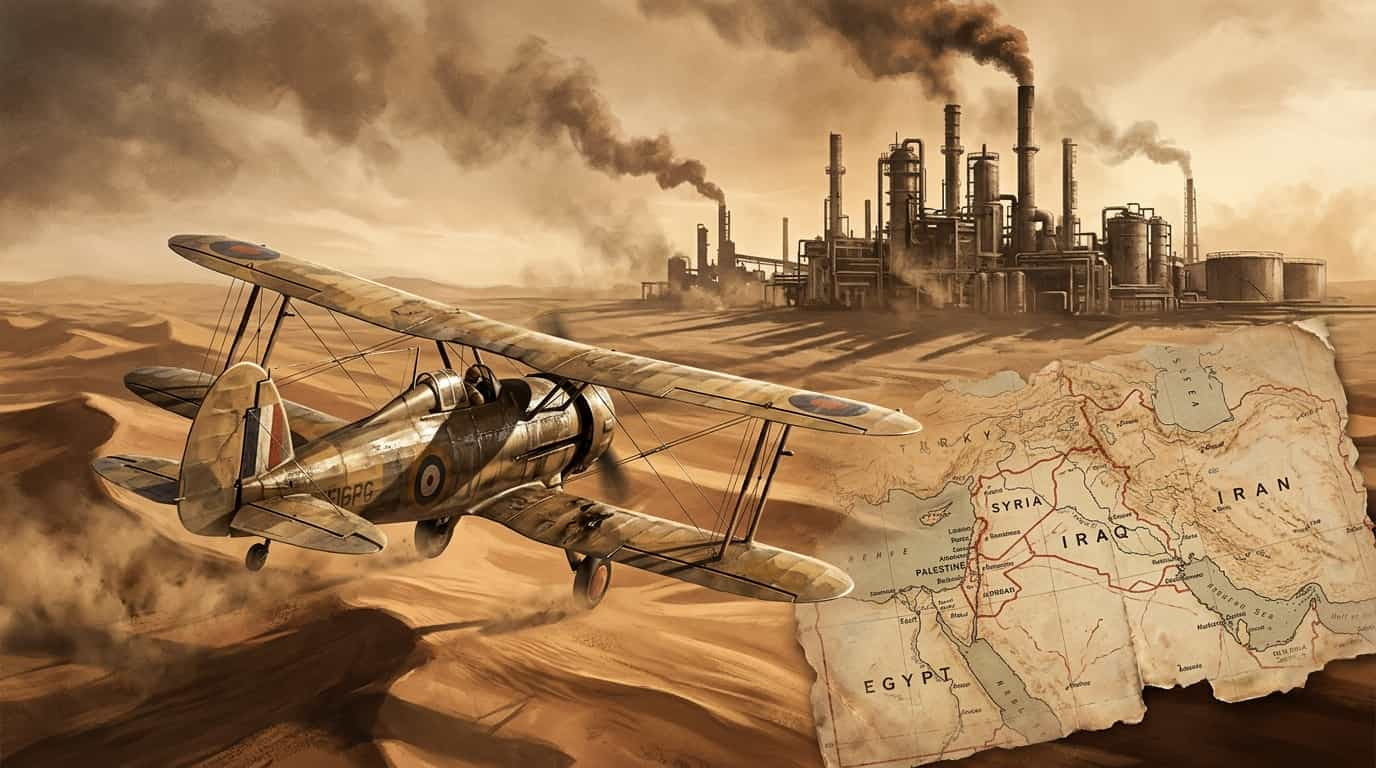
April 1941. A German aircraft touches down in Baghdad carrying a man the British intelligence services know well: Fritz Grobba—diplomat, propagandist, and the Third Reich’s most influential operative in the Arab world. Within days, Iraq is in revolt. A pro-Axis government seizes power. British troops are trapped at a desert air base surrounded by Iraqi forces. German bombers begin landing in the Middle East. And in Berlin, Adolf Hitler starts looking beyond Europe—toward the oil fields of Iraq and Iran, the Suez Canal, and the possibility of collapsing the British Empire from the south.
It came far closer to succeeding than most people realize.
Today, when we think of the Second World War, we picture the beaches of Normandy, the ruins of Stalingrad, the skies over London. But while the world’s attention was fixed on Europe, another war was unfolding across the Middle East—a war of coups, invasions, espionage, collapsing empires, and battles fought over the most valuable resource on Earth: oil.
This was not a sideshow. It was one of the strategic centers of the entire conflict. From the deserts of Iraq to the mountains of Syria, from the refineries of Abadan to the streets of Cairo, Allied and Axis powers fought for control of supply lines, pipelines, ports, and imperial lifelines that kept entire armies alive.
If the Axis had broken through the Middle East, the consequences could have been enormous. Britain might have lost access to vital oil supplies. The Suez Canal could have fallen. German forces advancing from North Africa and the Caucasus might have converged on the region from two directions at once. The entire balance of the war could have changed.
And yet, despite its importance, this front has largely vanished from popular memory. This book is the story of how the modern Middle East was forged in the shadow of the largest war in human history.
The Imperial Patchwork and the Ultimate Prize
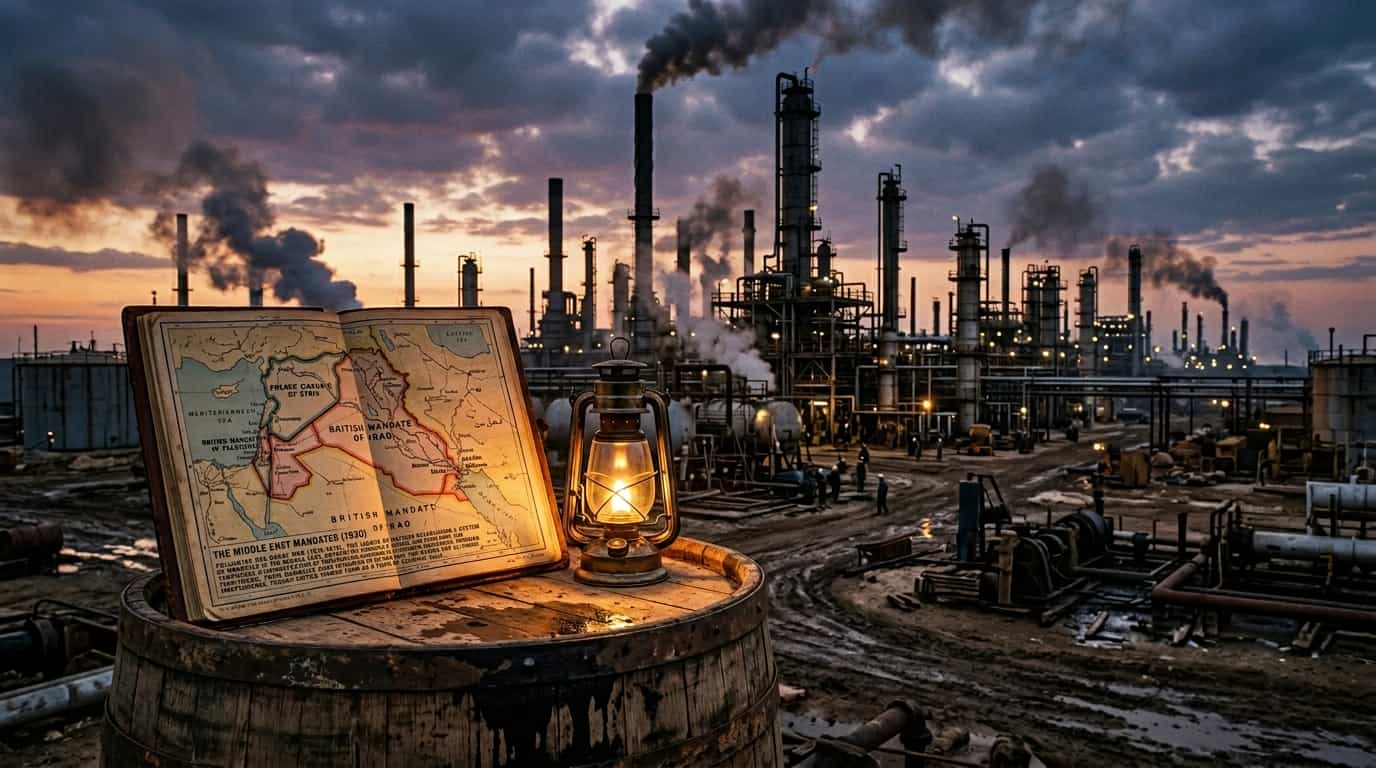
To understand why the Middle East mattered in the Second World War, you have to understand what the Middle East was in 1939. It was not the sovereign collection of nation-states that appears on modern maps. It was a patchwork of British mandates, French mandates, nominally independent kingdoms, and colonial arrangements dating from the end of the First World War. This system was constructed not to reflect the will of the people who lived there, but to serve the strategic interests of the European powers who had partitioned the Ottoman Empire's remains at the Paris Peace Conference of 1919.
Britain controlled Palestine, Transjordan, and Iraq under League of Nations mandates, while exercising effective control over a nominally independent Egypt. France controlled Syria and Lebanon. And beneath all of it lay oil.
The oil fields of Iraq had been in commercial production since the 1920s. Persian oil—extracted by the Anglo-Iranian Oil Company—was processed at the massive refinery at Abadan, the largest in the world at the time. Together, these fields supplied a significant portion of the fuel that Britain needed to run its navy, air force, and mechanized army. Whoever controlled Middle Eastern oil controlled the capacity to wage war.
Adolf Hitler's strategic thinking about the Middle East was systematically integrated into his larger vision. The conquest of the Soviet Union was to be accompanied by a drive into the Caucasus, toward the oil fields of Baku. A simultaneous push through North Africa, through Egypt, and across the Suez Canal was to bring German forces into the Middle East from the west. If these two thrusts could meet, the oil would be severed, and the British Empire broken.
Nazi Germany possessed a significant diplomatic asset in the region: genuine anti-British sentiment. Nationalist movements in Iraq, Syria, Egypt, and Palestine viewed Britain and France not as liberators, but as occupying powers. Germany cultivated these grievances with deliberate care, offering local leaders leverage against a common enemy. The region was primed to explode.
The Spark in Baghdad — The Golden Square Coup
The first detonation came not in the desert, but in a city on the banks of the Tigris. On April 1, 1941, a group of Iraqi military officers known as the Golden Square seized effective control of Baghdad. They forced the pro-British regent, Prince Abd al-Ilah, to flee the country and installed Rashid Ali al-Gaylani as prime minister.
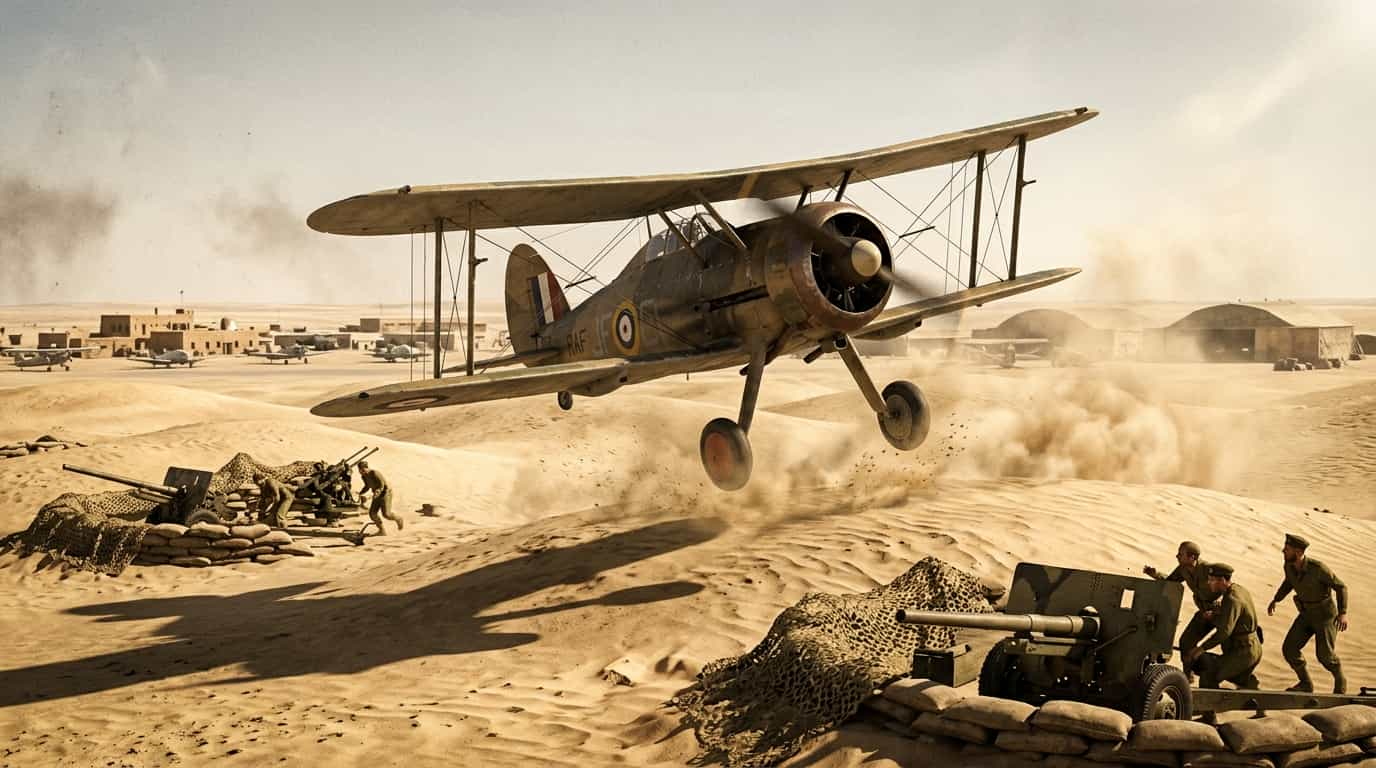
The timing was, from the German perspective, nearly ideal. The British were stretched thin. Rashid Ali ordered Iraqi forces to surround the British air base at Habbaniya, thirty miles west of Baghdad.
Habbaniya was not primarily a combat installation; it was a training base holding roughly nine thousand people and a collection of obsolete aircraft. The Iraqi forces surrounding it numbered in the thousands and possessed artillery. By the logic of warfare, the garrison should have surrendered. It did not. The RAF commander at Habbaniya, Air Vice Marshal Harry George Smart, made the decision to attack rather than wait.
For four days, instructors and trainees flew continuous sorties against Iraqi positions. Aircraft returned, were refueled and rearmed, and went back up. By May 6, the Iraqi forces withdrew. The siege had been broken by men in training aircraft flying against professional soldiers with artillery.
Simultaneously, a British relief column pushed from Palestine toward Baghdad. Though Germany deployed Luftwaffe bombers to northern Iraq, the window of opportunity was closing. On May 30, the British relief column reached the outskirts of Baghdad. Rashid Ali fled to Iran, and the pro-British government returned to power. The coup had lasted less than six weeks, but it proved the Middle East was dangerously vulnerable.
Frenchmen Killing Frenchmen — The War in the Levant
With Iraq stabilized, the British looked toward the Levant. In June 1940, France had fallen to Germany, and the collaborative Vichy government now controlled Syria and Lebanon. General Henri Dentz, the Vichy administrator in Syria, had allowed German aircraft to transit through Syrian airfields during the Iraqi coup. The British could not allow Syria to become a permanent German staging area.
This set the stage for an extraordinary tragedy: the French were about to fight the French.
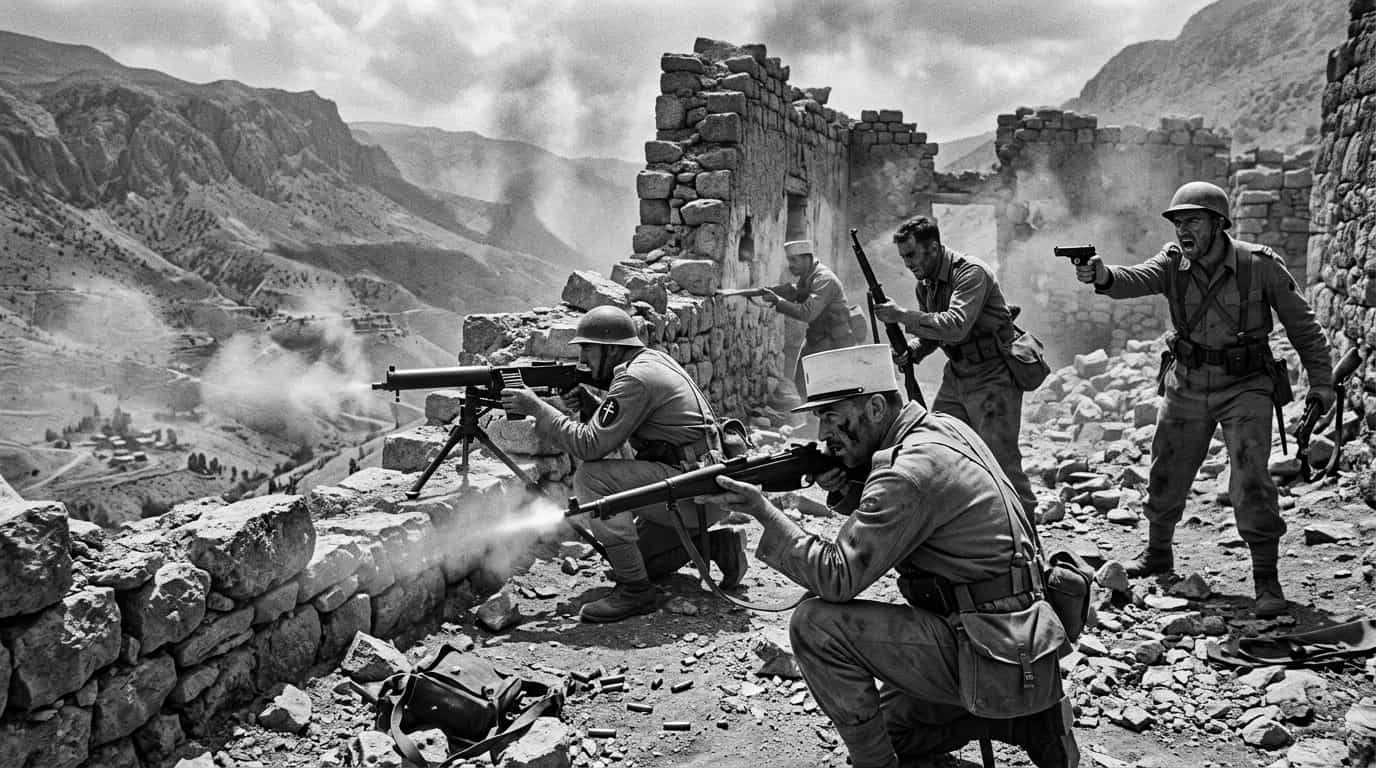
On June 8, 1941, Allied forces launched Operation Exporter, crossing the Syrian and Lebanese borders. The forces involved were British, Australian, Indian, and Free French. The Free French leadership, under Charles de Gaulle, expected the Vichy troops to defect rather than fight. They did not.
What followed was five weeks of bitter combat across the mountains and valleys of the Levant. French soldiers shot at French soldiers across positions they had jointly built before the war. At the Battle of Kissoué, Free French Legionnaires fought Vichy Foreign Legionnaires in surreal, hand-to-hand combat. The Australians, fighting along the coast, suffered over sixteen hundred casualties.
Damascus fell on June 21, and Beirut held until July 12. An armistice was signed at Acre on Bastille Day, July 14. Syria and Lebanon passed under Allied administration, closing the German route through the Levant. However, the majority of Vichy troops chose repatriation to France rather than joining de Gaulle, creating a lasting bitterness between the Free French and the British.
The Invasion of a Neutral Nation — Securing Iran
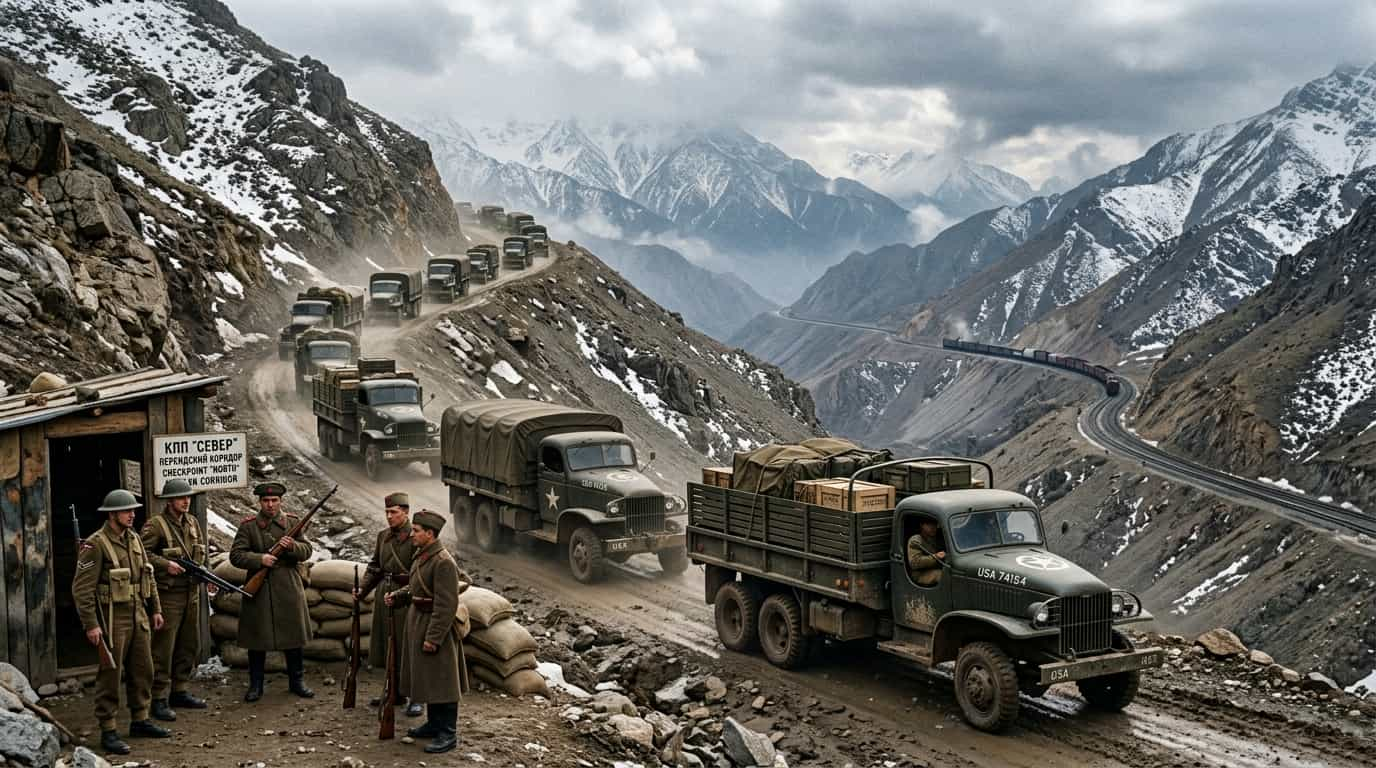
To the east of Iraq sat Iran, a nominally neutral country situated across the most critical supply route of the entire Allied war effort. The Shah of Iran, Reza Shah Pahlavi, maintained neutrality, but his sympathy for Germany was well known, and thousands of German technicians operated within the country.
After Hitler invaded the Soviet Union in June 1941, the Soviets absorbed catastrophic losses. They desperately needed supplies, and the route through Iran—from the Persian Gulf, north to the Soviet border—was geographically ideal.
On August 25, 1941, British and Soviet forces crossed the Iranian border simultaneously. Two ideologically opposed great powers invaded a neutral country in a coordinated fashion. The Iranian armed forces were overwhelmed within days. Reza Shah was forced to abdicate, replaced by his young son, Mohammad Reza Shah Pahlavi.
What followed was the creation of the Persian Corridor. Between 1941 and 1945, approximately five million tons of supplies—American Lend-Lease trucks, aircraft, food, and ammunition—passed through Iran to the Soviet Union. This logistical miracle supplied roughly one-quarter of all Lend-Lease material reaching the USSR, a contribution Stalin explicitly acknowledged as vital to Soviet survival. Iran had become the hinge of the Allied war effort, though its people experienced the war not as liberation, but as foreign occupation.
The Desert War — Defending the Gateway
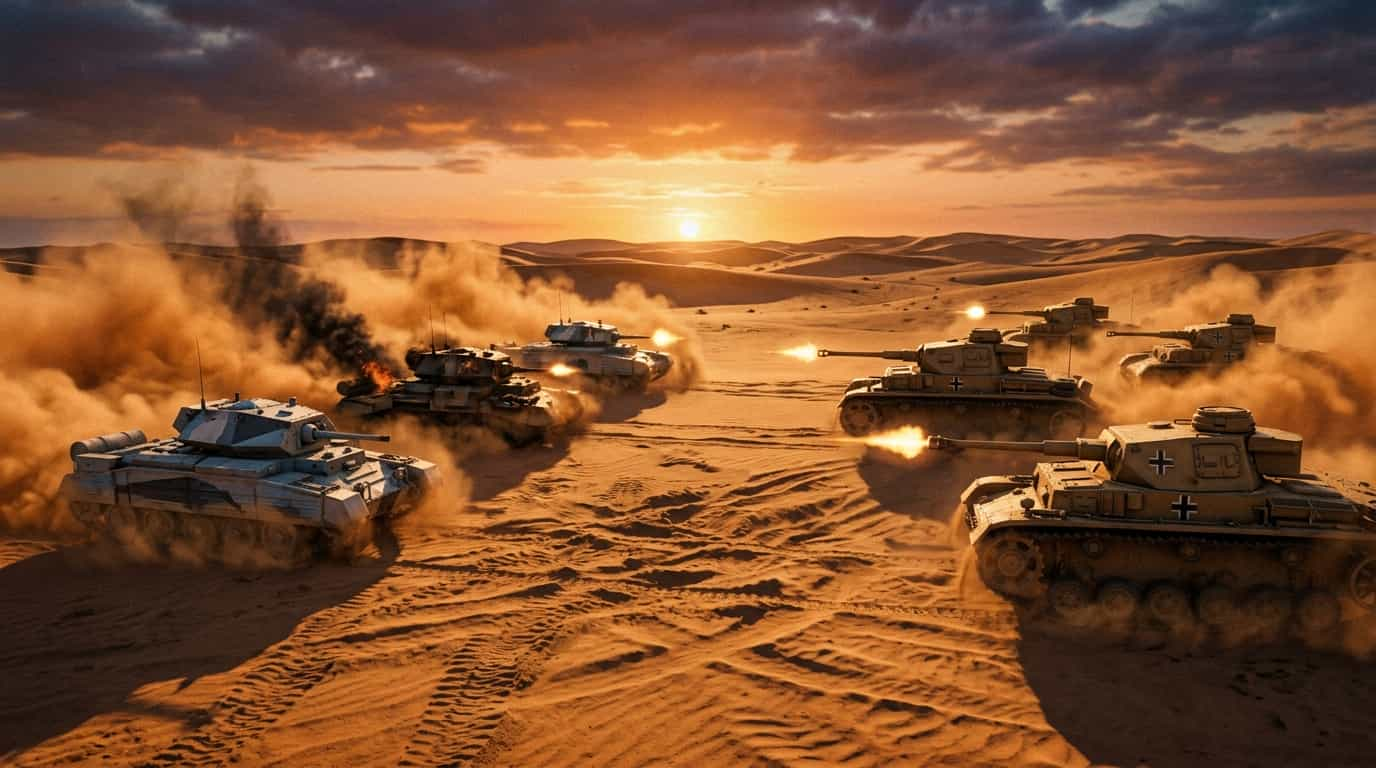
While supply lines were secured in the east, the war in the Western Desert of Egypt and Libya was reaching its climax. Erwin Rommel arrived in North Africa in February 1941, commanding the Afrika Korps. Moving faster and thinking more boldly than his opponents prepared for, Rommel launched a massive offensive.
The North African campaign is often treated as a separate conflict, but it was intrinsically tied to the broader Middle Eastern theater. If Rommel had broken through at El Alamein in the summer of 1942, the consequences would have been catastrophic. British forces in Palestine would have been threatened, the Iraqi oil pipelines severed, the Levant outflanked, and the Persian Corridor isolated.
General Claude Auchinleck halted Rommel’s initial advance, stabilizing a dissolving front. His successor, General Bernard Montgomery, commanded the British forces at the Second Battle of El Alamein in late 1942, permanently ending German offensive capacity in North Africa.
The soldiers who fought across this theater represented a global coalition: Australians, Indians, South Africans, New Zealanders, Poles, Czechs, Greeks, Palestinians, and Americans. Together, they defended the strategic keystone of the southern approach to Europe.
The Crucible of Palestine
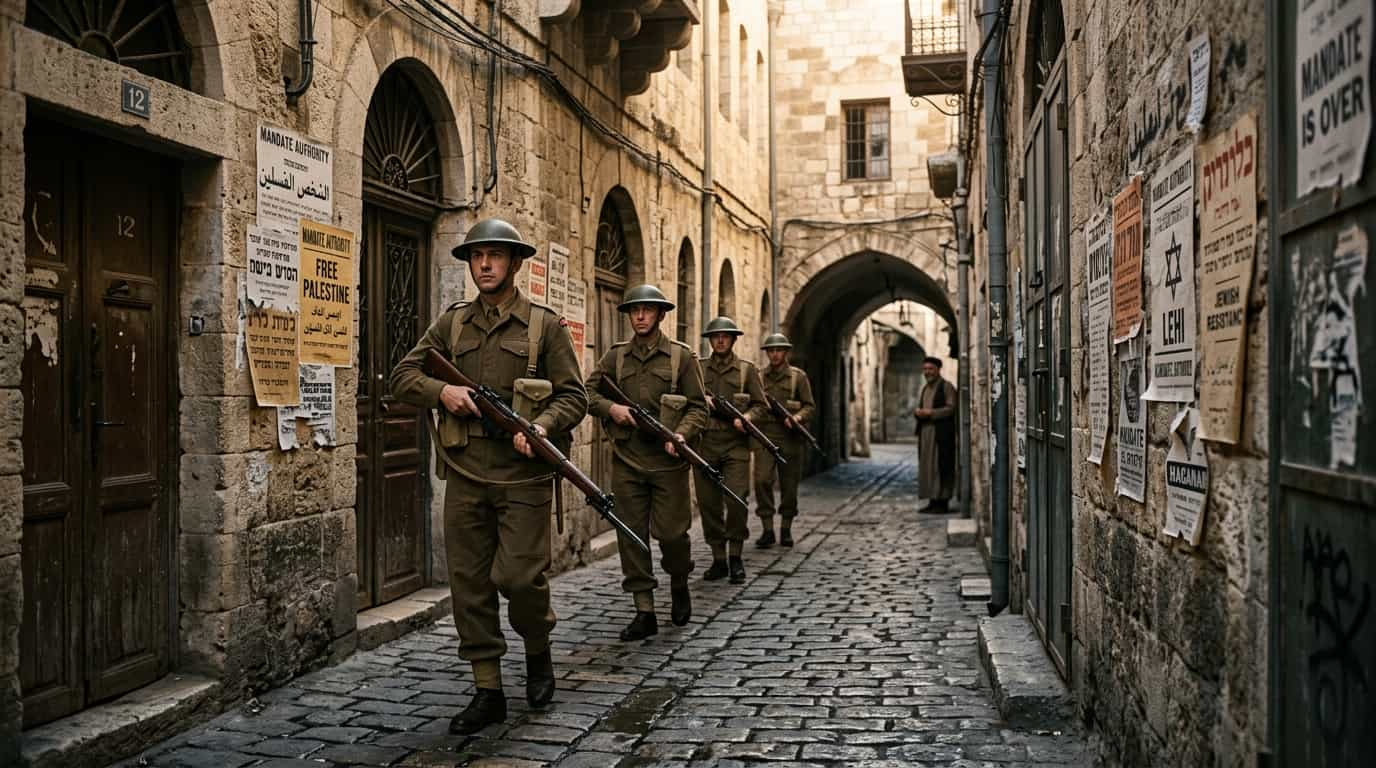
Throughout the war, the British Mandate for Palestine remained in a state of managed crisis. Following the Arab Revolt of the late 1930s, the British issued the White Paper of 1939, sharply restricting Jewish immigration to Palestine to maintain Arab goodwill.
This policy went into effect just as the Holocaust intensified in Europe. The Jewish community of Palestine, the Yishuv, responded with a dual strategy articulated by David Ben-Gurion: fight the war alongside the British against the Axis, while simultaneously resisting British immigration restrictions.
Approximately thirty thousand Palestinian Jews enlisted in British forces, eventually forming the Jewish Brigade. At the same time, militant Zionist factions like the Irgun and Lehi maintained violent opposition to British rule, culminating in the 1944 assassination of Lord Moyne in Cairo.
Meanwhile, the Arab population watched with a mix of anxiety and frustration. While many Arabs served in Allied forces, leaders like the Grand Mufti of Jerusalem, Haj Amin al-Husseini, aligned with the Axis, broadcasting propaganda from Berlin. The tensions in Palestine were merely suspended by wartime necessity, compressing like a spring that would violently uncoil the moment the global conflict ended.
The Shifting Sands of Postwar Power
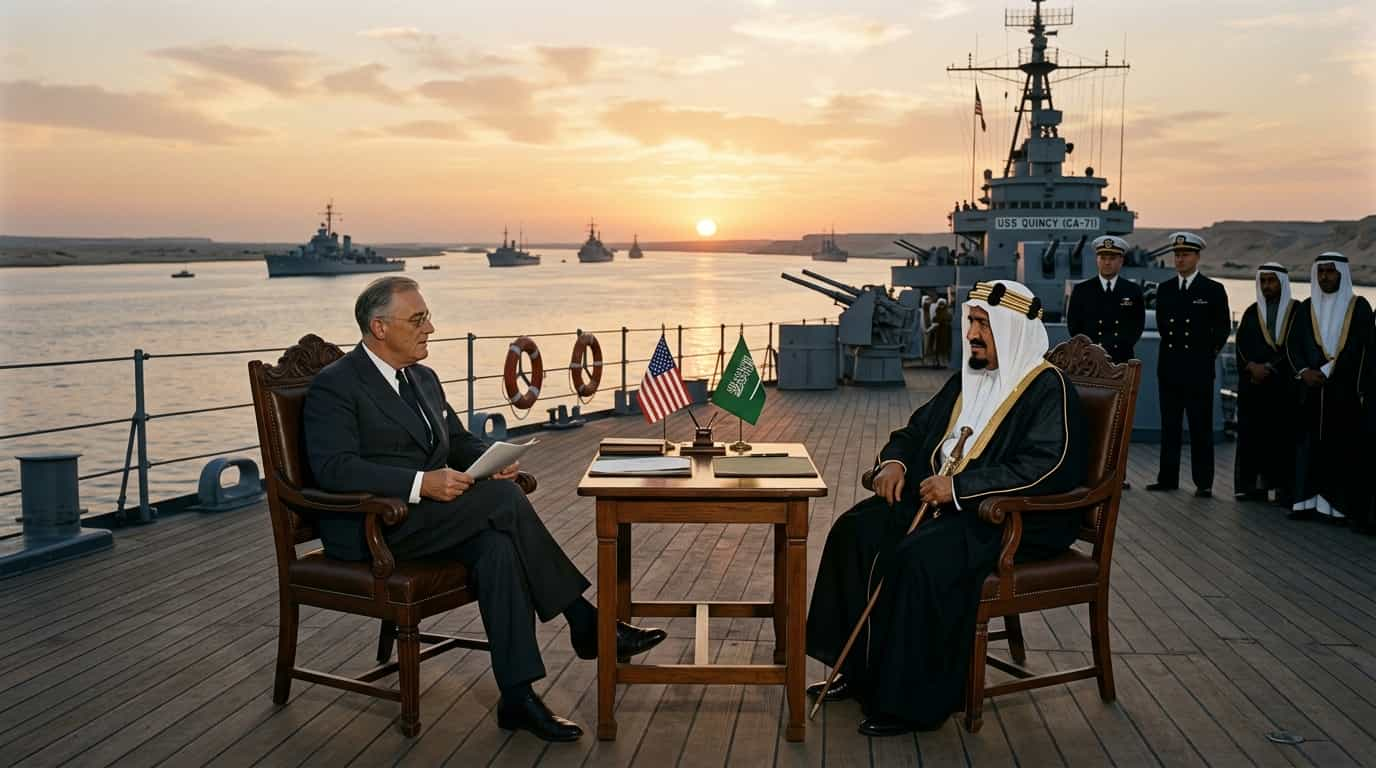
By 1944, the immediate strategic threats to the Middle East had been resolved, but the political questions remained. The United States had arrived as a dominant actor, cemented by a February 1945 meeting between President Franklin D. Roosevelt and Saudi King Ibn Saud, establishing a framework that defines geopolitics to this day.
Britain emerged from the war victorious but financially drained and militarily exhausted. The era of formal imperial control was ending. In Syria and Lebanon, the Free French discovered the populations they administered would not accept continued rule. When French forces bombarded Damascus in May 1945, the British intervened, effectively forcing France to grant independence to both nations.
In Iran, Soviet forces refused to leave after the war, triggering one of the first confrontations of the Cold War. The resentment from the 1941 occupation and ongoing foreign interference fed Iranian nationalism, directly setting the stage for the 1953 CIA-backed coup that removed Prime Minister Mohammad Mosaddegh.
In Iraq, the pro-British governments survived for a decade until the violent revolution of 1958 overthrew the monarchy. And in Palestine, the end of the British Mandate in 1948 resulted in the creation of Israel, a subsequent war, and the displacement of hundreds of thousands of Palestinians, creating a geopolitical wound that remains unhealed.
The Fires Still Burning

There is a reason this theater of the war has been forgotten in popular histories. The story of the Middle East in the Second World War does not fit cleanly into the narrative frameworks that Western memory has built. It is not a simple story of democratic good versus totalitarian evil. It is the story of empires defending their interests, of colonial subjects navigating between oppressors, and of promises made and broken in the same breath.
It is not comfortable. But it is the true story.
The borders of modern Iraq, Syria, Lebanon, Israel, and Jordan are the borders of the Mandate system, defended and modified by this very war. The oil infrastructure the Allies fought to secure became the backbone of the modern global economy. The Iranian-American animosity, the Iraqi instability, and the Israeli-Palestinian conflict all trace their modern parameters directly to the conditions, promises, and traumas of the wartime theater between 1940 and 1945.
Forgetting this front allows the consequences to accumulate without explanation. It makes the Middle East seem perpetually, inexplicably volatile, rather than a region shaped by specific, traceable historical causes.
The soldiers of the forgotten front left no monuments comparable to Normandy. Their battles have been absorbed into the landscape—now cities, oil fields, and contested borders. But the consequences of what they did, what was promised and not delivered, and what was taken and not returned, are not invisible at all.
They are everywhere. They are still here.
WW2 Middle East theater, forgotten front World War II, Golden Square coup Iraq 1941, Siege of Habbaniya, Operation Exporter Syria, invasion of Iran WW2, Persian Corridor Lend-Lease, Erwin Rommel North Africa, British Mandate Palestine WW2, geopolitics of Middle East oil, history of modern Middle East


Discussion
Comments
Approved comments are published after moderation to keep discussion useful and spam-free.
No comments yet. Start the discussion below.