The Hormuz Escalation Cycle: A Tactical and Diplomatic Breakdown of the US-Iran Kinetic Exchange
The security architecture of the Persian Gulf faces its most severe operational test since the implementation of the United States naval blockade on April 13, 2026. A complex, multi-theater kinetic exchange overnight has disrupted ongoing diplomatic channels, resulting in structural damage to civilian infrastructure in Kuwait and targeted military destruction on Qeshm Island.
This analysis deconstructs the chronological sequence of events, evaluates the competing strategic justifications of the primary actors, and examines the underlying diplomatic impasse stalling a finalized ceasefire agreement between Washington and Tehran.
The overnight engagements involved a rapid sequence of offensive launches and defensive counter-measures across the upper and lower Persian Gulf. The theater operations can be organized into three distinct geographic phases:
====================================================================
               CHRONOLOGY OF MARITIME AND AIR ENGAGEMENTS
====================================================================
[PHASE 1: MARITIME INTERDICTION]
US Naval Asset ──► Launches AGM-114 Hellfire ──► Disables M/T Engine Room
                                                       │
                                                       ▼
[PHASE 2: REGIONAL MISSILE/DRONE WAVE]
IRGC Rocket Forces ──► 3 Ballistic Missiles ──► Bahrain (Intercepted)
                   ──► 2 Ballistic Missiles ──► Kuwait (Defensive Failure)
                   ──► Swarm Drones      ──► Kuwait Airport (Civilian Fatality)
                                                       │
                                                       ▼
[PHASE 3: COUNTER-BATTERY STRIKE]
US Centcom Air Assets ──► Precision Munitions ──► Qeshm Island Control Station
====================================================================
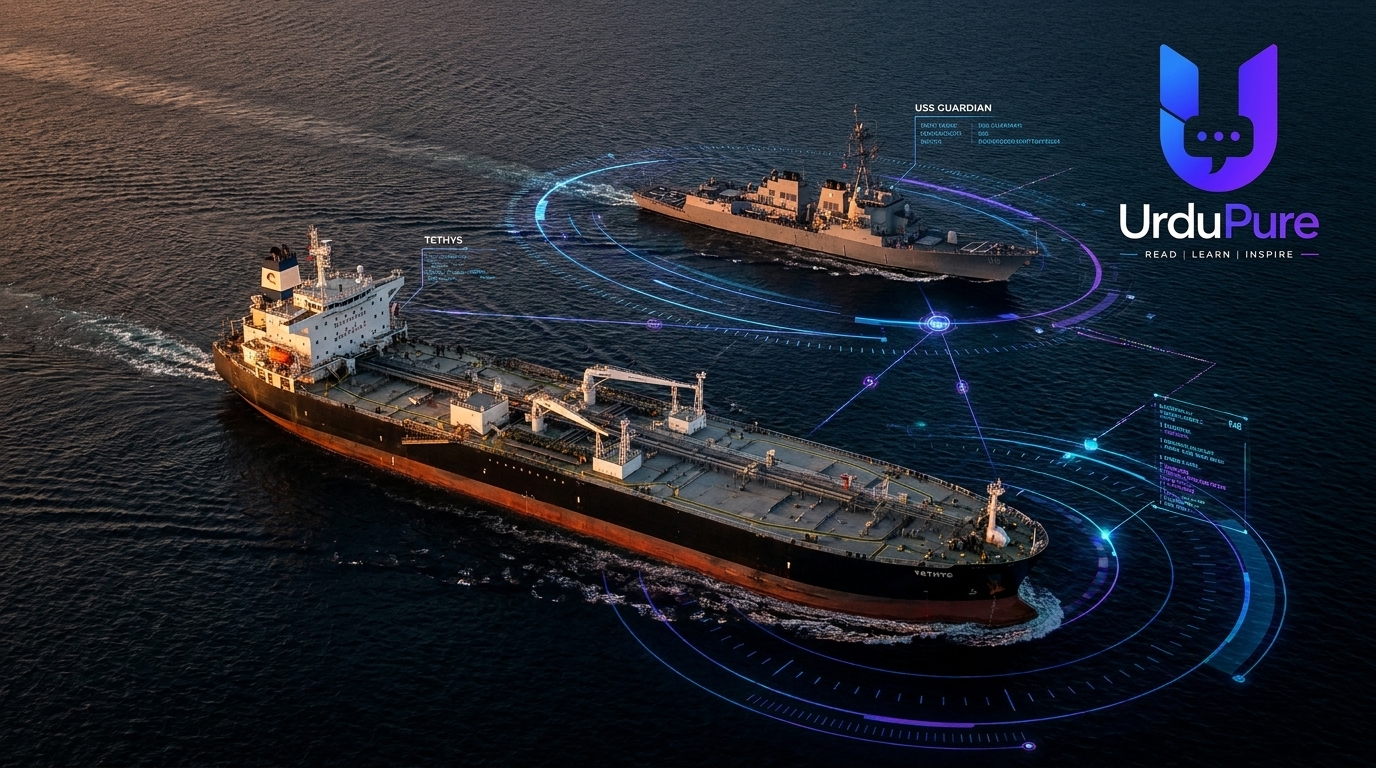
Hours prior to the aerial escalation, U.S. naval forces operating under the April 13 blockade mandate intercepted the Botswana-flagged oil tanker M/T as it transited toward an Iranian oil terminal. According to technical briefs from U.S. Central Command (Centcom), the vessel proceeded through a restricted transit corridor after ignoring multiple maritime advisory broadcasts.
A U.S. military aircraft subsequently deployed a single AGM-114 Hellfire missile into the vessel's engine room. The strike was architected to disable the ship's propulsion mechanisms while minimizing the risk of hull breach or environmental contamination.
In response to the disabling of the tanker and the enforcement of the embargo, the Islamic Revolutionary Guard Corps (IRGC) initiated a coordinated launch of ballistic missiles and loitering munitions from the Iranian mainland.
The offensive split into three primary vectors:
The Bahrain Vector: Three ballistic missiles were tracked heading toward western Gulf targets. Integrated air defense units in Bahrain successfully neutralized or deflected all three targets before they reached their terminal phase.
The Maritime Vector: Three attack drones tracking toward international shipping channels were intercepted and destroyed by U.S. Navy surface combatants.
The Kuwait Vector: Two ballistic missiles and a swarm of loitering munitions targeted the northern Gulf. While defensive batteries engaged, elements of the drone swarm bypassed local air defenses, striking structural targets within the perimeter of Kuwait International Airport and adjacent districts. The Kuwaiti Foreign Ministry confirmed one civilian fatality and multiple injuries, alongside structural damage to surrounding infrastructure and diplomatic properties.
The Counter-Battery Response
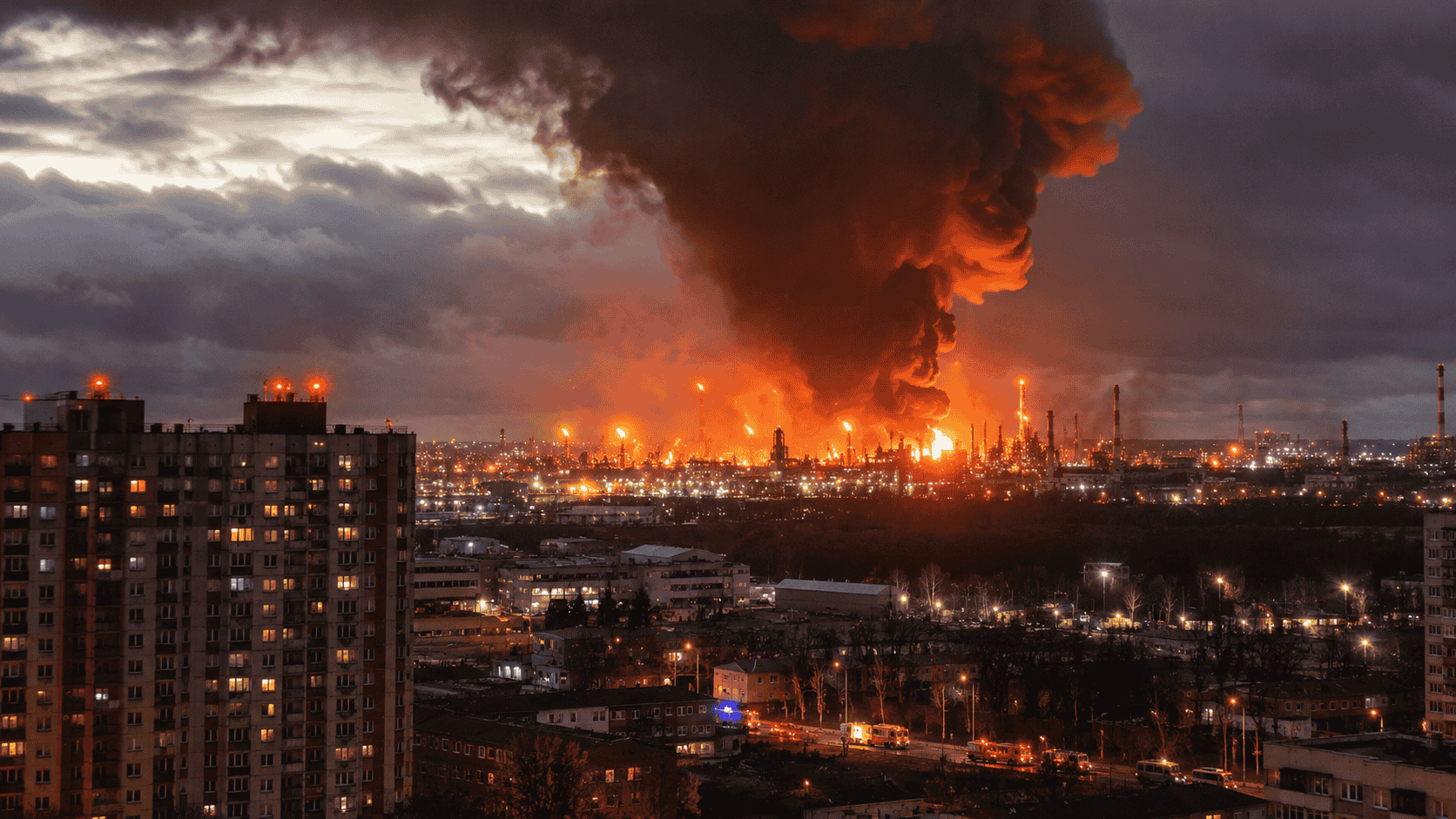
As the airspace engaged, Centcom assets launched an immediate counter-battery strike against an active Iranian ground control station on Qeshm Island. Situated in the narrow throat of the Strait of Hormuz, the Qeshm facility served as a primary command node for monitoring and directing localized drone operations over international waters. The precision strike successfully disabled the facility's radar and command infrastructure, ending the night's active engagements.
Determining responsibility for the breakdown of the operational status quo requires assessing the conflict through three distinct timelines. Military analysts view the escalation not as an isolated incident, but as a chain of action and reaction where each party operates under a logically consistent defensive doctrine.
+-------------------------------------------------------------------+
|                     THE ESCALATION SPIRAL                         |
+-------------------------------------------------------------------+
|  STRATEGIC LEVEL:   Long-term Nuclear and Sanctions Standoff      |
|         │                                                         |
|         ▼                                                         |
|  OPERATIONAL LEVEL: Implementation of US Naval Blockade (Apr 13)  |
|         │                                                         |
|         ▼                                                         |
|  TACTICAL LEVEL:    Interdiction of M/T Tanker via Hellfire       |
|         │                                                         |
|         ▼                                                         |
|  KINETIC RESPONSE:  Regional Missile/Drone Swarm Engagement        |
+-------------------------------------------------------------------+
If evaluated purely within the immediate 24-hour operational window, the kinetic escalation was initiated by the U.S. aerial strike on the Botswana-flagged tanker.
From the Iranian perspective, the use of a missile against a commercial merchant vessel trading with its ports constitutes an act of economic warfare and physical aggression, demanding an asymmetric military response to project deterrence. Conversely, from the American perspective, the tanker's refusal to heed warnings within a legally declared blockade zone made the interdiction a necessary enforcement action to maintain the integrity of the embargo.
Expanding the window to the prior months shifts the focus to the April 13 Blockade Mandate. Under this lens, the structural instability of the theater stems from the U.S. decision to position naval assets to intercept and control Iranian energy exports.
Tehran views the blockade as a violation of freedom of navigation in international straits, justifying its counter-strikes on regional host nations as an enforcement of its own maritime sovereignty. Washington, however, frames the blockade as a lawful enforcement mechanism designed to counter long-term regional proxy funding and maritime disruptions previously attributed to regional actors.
At the highest analytical tier, the conflict is rooted in the long-term Nuclear Proliferation and Sanctions Impasse. The United States operates under a policy of comprehensive economic containment to pressure Tehran into structurally modifying its nuclear and missile development programs.
Iran views these sweeping sanctions as an existential threat to its domestic stability, making the strategic leverage of the Strait of Hormuz—and the ability to disrupt regional security networks—its primary defensive counterweight against a conventionally superior adversary.
The paradox of the current escalation is that it occurred during a period of intense, back-channel ceasefire negotiations. The diplomatic efforts stalled over the weekend due to significant structural changes introduced into the draft text of the peace framework.
====================================================================
                  THE CEASEFIRE ROADBLOCKS
====================================================================
[US REVISED MANDATES]                 [IRANIAN COUNTER-POSITIONS]
* Permanent freedom of navigation   ──► Reject as infringement on
  within the Hormuz corridor.           sovereign maritime borders.

* Verified external removal of      ──► Refuse total surrender of enriched
  highly enriched uranium stocks.       material without upfront relief.

* Mandatory reopening of broader    ──► Demand strict isolation of ceasefire
  nuclear program portfolios.           from non-regional weapon talks.
====================================================================

According to institutional briefings via CBS News, the Trump administration requested edits to the core terms of the potential peace deal after evaluating the long-term stability of the Gulf security architecture with senior national security advisors. These modifications introduce three non-negotiable American positions:
The Freedom of Navigation Protocol: The revised terms demand an uninhibited, internationally verified maritime corridor through the Strait of Hormuz, permanently removing the option for localized tolling or asymmetric closures.
The Enrichment Cleanse: Washington has conditioned a permanent ceasefire on the physical removal of highly enriched uranium stockpiles from Iranian territory, requiring the material to be transferred to a verified neutral country under International Atomic Energy Agency (IAEA) custody.
The Expanded Mandate: The new text binds both parties to a structured timeline to reopen comprehensive negotiations regarding Iran's wider nuclear portfolio, its ballistic missile telemetry development, and its regional alliance networks.
Iranian Foreign Ministry spokesman Esmail Baghaei pushed back against the implementation of these terms, asserting that Washington was "constantly changing its views and putting forward new or contradictory demands" designed to shift the goalposts of a pre-negotiated draft.
This diplomatic friction matches the public posture of President Trump, who urged domestic critics to "sit back and relax," indicating that the White House believes its economic and military leverage will eventually compel Tehran to accept a highly structured, American-backed framework.
The domestic execution of American strategy was clarified by Secretary of State Marco Rubio during a congressional committee hearing on Tuesday. Confronted by lawmakers concerning the logical consistency of declaring a war "over" while actively engaging in naval blockades and missile defense actions, Rubio outlined a strict, condition-based diplomatic model.
                  ┌──► Nuclear Program Dismantling (Verified)
                  ├──► Ballistic Missile Program Caps
SANCTIONS RELIEF ─┼──► Verifiable Cessation of Regional Proxy Funding
                  └──► Permanent Maritime Freedom Assurances

The Rubio Doctrine explicitly rejects the traditional de-escalation framework, which often involves offering preliminary economic concessions or partial sanctions lifting to secure a temporary pause in hostilities. Rubio confirmed to Congress that U.S. negotiators have refused to offer any provisional economic relief simply to secure free transit through the Strait of Hormuz.
Under this framework, sanctions relief is treated as an immutable consequence of long-term strategic adjustments by Tehran, rather than a tactical bargaining chip to resolve localized maritime disputes. By stating that "the war is over," Rubio implies that from Washington's perspective, the conventional military balance has shifted permanently due to the blockade, leaving the administration content to maintain economic pressure until its core strategic objectives are met.
The transition from a diplomatic standoff to active kinetic engagements within civilian infrastructure and commercial shipping lanes has triggered immediate recalculations across global markets.
Following the disabling of the Botswana-flagged vessel and the drone impacts at Kuwait Airport, maritime insurance syndicates—including the Lloyd’s Joint War Committee—moved to re-classify the upper and lower Persian Gulf as an elevated war-risk zone.
Consequently, war-risk premiums for commercial tankers are expected to experience an immediate increase. This development alters the financial modeling for international shipping corporations, rendering routine transits through the Gulf significantly more expensive.
If the kinetic threat to commercial mariners persists, global shipping lines will face a structural choice: endure the elevated insurance and security costs of the Hormuz corridor or route ultra-large crude carriers (ULCCs) around the Cape of Good Hope.
[Hormuz Friction] ──► [Cape of Good Hope Diversion] ──► [+10-14 Days Transit] ──► [Global Supply Chain Inflation]
Diverting traffic around the African continent adds approximately 10 to 14 days to international transit manifestations. This shift naturally disrupts just-in-time delivery models for European and Asian manufacturing hubs, introducing a predictable, downstream inflationary spike to global energy and consumer commodity markets.
As both actors fortify their respective operational positions, the path toward regional stabilization remains bound to two primary geopolitical paths:
This model assumes that the compounding economic pressure of the naval blockade, paired with the regime's dwindling foreign currency reserves, will eventually bring Tehran to a point of transactional capitulation.
Faced with severe inflation and domestic structural constraints, the Iranian leadership may choose to accept a modified version of the Trump administration's terms—consenting to audited uranium caps and maritime security protocols in exchange for structured, condition-based sanctions relief. This pathway would lead to a formalized regional framework before the conclusion of 2026.
Conversely, if the hardline defense factions within the IRGC successfully isolate the diplomatic core, the theater will likely slide into a protracted, low-intensity grey-zone conflict. Rejecting the condition-based limits of the Rubio Doctrine, Tehran could rely on decentralized, asymmetric capabilities—such as loitering munitions, sea-skimming missiles, and deniable maritime mining operations—to raise the operational costs of the U.S. blockade.
By targeting peripheral logistics nodes and commercial vessels, this strategy aims to wear down the international shipping community's tolerance for risk. This path would defer any viable peace agreement into 2027, turning the Persian Gulf into a semi-permanent zone of managed kinetic friction.
US Iran military exchange 2026, Strait of Hormuz naval blockade, Kuwait airport drone strike, Qeshm Island kinetic action, Gulf defense analysis, commercial maritime security, tactical air defense interception, condition-based sanctions relief, regional deterrence framework, Middle East security architecture.





Discussion
Comments
Approved comments are published after moderation to keep discussion useful and spam-free.
No comments yet. Start the discussion below.