The World Is Sleepwalking Into a Food Catastrophe — And the Strait of Hormuz Is the Reason
The news cycle covers the missiles. It covers the ceasefire negotiations. It covers the diplomatic chess moves in capitals from Washington to Tehran to Islamabad. It counts the warships in the Persian Gulf and debates the terms of any eventual deal.
What it does not cover — with anywhere near the same urgency — is what happens to the family in Dhaka who cannot afford fertilizer for their rice field. Or the port worker in Bangladesh's Chittagong who is watching freight costs double. Or the 10 million people in sub-Saharan Africa who were already food-insecure before the Strait of Hormuz closed and are now contending with a second compounding shock.
UK Foreign Secretary Yvette Cooper put it plainly in May 2026: "The world is sleepwalking into a global food crisis."
She was right. And the world is largely asleep.
What the Strait of Hormuz Is — And Why It Cannot Be Replaced
The Strait of Hormuz is a narrow stretch of water between Iran and the Musandam Peninsula of Oman — at its tightest, 33 kilometres wide. Despite those modest dimensions, it functions as the world's single most critical maritime chokepoint. Not the most important. The most critical. The one whose closure creates consequences with no equivalent alternative.
Through the Strait flows:
Approximately 20–21 million barrels of oil per day — roughly 20% of the world's total daily oil consumption
30% of global liquefied natural gas (LNG) trade
One-third of global seaborne fertilizer trade — approximately 16 million tonnes annually, per UN figures
Significant volumes of aluminum, helium, and other industrial commodities
The critical distinction between the Strait of Hormuz and other maritime chokepoints — the Suez Canal, the Malacca Strait, the English Channel — is that the Strait of Hormuz has no viable alternative routing. Ships rerouting around the Suez Canal, for instance, can use the Cape of Good Hope. They pay more in time and fuel, but they can reroute.
There is no reroute around the Strait of Hormuz. The Persian Gulf is a semi-enclosed body of water with a single functional maritime exit. When that exit closes, the oil, gas, and fertilizer inside the Gulf simply do not move.
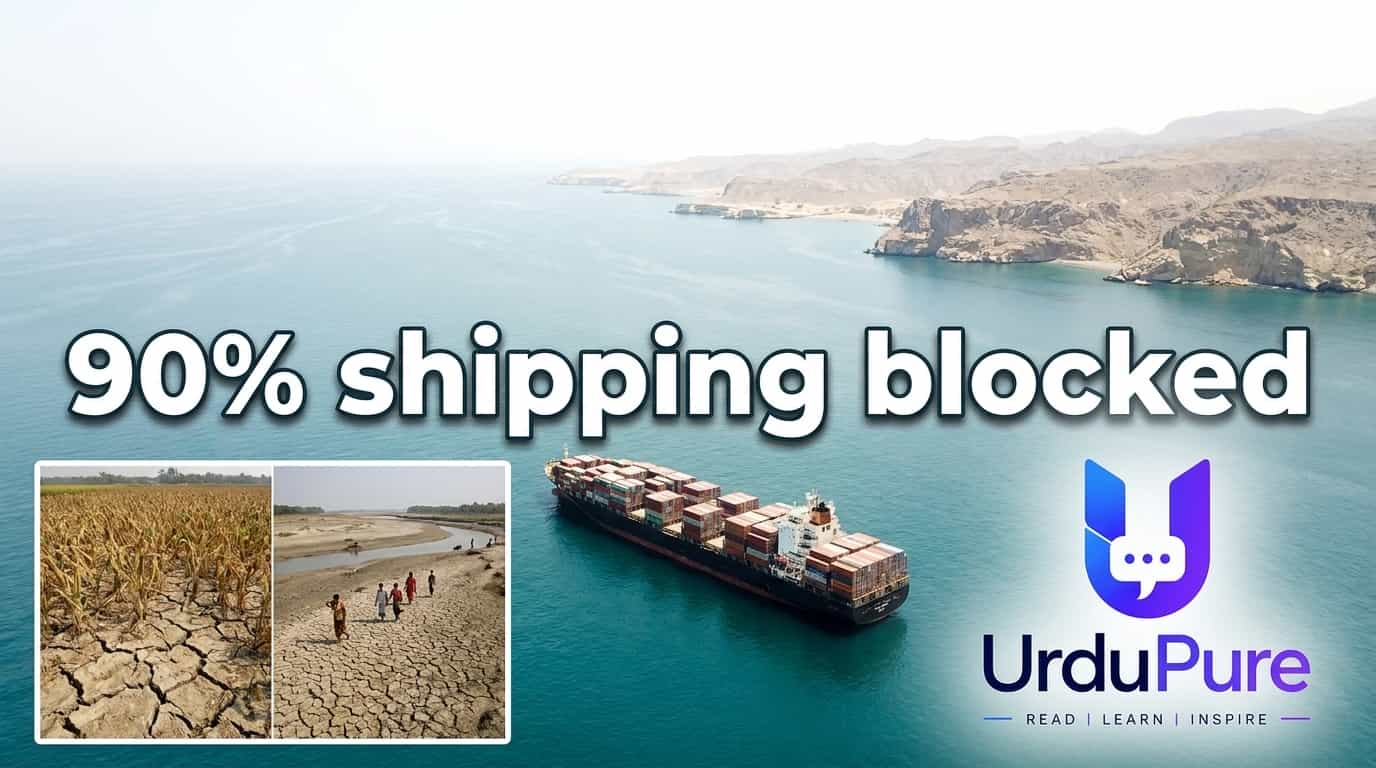
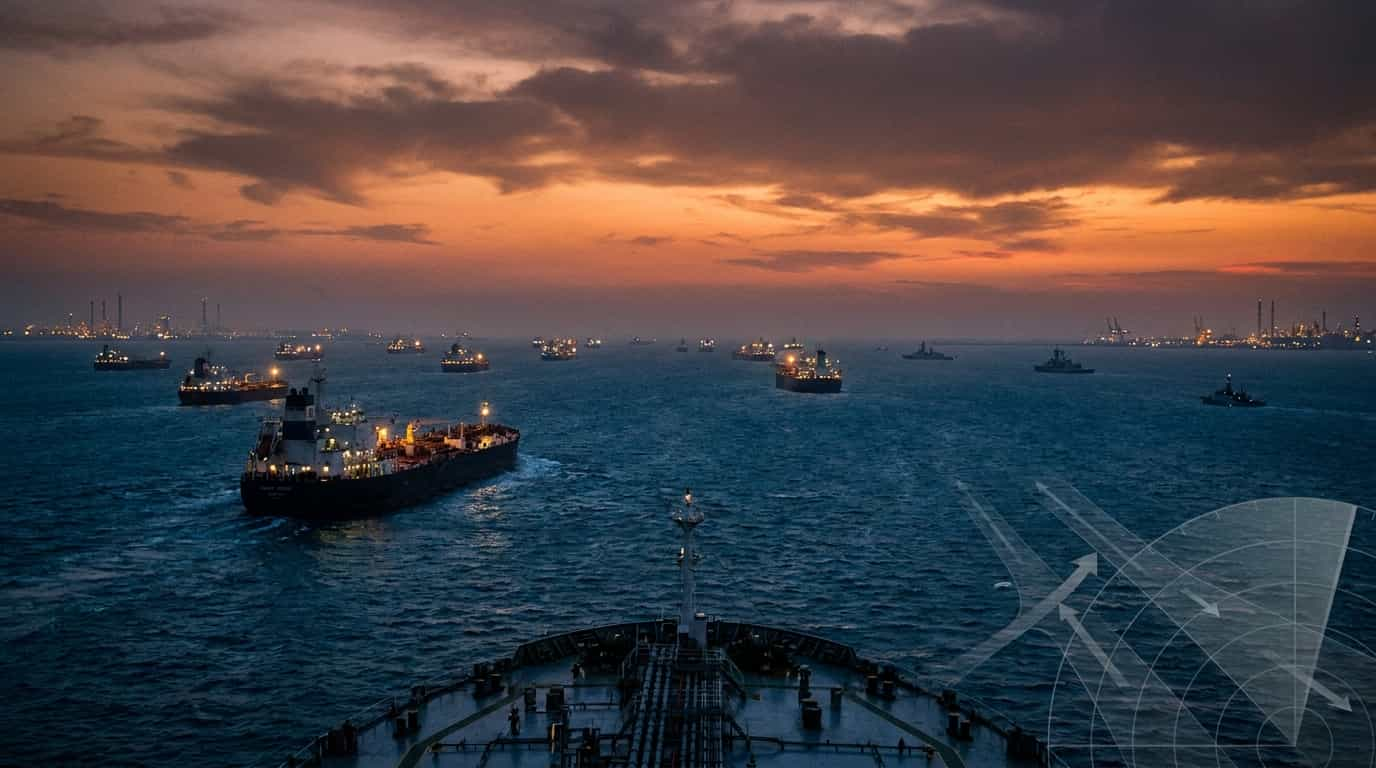
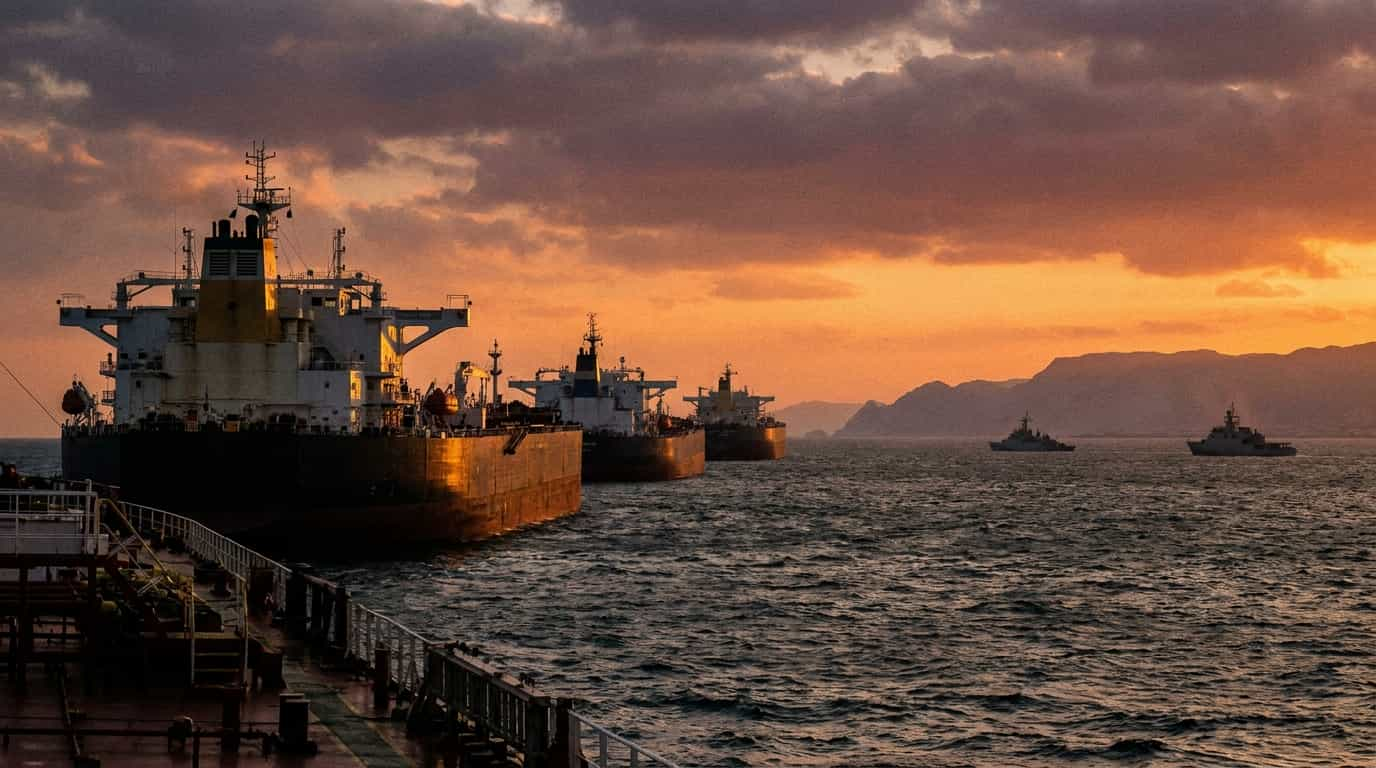
Since February 28, 2026, when Iran closed the Strait in retaliation for the U.S.-Israeli strikes, ship transit traffic has dropped by over 90%, according to UN figures. The closure has become, in the assessment of Wood Mackenzie, "the largest disruption to world energy supply since the 1970s energy crisis" — and by the measure of the oil market specifically, the largest in history.
The Oil Shock: From $90 to a Possible $200
The price of Brent crude oil has already passed $90 per barrel in the weeks following the closure, up sharply from its pre-war levels. But the number that keeps energy analysts awake at night is Wood Mackenzie's worst-case scenario: Brent crude approaching $200 per barrel by the end of 2026 if the Strait remains largely closed through year-end with recurring conflict.
To understand what $200 oil means for the global economy, you need to understand what it means beyond gas prices:
Household energy costs: Home heating, electricity generation, and transportation fuel would all see dramatic price increases. In the United States, the average household energy burden — the percentage of income spent on energy — would double or more for lower-income households.
Manufacturing and logistics: Every product that is manufactured, packaged, or shipped pays energy costs. Oil at $200/barrel translates directly into higher prices for virtually all physical goods — from groceries to electronics to clothing.
Agricultural production: Modern agriculture is profoundly energy-intensive. Tractors run on diesel. Irrigation systems run on electricity. Pesticides and herbicides are petrochemical derivatives. At $200/barrel, the cost of producing food increases sharply everywhere in the world.
Wood Mackenzie's three scenarios frame the uncertainty clearly:
Scenario 1 — Quick Peace: A workable agreement is reached near-term, the Strait reopens by June, and Brent falls to approximately $80/barrel by end-2026 before declining further to $65/barrel in 2027. Global GDP growth slows from 3% in 2025 to 2.3% in 2026. A recession is limited to the Middle East.
Scenario 2 — Summer Settlement: The ceasefire holds but negotiations extend into late summer. The Strait remains largely closed until September. Oil and LNG shortages persist through Q3 2026. Global GDP growth falls below 2% in 2026, with a shallow global recession in the second half. Economic scarring persists compared to the pre-war baseline.
Scenario 3 — Prolonged Crisis: The Strait remains largely closed through end-2026 with recurring conflict. Brent could approach $200/barrel. More than 11 million barrels per day of crude and condensate production affected. A deep global recession becomes likely.
As of late May 2026, the world is navigating between Scenarios 2 and 3. The ceasefire is in effect but contested. U.S. strikes against Iranian positions continued even as negotiations were ongoing on May 25. The Strait remains largely closed.
The Fertilizer Cascade: When Energy Becomes Hunger
Here is the mechanism that UK Foreign Secretary Yvette Cooper was describing when she warned of a food crisis — and it is more specific, more lethal, and more immediate than the headline suggests.
Fertilizer is made from natural gas. The industrial process for producing nitrogen fertilizers (ammonium nitrate, urea) requires natural gas as both a feedstock and an energy source. Approximately 85% of global ammonia production uses natural gas. When natural gas prices spike — as they do when LNG shipping through the Strait of Hormuz collapses — fertilizer production becomes dramatically more expensive, and in some cases economically impossible.
The Strait carries the fertilizer itself. Separately from the energy input to make fertilizer, the Strait of Hormuz is also the transit route for approximately 16 million tonnes of seaborne fertilizer trade annually — about one-third of the global total, per UN data. This fertilizer primarily flows from Gulf producers (Qatar, Saudi Arabia, UAE) to agricultural markets in South Asia, Southeast Asia, and parts of Africa.
With the Strait closed, that fertilizer does not move.
Marcia Brown, a food and agriculture expert, described the compounding nature of the crisis in a May 2026 interview: "One of the important things to understand about this is just how different parts of what is in the food supply chain come through the Strait. A third of global fertilizer comes through the Strait and the entire world is going to feel the shock because these are global markets."
The timeline from fertilizer blockage to harvest shortfall operates on an agricultural clock: farmers who cannot access fertilizer at planting time will produce less food at harvest time, 3-6 months later. If the Strait remains closed into summer, the fertilizer shortfall becomes locked into 2026-27 crop cycles. The food price increases from that shortfall are not hypothetical future risks — they are scheduled consequences of a current decision.
The Countries That Cannot Absorb This
The energy and food shock from the Hormuz crisis is global. But it is not equal. The UNCTAD analysis is unambiguous: developing countries dependent on imported energy and fertilizers are most exposed, experiencing two simultaneous shocks.
The Kiel Institute's policy brief is even more direct: "Every week that the strait remains closed, developing countries lose real income that cannot be recovered through subsequent market adjustment."
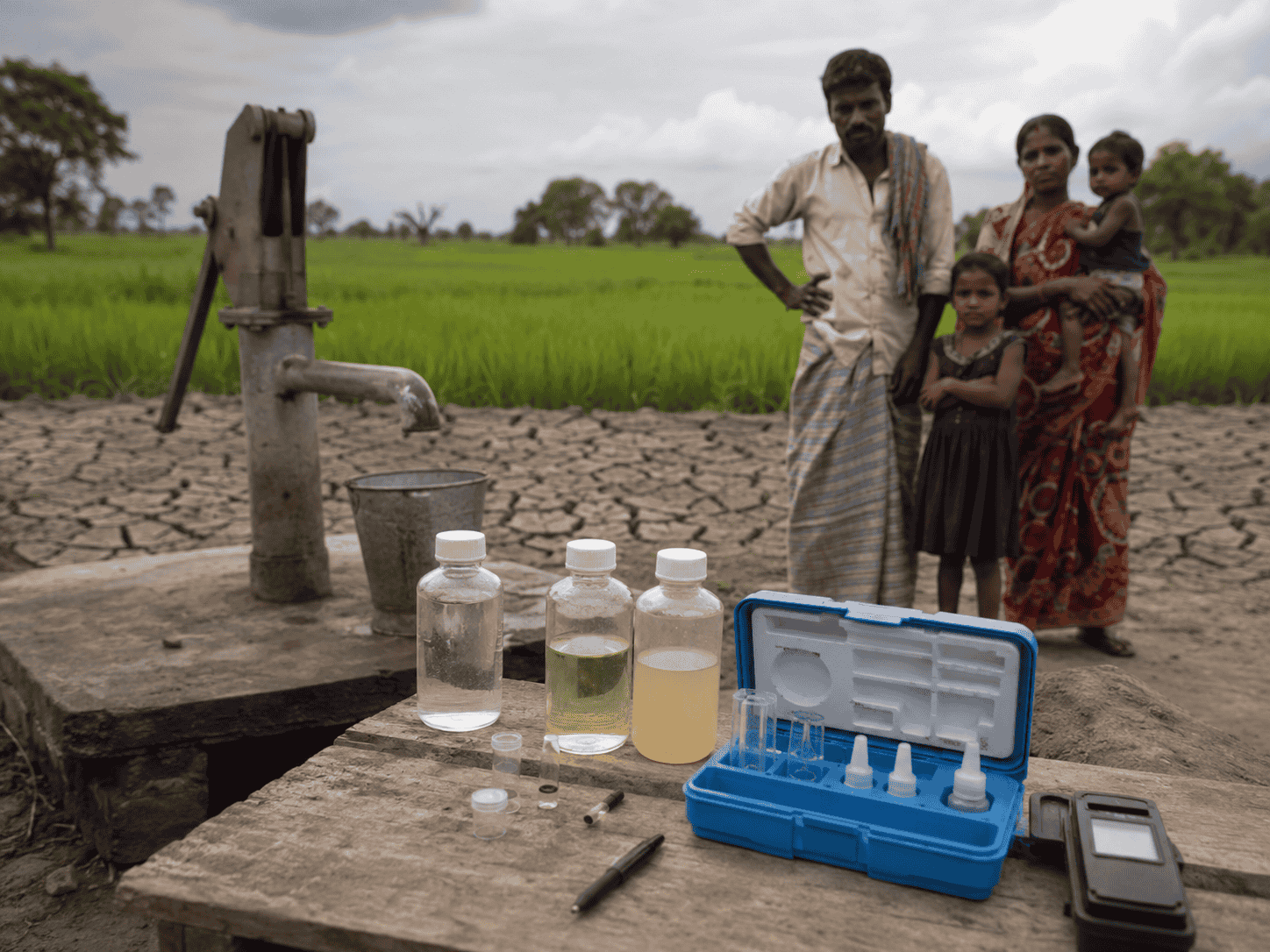
South Asia: Countries including Bangladesh, Pakistan, and Sri Lanka were already navigating constrained fiscal positions, high debt service burdens, and energy import dependence before the crisis. Bangladesh had been managing a fragile economic recovery. The Hormuz closure delivers a direct double hit: higher energy import costs AND potential fertilizer scarcity for rice and jute production. South Asian countries have been forced to shutter fertilizer production plants due to insufficient fuel access, per Marcia Brown's interview with CTV.
Sub-Saharan Africa: Multiple sub-Saharan African nations depend on Gulf fertilizer imports for their agricultural sectors. For countries like Ethiopia, Uganda, and Tanzania, where agriculture employs 60-80% of the population, a significant fertilizer supply disruption does not merely raise food prices — it threatens food production volumes. The UN World Food Programme was already managing crisis-level food insecurity across the Horn of Africa before February 2026.
Middle East and North Africa: The Kiel analysis identifies the MENA region as facing compounding effects — both as a region proximate to the conflict and as a region with high food import dependence. Egypt, which imports more wheat than almost any country on earth, faces supply chain disruptions that directly threaten its bread subsidy program, a political pillar of the Egyptian state.
The commodity price surge is already happening. Beyond oil, the Hormuz closure has driven price increases in aluminum, helium, and fertilizer inputs across global spot markets. These price signals are moving through supply chains now. The consumer price impact — at grocery stores, at fuel pumps, in electricity bills — is still building.
The UN's Warning: Recession, Poverty, Hunger
UN Secretary-General António Guterres issued a formal warning in April 2026 that deserves to be quoted in full — because it is the most authoritative assessment of what the Hormuz crisis means for global sustainability:
"The escalating crisis in the Strait of Hormuz could push tens of millions into poverty, trigger a surge in global hunger and even tip the world towards recession."
Three outcomes in one sentence: mass poverty expansion, global hunger surge, and global recession. From the Secretary-General of the United Nations. About a crisis that is ongoing right now.
UNCTAD (the United Nations Conference on Trade and Development) published a formal analysis noting that Brent crude prices were already rising above $90/barrel following the closure, with freight rates, insurance premiums, and bunker fuel costs all spiking simultaneously. The cumulative effect on import-dependent developing nations resembles, UNCTAD noted, "similar repercussions to those observed during the COVID-19 pandemic and at the beginning of the war in Ukraine" — except that the COVID and Ukraine supply shocks were not deliberately caused by an active military conflict with no certain end date.
The Sustainability Reckoning Nobody Is Having
Here is the dimension of this crisis that sustainability professionals, climate advocates, and global development organizations need to confront directly:
The Hormuz crisis is the world's most acute current demonstration of fossil fuel dependence vulnerability. The reason a 33-kilometre strait can threaten global food security, global energy supply, and global economic stability is that the global economy runs on oil and gas — and roughly 20% of that oil and gas flows through a single geographic chokepoint.
Every serious analysis of the energy transition — from the International Energy Agency's Net Zero reports to the IPCC's climate pathways — acknowledges that reducing the world's dependence on fossil fuels would, over time, reduce the strategic leverage of nations that control fossil fuel transit. The Hormuz crisis is a live demonstration of exactly this vulnerability, playing out in real time and in human lives.
The countries least responsible for global carbon emissions — Bangladesh emits a fraction of a percent of global CO₂ — are the countries most exposed to the food security consequences of an energy-system crisis they did not cause. This is the sustainability equity crisis that the climate movement has always warned was coming, manifesting not through slow-moving temperature change but through an acute military-triggered supply chain rupture.
What Resolution Looks Like — And What Must Come After
The ceasefire negotiations underway as of late May 2026 are focused on the Strait of Hormuz reopening as a central demand — and for good reason. The 60-day framework being discussed, if implemented, would allow oil and LNG flows to resume, fertilizer exports to restart, and the immediate food security clock to stop ticking.
But resolution of the Hormuz crisis, if it comes, does not resolve the underlying sustainability lesson. A world in which 20% of global oil supply flows through a 33-kilometre strait is a world perpetually vulnerable to the decision of whichever government controls the nearby coastline.
The long-term mitigation strategy is not military. It is structural. The Kiel Institute's analysis identifies "investment in energy efficiency, import infrastructure connected to non-Gulf suppliers, and diversification of energy sources" as the most effective long-term response. Translated: the world needs to use less fossil fuel, source it from more places, and build the alternative energy infrastructure that reduces the strategic leverage of any single chokepoint.
The Hormuz crisis of 2026 is not an argument for more military presence in the Persian Gulf. It is the most powerful possible argument for accelerating the energy transition. Every barrel of renewable energy capacity added globally makes the Strait of Hormuz slightly less capable of holding the world hostage.
The missiles struck military targets in Iran. But the consequences of the Strait of Hormuz closure are striking people who have never held a weapon, never voted for any of the governments involved in this conflict, and never had a voice in the decision to close an international shipping lane.
Saleh Ahmed, the Bangladeshi water delivery driver killed by missile debris in the UAE on the first day of the war, was the first civilian casualty. He was not a combatant. He was delivering water. His death was a harbinger: in this war, as in all wars, the people who pay the heaviest price are often the people who had the least to do with starting it.
The food crisis building behind the Hormuz closure will, if it arrives at scale, kill no one with a missile. It will kill with hunger, malnutrition, and the cascading health consequences of food insecurity. It will kill in Bangladesh and Ethiopia and Pakistan, in cities and villages far from the Persian Gulf, among people who have never heard of Operation Epic Fury.
The world is not yet sleepwalking. It is awake — briefly. The question is whether that moment of wakefulness produces the urgency this moment requires.
Strait of Hormuz crisis, global food crisis 2026, Iran war food supply, energy crisis 2026, global food security, oil prices 2026, Hormuz closure impact, fertilizer shortage 2026, Brent crude oil price, developing nations food crisis, UN global recession warning, UNCTAD Hormuz, Wood Mackenzie Iran war, food prices 2026


Discussion
Comments
Approved comments are published after moderation to keep discussion useful and spam-free.
No comments yet. Start the discussion below.