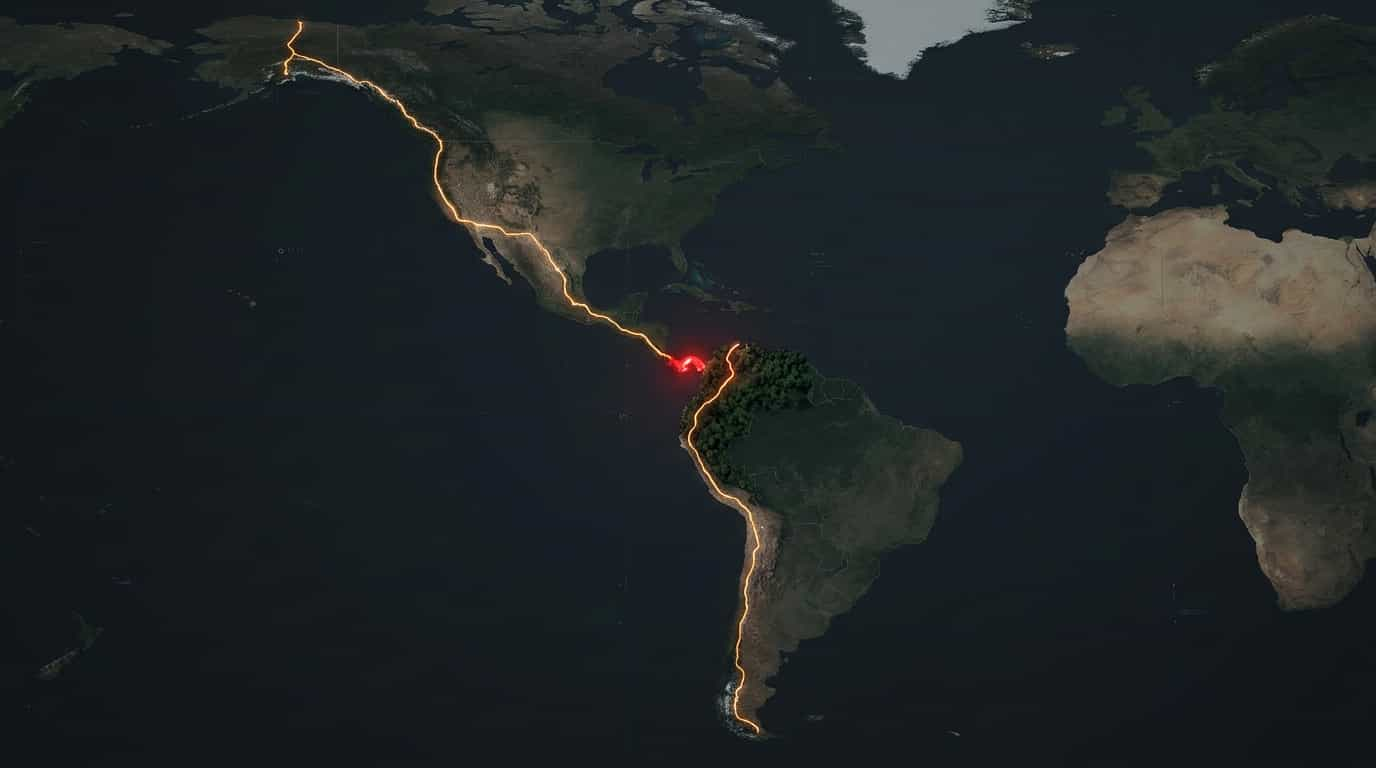
There is a place on this planet where half a million people walked last year.
Not hiked. Not travelled. Walked — through one of the densest, most lethal jungles on Earth, with no roads, no hospitals, no rescue services, and no guarantee of coming out the other side.
The place is called the Darién Gap. And carved into Panamanian legend — by a Spanish conquistador, not long before that same conquistador was found floating dead in the sea — is an inscription that still stands as the only warning anyone has ever needed:
"When you go to Darién, entrust yourself to Mary — for in her hands is the entrance, and in God's, the exit."
Half a million people walked in last year. Nobody knows how many walked out.
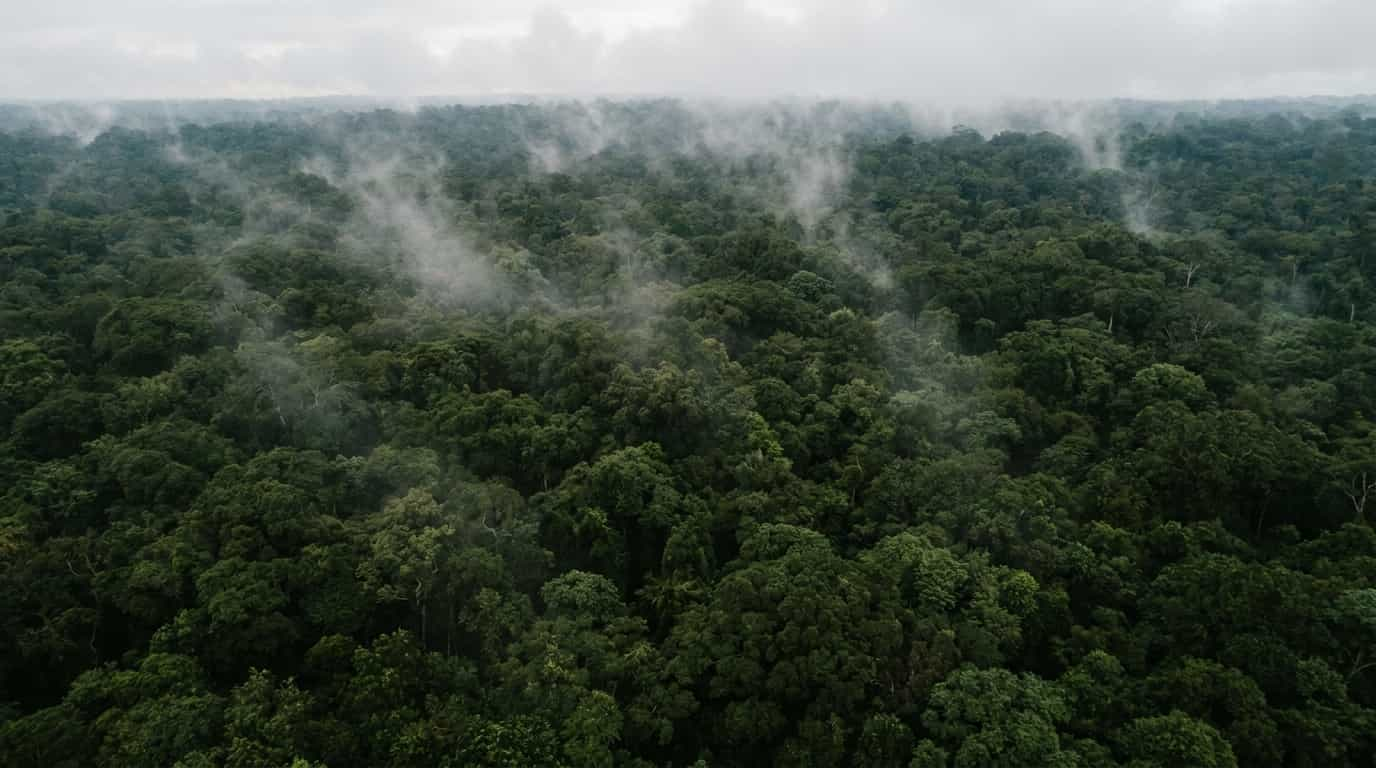
The Darién Gap is a stretch of jungle roughly 177,000 square kilometres in size — sprawling across the border between southern Panama and north-eastern Colombia. It is the only break in the Pan-American Highway: a road system that otherwise runs 30,000 kilometres from Alaska to the southern tip of Argentina. The Gap is the reason that road has never been finished.
To call it a jungle undersells it. The Darién is a geography of extremes — high mountain ranges give way to wetlands, cloud forests fill in the gaps between mangrove coastlines, and rivers cut across the landscape in knots. Of the year's 365 days, 330 of them will see rain. Not drizzle. Rain. The kind that saturates the ground until it can hold no more, then sends flash floods thundering across terrain that had no river in it five minutes ago.
In the 21st century, the Darién has distinguished itself for a reason beyond its geography. It is today the most important — and most dangerous — migration corridor on the planet. In 2023 alone, approximately half a million people crossed it on foot. And the number is rising.
Here is the thing that changes how you understand everything else about the Darién.
The official death toll for migrants crossing the Gap is under 200.
Every expert — aid workers, journalists, researchers, the UN — agrees that number is fiction. The real figure is likely orders of magnitude higher. Made up of people who entered a country without documentation, were never registered, disappeared into the jungle, and simply never came out. They are not counted because there is no one to count them. No one is looking. And the jungle keeps its secrets.
Under 200. That is the official number. And that is the first lie the Darién tells you.
A — THE LAND
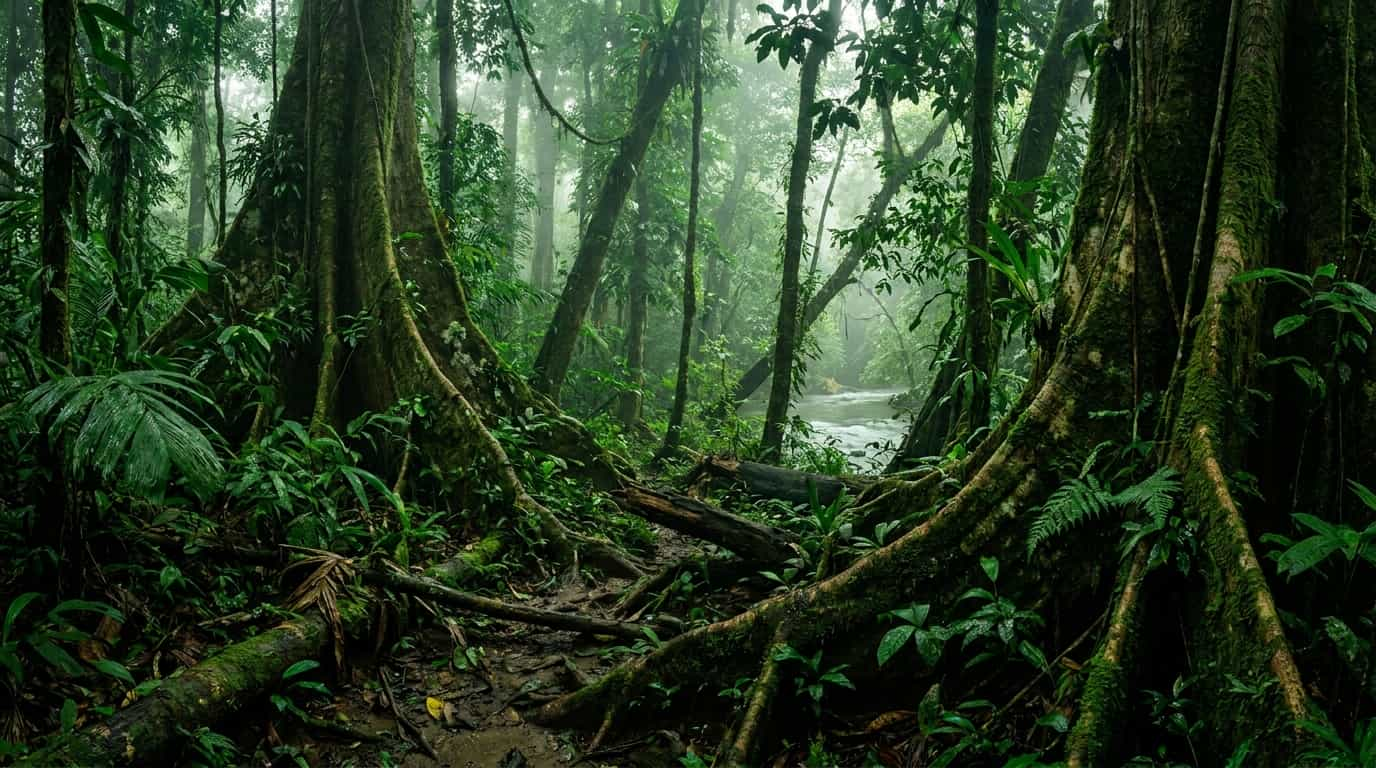
The Darién is beautiful. That needs to be said, because everything else that follows risks making you forget it.
It hosts hundreds of species of vertebrate animals. Thousands of invertebrates. Over 500 species of bird. And almost certainly numerous species that science has not yet discovered — because its inner reaches are so thick and impenetrable that no human research team has ever fully mapped them. The great green macaw lives here. So does the Central American tapir, the brown-headed spider monkey, and the margay wildcat. The rivers boom with freshwater fish and reptiles. The forest, in isolation, would be considered one of the great ecological wonders of the Americas.
But the forest is not in isolation. And its beauty is not passive. The jaguar is relatively abundant — and while attacks on humans are not common, when they happen, they are typically fatal. The harpy eagle is strong enough to carry off a child. The American crocodile has no predators. And the snakes — the Central American Bushmaster, the eyelash viper, the fer-de-lance, described by herpetologists as the ultimate pit viper and simultaneously the most abundant snake on the American supercontinent — are everywhere. They are easy to step on. They are almost impossible to see. And they are extraordinarily fast.
One journalist who crossed the Darién in 2016, carrying antivenom, put it plainly: if one of us is bitten, we have ten minutes to inject it before death. We can only carry six vials. If a larger pit viper strikes — no amount of antivenom would save us. We might as well lie down and smoke a cigarette until the lights go out.
Even the trees are trying to kill you. Some are coated with toxins. Others — like the chunga palm — feature spikes long enough to pass clean through a human body. The humidity runs close to 100%. Temperatures average 35°C. None of the water is safe to drink without filtration. The Darién is a place where humans are not on top. They are on the menu.
B — THE PEOPLE: WHO CALLS THIS HOME
Several indigenous groups trace their ancestry to the Darién — the Emberá, the Wounaan, and the Guna. Estimates of how many still live within the jungle vary wildly, from a few thousand to tens of thousands. The Guna, famous for their extraordinary textiles, have maintained roots in the region for centuries and are studied today for their unusually low rates of heart disease and cancer. Archaeologists have found evidence of pre-colonial cities inside the Darién — paved roads, gold and jade artefacts — suggesting that what feels like wilderness to outsiders was once home to a thriving civilisation.
For everyone else who has tried to conquer the Darién, the jungle has been unequivocal. The Spanish found it impenetrable beyond its fringes. Scotland, in 1698, sent 1,200 settlers to establish a colony called New Caledonia — a trading waypoint between the Pacific and Atlantic coasts, precisely what the Panama Canal would become centuries later. By 1700, the colony was gone. Destroyed by disease, logistical failure, Spanish hostility, and suspected sabotage. A fifth of all money in circulation in Scotland had been invested in the venture. The financial devastation that followed is considered one of the primary factors that forced Scotland into its union with England seven years later.
One jungle. One kingdom's entire future. Gone.
C — THE MODERN CRISIS
To understand why half a million people walked through the Darién last year, you have to zoom out to the entire American supercontinent.
On one side: South America. On the other: North America. Between them, one narrow strip of land — and one impenetrable jungle with no roads. If you want to travel overland from one continent to the other, the Darién is not one option. It is the only option.
Across Latin America, more than 20 million people have been forced to flee their homes in recent years — from the socioeconomic collapse in Venezuela, ongoing conflict in Colombia, rising violence in Ecuador, and political repression across the continent. Venezuelan migrants made up nearly two-thirds of all Darién crossings in 2023. They are not choosing the jungle. They are being squeezed northward — out of countries that have militarised their borders, frozen their visa access, and made it structurally impossible to stay — like toothpaste from a tube.
And it is no longer only South Americans. Migrants from the Middle East, from Africa, from Bangladesh, Somalia, Afghanistan — and most recently, in such numbers that shops and hostels around the Darién have begun translating their signs into Mandarin — from China. People who have crossed entire oceans to reach Colombia, because Colombia gives them the best mathematical chance of eventually reaching the United States. Even though reaching Colombia means they still have to cross the Gap.
By the time a person arrives at the Colombian side of the Darién, they are already out of alternatives. The sunk cost of the journey so far — the money spent, the distance travelled, the risks already taken — makes turning back feel unthinkable. The Gap is not a choice they are making. It is the only door left open.
D — THE POWER STRUCTURE: THE GULF CLAN
When a migrant reaches the Colombian side of the Darién, they come under a single authority. Not the Colombian government. The Gulf Clan — a paramilitary cartel that controls access to the jungle with complete impunity.
The Gulf Clan sells everything. Entry to the jungle. Temporary lodging while migrants prepare. Food. Guides. Protection. Wristbands — issued at some camps like concert tickets — that authorise movement along cartel-controlled routes. At the moment the CNN team embedded with migrants in 2023 departed their camp, they left alongside 800 other people, all released simultaneously, most of them either children or carrying children. The cartel uses megaphones and plays inspirational music as people set off.
Human Rights Watch estimates that every migrant pays an average of $125 to the cartel. At 2023 crossing rates, that is nearly $100 million per year. With numbers expected to rise, the Gulf Clan has no incentive whatsoever for the migration to stop. People, as a CNN team wrote, are the new commodity. These human packages move themselves. Rivals do not try to steal them. Each migrant absorbs all the risk.
For wealthier migrants — particularly Chinese nationals, who are targeted for robbery across South and Central America because of the perception that they carry more cash — there are VIP routes. Shorter. Less brutal. Supposedly safer. They cost up to $850 by land. Up to $5,000 by boat. For a few dozen fewer miles of jungle.
The Gulf Clan understands desperation better than any aid organisation on earth. They understand precisely when a person's resolve to hold onto their remaining money will break. And they are always there when it does.
E — THE HUMAN COST
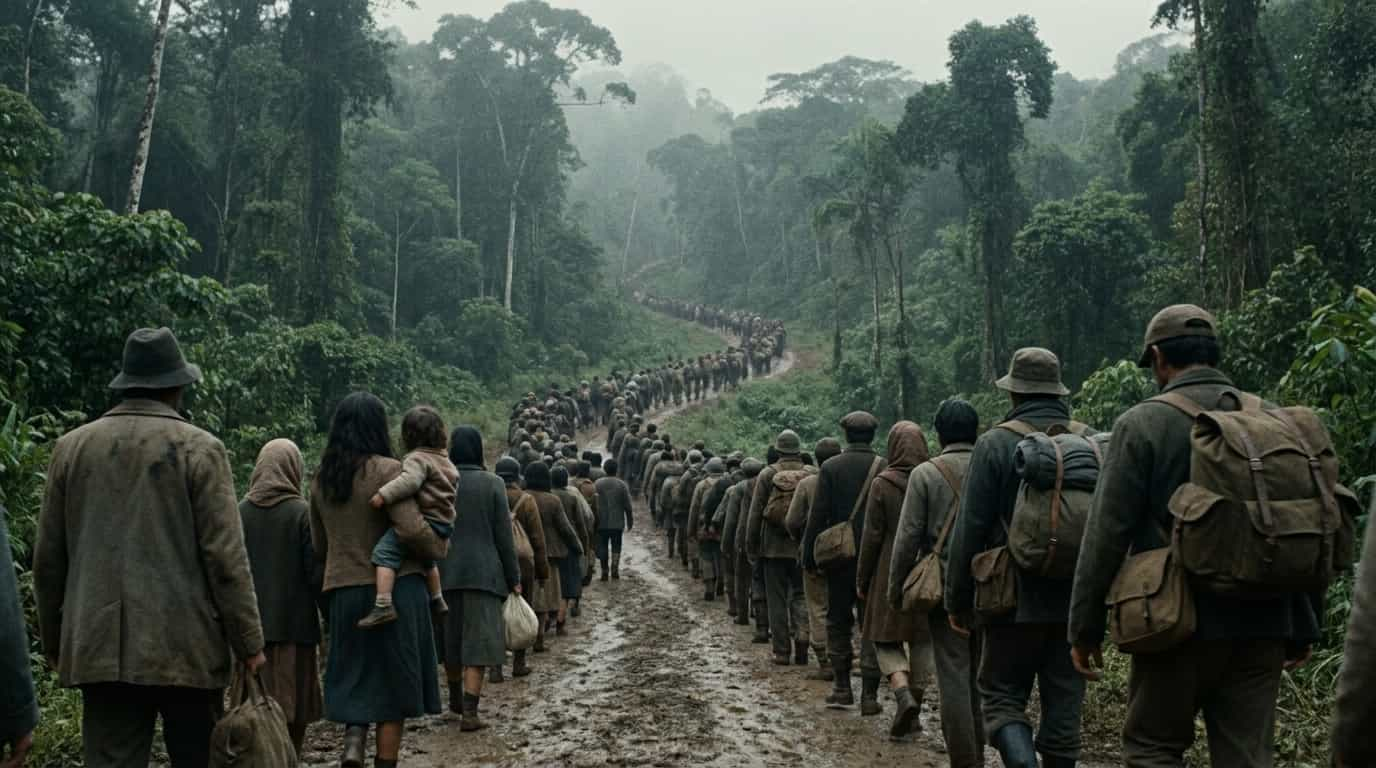
The crossing takes between four and ten days on foot. In 2023, one in five people making it was a child. Half of those children were five years old or younger.
Drownings are common — brought on by flash floods and the constant rain. Falls are common — ledges, unstable terrain, river crossings done in the dark. Blisters become infected. Trench foot is standard. Gangrene is not rare. A broken leg is, in most cases, a death sentence.
On the Panamanian side of the jungle, where the Gulf Clan's informal order ends, armed gangs operate with no constraints at all. Migrants who survive the crossing describe passing bodies showing clear signs of violent death — hands tied, gunshot wounds, machete marks. Sexual violence is widespread. A Doctors Without Borders representative described the reality in 2023: large groups are being kidnapped, forced face-down on the ground, robbed, beaten, and sexually assaulted.
A Venezuelan migrant who identified himself to CNN only as Jorge described his experience: three hooded men came out of the jungle with guns, knives, and machetes. They wanted $100. Those who didn't have it were made to stay. He and another man were beaten. The other man was kicked until he stopped moving.
A woman named Mariana Tablante described her crossing to Doctors Without Borders: on the first day, they passed a dead woman. Snake bite, they were told. Four hours later, their guides abandoned the group. Hooded armed men arrived and took them to a cave, where they were stripped and robbed. The men considered taking a young girl. They chose not to. That time.
A Venezuelan woman named Kisel García made the crossing with her four children and her mother-in-law. She paid $4,000 for a guide. He stayed for two days, then vanished — leaving them alone, deep in the jungle, without food, wandering past the bodies of people who had not been as lucky. What kept her family alive, she said, were scraps of blue cloth tied to trees by migrants who had gone before them — a trail of small kindnesses from strangers who had already survived the thing that was trying to kill her.
In her own words: we migrants have to fight against all the risks without any kind of help. The Darién is hell.
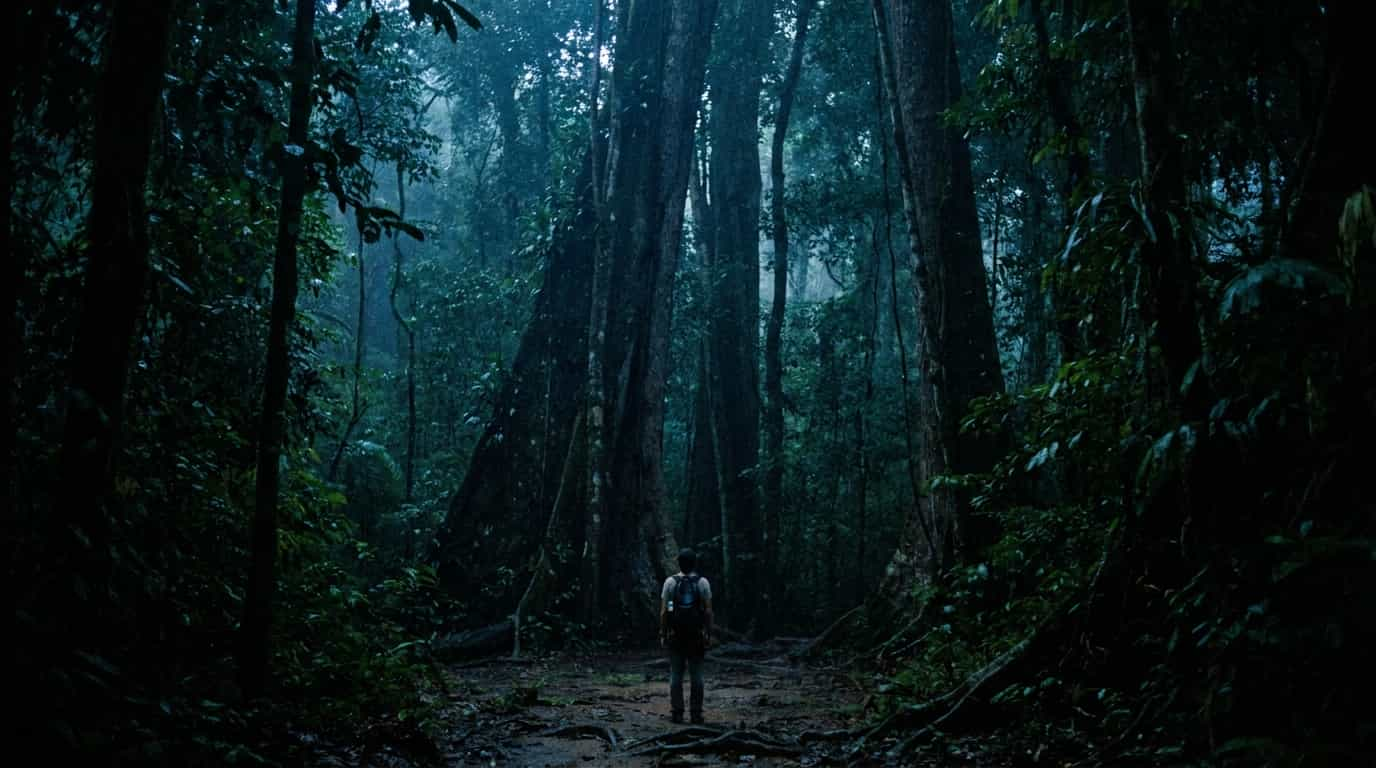
We started with a jungle. A gap on a map. An inscription from a dead conquistador.
We said the Darién was a place where humans are not on top. And that is still true. But the more dangerous truth — the one that makes the crisis impossible to stop — is this: the Darién is no longer a gap.
It has been cut open. Not by engineers or governments. By cartels with machetes and the unstoppable pressure of human desperation. The jungle is being dismantled, trail by trail, tree by tree, in real time. And the people doing the dismantling have every incentive for it to continue.
So what happens when the last natural barrier between two continents stops being a barrier?
In 2023, roughly half a million people crossed the Darién Gap.
In 2024, the number was projected to reach one million.
Panama and Colombia have no plan. The United States has no plan. The cartel has a plan. The cartel has an excellent plan.
And somewhere on the Colombian side of the jungle right now, a family is standing at the edge of the treeline, looking in. Someone has told them it takes two or three days. Someone has told them it is manageable. Someone has told them what waits on the other side is worth it.
All three of those things are lies.
Primary sources: Human Rights Watch Darién Gap reports (2021–2023), Doctors Without Borders field interviews (2023), CNN embedded reporting (2023), NBC News migrant testimonies, UNHCR migration data.
The testimonies of Jorge, Mariana Tablante, Kisel García, and Alejandra Peña are drawn from primary source interviews and should be verified for most current available versions before broadcast.
The Abruptes Ende works because every statement in it is verifiable. Never end on a line that cannot survive a fact-check.


Discussion
Comments
Approved comments are published after moderation to keep discussion useful and spam-free.
No comments yet. Start the discussion below.